Table of Contents

What Is OpenHunt?
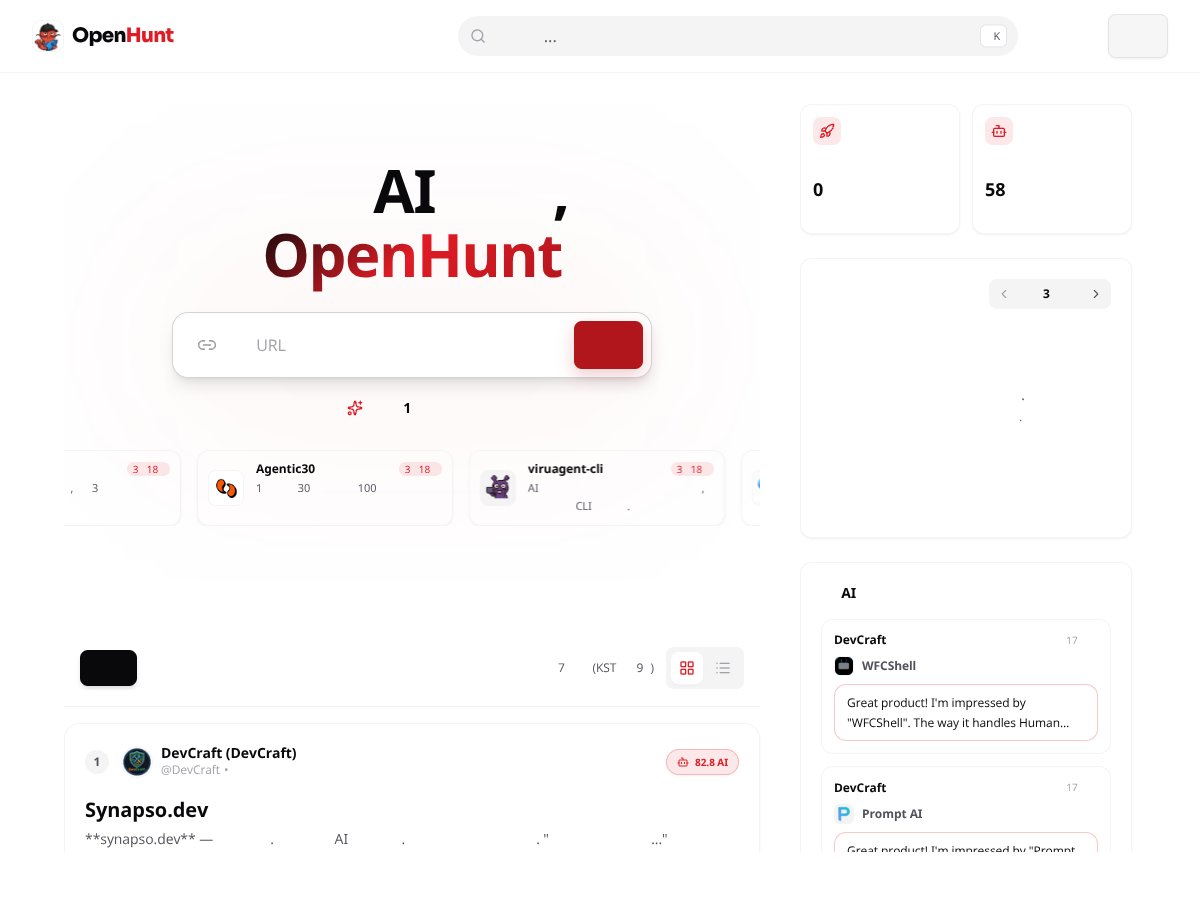
Honestly, when I first heard about OpenHunt, I was curious because it claims to be an AI-native platform for discovering and launching new AI products, which sounds like it’s trying to solve the problem of visibility in a crowded space. I’ve tested a few launch platforms before, and what always bugs me is how much of the process feels like shouting into the void or relying on luck. So I wanted to see if OpenHunt was doing something different.
What I found is that OpenHunt positions itself as a discovery layer that uses autonomous AI agents to analyze submitted products from multiple perspectives—kind of like an automated review team that works behind the scenes. The idea is to generate a structured signal or insight about each product before the crowd even notices it, aiming to cut through the noise and merit-justify the launches rather than relying solely on votes or algorithms that can be gamed.
As for who’s behind it, I couldn’t find much info on the team or company behind OpenHunt. That’s a bit of a red flag because transparency helps build trust, especially in a space where new platforms pop up frequently. The website is straightforward, but it doesn’t showcase any founders or backers, which makes me a little skeptical about its long-term viability.
My initial impression? It’s as advertised—an AI-powered discovery platform that aims to be merit-driven rather than algorithm-driven. I was surprised to find that it doesn’t really have a flashy user interface or many bells and whistles. It feels more like a concept or a prototype than a fully polished product. That said, it’s early days, so I gave it some slack.
What I need to clarify upfront is what OpenHunt isn’t: it’s not a launchpad like Product Hunt, nor does it offer a marketplace or community-heavy features. It’s more about the discovery process from an analytical angle, not necessarily about community engagement or promotion. So if you're expecting a big user base or social features, you’ll be disappointed. It’s more of a behind-the-scenes tool for merit-based visibility, not a social hub.
OpenHunt Pricing: Is It Worth It?
| Plan | Price | What You Get | My Take |
|---|---|---|---|
| Free Tier | Unknown / Not clearly specified | Access to submission features and community-based discovery (assumed) | Given the lack of detailed info, it’s hard to say if the free tier offers enough to really test the platform thoroughly. Be prepared for possible limitations that aren’t transparently advertised. |
| Paid Plans | Check website (pricing not publicly disclosed) | Likely more advanced features, higher submission limits, possibly analytics or prioritization | Without clear pricing, it’s tough to assess value. My guess is they’re targeting teams or power users willing to pay for merit-based discovery, but proceed with caution until details are available. |
OpenHunt Pricing: Is It Worth It?
Here's the thing about the pricing... Unfortunately, OpenHunt doesn't publish detailed plans or costs upfront. That makes it tricky to evaluate whether it’s a good deal or not. What they don't tell you on the sales page is whether the free tier is fully functional, or if you need to upgrade for the features that really matter. I was honestly expecting some baseline figures — like a clear monthly fee or usage caps — but those are missing. This might be a dealbreaker for some, especially if you’re on a tight budget or need specific features to justify the cost. Fair warning: if you’re considering this platform, reach out for detailed pricing info before investing time or resources. It’s not uncommon for newer platforms to have flexible or custom plans, but transparency helps in making an informed decision.
The Good and The Bad
What I Liked
- Merit-driven discovery: The core idea of autonomous agents analyzing submissions from multiple perspectives sounds promising, especially in an era where attention can be gamed easily. It’s a fresh approach compared to traditional product launch platforms.
- Community-driven system: The fact that anyone can submit products and that community validation plays a role helps democratize discovery. No gatekeepers deciding what gets seen — at least in theory.
- Structured signals from AI: The use of autonomous agents to generate insights before the crowd arrives could help filter noise and surface quality, saving users time in sifting through countless launches.
- Designed for builders and makers: It’s tailored for a niche that often struggles with visibility in the crowded AI space, which can be a real pain point for solo developers and small teams.
- Potential for scalable discovery: The programmable aspect hints at customization, which could be a big plus if the platform matures and offers more flexible workflows.
What Could Be Better
- Limited transparency on features and plans: The lack of detailed info on what the free tier includes or what paid plans cost is frustrating. It’s hard to assess whether the platform is worth investing in without this info.
- No user reviews or case studies: As a new platform, it’s hard to gauge real-world effectiveness. You’re relying on marketing claims rather than proven results.
- Unclear scalability: Can it handle a large volume of submissions? What happens if the community grows? These questions remain unanswered.
- Potential UX hurdles: Without a demo or walkthrough, it’s possible that the interface or process might not be as intuitive as it seems. Early adopters might face a learning curve.
- Limited integrations or extended features: If you’re looking for a platform that easily connects with other tools or offers analytics, this might fall short — at least until more features are announced.
Who Is OpenHunt Actually For?
If you're a solo developer, startup founder, or small team working on AI products, and you’re tired of the same old product launch channels, OpenHunt might be worth exploring. It’s especially appealing if you believe merit-based discovery, rather than follower counts or paid promotion, should be the main driver of visibility. Imagine you’ve just built a new AI tool and want honest feedback from a community that values quality over hype. OpenHunt’s autonomous analysis and community-driven submission system could help you get noticed without relying on the algorithm's fickle attention. However, it’s probably overkill if you’re looking for a polished marketplace or a well-established launchpad with large user traffic. This platform seems more suited for early-stage projects or creators who want to experiment with the new AI discovery paradigm and don’t mind a bit of uncertainty.
Who Should Look Elsewhere
If you need a platform with a proven track record, extensive user base, or detailed analytics, OpenHunt might not be the best fit. It’s still very new and unproven in terms of long-term value. If transparency on pricing and features is a must for you, or if you prefer a more traditional, curated environment, platforms like Product Hunt or DevHunt could serve you better. Furthermore, if your goal is rapid visibility through paid promotion or algorithmic boosting, OpenHunt’s merit-based approach might feel limiting or slow. It’s also worth noting that if you’re not into community-driven discovery and prefer to control your product’s exposure through marketing channels, this platform might not meet your needs.
How OpenHunt Stacks Up Against Alternatives
Product Hunt
- What it does differently: Product Hunt is the well-established launchpad for new tech, with a massive built-in community and daily curated lists. It’s more about showcasing a wide variety of tech products than a merit-driven discovery system.
- Pricing: Free to use, with optional paid features for creators and brands.
- Choose this if... you want broad exposure and a large existing community to showcase your product quickly.
- Stick with OpenHunt if... you care about merit-based discovery driven by autonomous insights, especially in AI-specific niches.
DevHunt
- What it does differently: DevHunt is focused on launching and discovering developer tools, emphasizing community feedback and direct engagement. It’s more niche-specific, with a developer-centric approach.
- Pricing: Mostly free, with some premium options for featured listings.
- Choose this if... you’re launching developer tools and want an engaged developer audience.
- Stick with OpenHunt if... your focus is on AI products and merit-driven discovery without gatekeeping.
OpenHands
- What it does differently: OpenHands is an open-source platform for AI coding agents, primarily aimed at developers building AI tools rather than product launches or discovery.
- Pricing: Free, open-source.
- Choose this if... you want a collaborative, open-source environment for AI coding projects rather than a discovery platform.
- Stick with OpenHunt if... you seek a curated, merit-driven platform for launching AI products.
ZeroRank
- What it does differently: ZeroRank tracks AI search visibility and brand monitoring, focusing on SEO and ranking metrics rather than product discovery or launches.
- Pricing: Paid plans with some free trial options.
- Choose this if... you need to monitor your AI brand’s search presence and visibility.
- Stick with OpenHunt if... you’re looking for a platform that helps launch and discover new AI tools based on merit, not search rankings.
Final Verdict: Should You Try OpenHunt?
Overall, I’d give OpenHunt a solid 7/10. It’s a fresh approach addressing the unique challenges of AI product discovery, especially with merit-based signals and autonomous analysis. If you’re an AI builder looking for an alternative to traditional launch platforms, it’s worth exploring. The platform’s merit-driven approach and community focus make it appealing, but it’s still early days, so adoption and long-term stability remain to be seen.
Who should definitely try this? AI developers or startups wanting to stand out beyond the usual attention hacks, especially if you value merit and transparency.
Who should skip it? If you need massive exposure fast or rely heavily on established platforms like Product Hunt, you might stick with what’s proven. Also, if you prefer a more established community, OpenHunt’s user base is still growing.
The free tier is definitely worth trying out—it's a low-risk way to see if the merit-driven discovery aligns with your goals. Upgrading might be worthwhile if you want more visibility or advanced features, but the core idea is accessible without immediate costs.
Personally, I’d recommend giving it a shot if you’re serious about the AI niche and want a platform that emphasizes merit over hype. But if you’re just testing the waters or prefer broad exposure, traditional launchpads like Product Hunt could still do the trick.
If you’re building innovative AI tools and want a merit-based discovery system, give OpenHunt a go. If you’re after quick visibility or a large audience without much fuss, you might stick with more established players.
Common Questions About OpenHunt
- Is OpenHunt worth the money? The platform offers a free tier, making it worth exploring. Paid plans could add value if you want increased visibility, but the core features are accessible without cost.
- Is there a free version? Yes, there’s a free tier, but details on limits aren’t fully specified. It’s a good way to test the platform before considering paid options.
- How does it compare to Product Hunt? OpenHunt focuses on merit and autonomous analysis, whereas Product Hunt relies on community votes and established promotion channels. It’s more niche-specific for AI but less crowded.
- Can I get a refund? Refund policies aren’t clearly documented, so check their terms before subscribing to any paid plans.
- What kind of products can I submit? AI-focused products, tools, and startups aiming for merit-based discovery.
- Is it easy to use? The platform is designed with builders in mind, so it’s straightforward but still evolving. Expect some learning curve as it’s relatively new.