Table of Contents
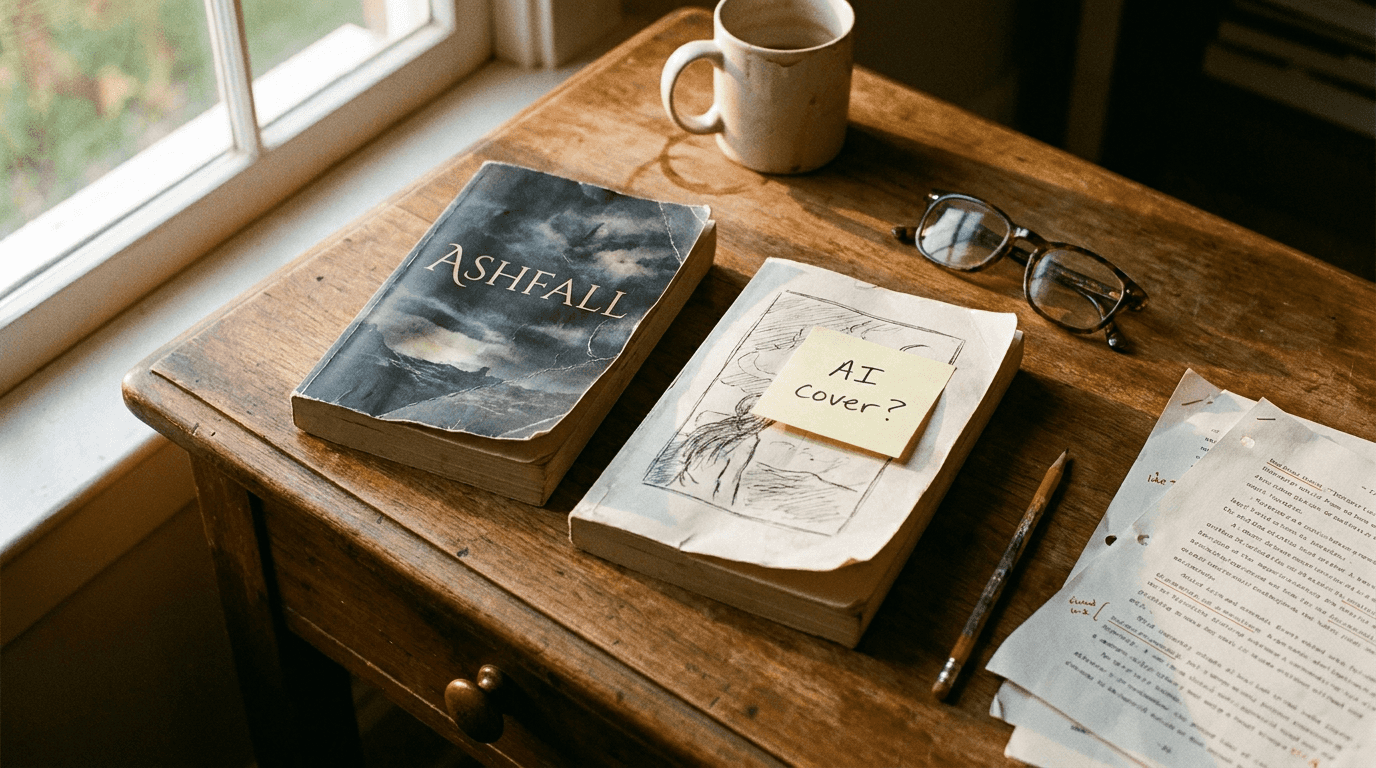
An author spent months on a dark-fantasy novel, used ChatGPT for exactly one thing — a cover concept — posted it to a Facebook book group to drum up interest, and got roasted hard enough that they deleted the post and nearly shelved the whole book. That story showed up in r/KDP this week, and it’s worth sitting with, because it’s the clearest recent example of how much the ground has shifted on AI covers.
Full disclosure before I go further: I’m Stefan, the founder of Automateed, an AI ebook creator. So I’m an AI-tools person telling you to be careful with AI on your cover, which should tell you how real this problem has become. Let’s look at what actually happened and what the honest answer is.
r/KDP
Backlash after using AI for a cover concept
“I admit I ONLY used chat gpt to help with the concept for the book cover (the only time I ever used it)… I went with that and ran with it. After the major slap in the face with Facebook, I just deleted the post and it low-key made me not wanna even release the book.”
View on Reddit →⚡ TL;DR – Key Takeaways
- •Yes, an obviously AI cover can hurt sales in fiction — not because of some rule, but because readers now treat the “AI look” as a signal of low effort and skim right past it.
- •The screening has gone institutional: some promo events (like Stuff Your Kindle days) now openly reject books with an AI cover, AI-written text, AI marketing, or an AI audiobook.
- •The damage is worst in genre fiction, where covers are a tight visual language readers scan in a second. It matters less for some private or utility use, but even there it’s a risk.
- •You don’t need a big budget to avoid it: services like Getcovers do covers around $35, premade covers are cheap, and a real designer is worth it for a series.
- •If you use AI at all, use it privately to explore a concept, then hand that direction to a human designer — don’t ship the raw AI image as your final cover or attach “AI” to your author brand.
What actually happened in the thread
The original poster is releasing a dark-fantasy series with bleak, atmospheric writing. They’d launched a Booksprout review campaign and came to r/KDP asking what to do next. Somewhere in the replies the real story came out: they’d generated the cover concept with ChatGPT, posted it to a Facebook book group, and the reaction was harsh enough that they pulled the post and started second-guessing the entire release.
What’s striking is that they hadn’t used AI to write anything. The book is theirs. The AI touched one asset — the cover — and that was enough to trigger the backlash. That gap between “I used AI for one thing” and “the internet treated my whole book as AI slop” is exactly the trap worth understanding before you make the same call.
Why readers react so strongly to AI covers now
The “AI look” became a genre signal
A book cover is a compression algorithm. In under a second, a reader browsing thumbnails decides whether your book belongs in their genre and whether it looks professionally made. Genre readers have trained themselves on thousands of covers, so they’re unusually good at spotting the tells — the slightly plastic skin, the melty hands, the generic fantasy-nebula background, the typography that floats instead of sitting in the composition.
Once a reader clocks those tells, the cover stops saying “dark fantasy” and starts saying “made in five minutes.” Fair or not, that becomes a proxy for the writing inside. As one experienced commenter in the thread put it, readers just see a wall of covers, and if yours looks DIY or AI, they may pass it by before they ever read your blurb. You never get the click, so you never get the chance to prove the book is good.
The screening has gone institutional
This is the part that surprised me most, and it’s why an AI cover is now a distribution problem, not just an aesthetic one. It’s no longer only individual readers reacting — the gatekeepers of cheap, high-volume promotion have started writing AI out of the rules.
r/KDP · Top 1% Commenter
Paraphrased: AI is clogging up the bookish spaces and readers are sick of it, so many now screen it out by avoiding any author who attaches AI to their brand at all. They’d just signed up for a Stuff Your Kindle day that flatly rejects any book that used AI to write it, has an AI cover, used AI in its marketing, or has an AI audiobook attached. Their fix for a budget cover: a service like Getcovers, around $35.
View on Reddit →Read that list again, because it’s the important shift. A single AI-touched asset — even just the cover — can now disqualify your book from a promo that could have put it in front of thousands of readers. The event doesn’t care that you wrote every word yourself. “AI cover” is on the reject list, full stop, and more reader-run promos are adopting similar policies.
So does an AI cover actually hurt sales? The honest answer
Here’s where I’ll resist the urge to give you a comfortable answer. It depends heavily on your category, and the split is sharper than most “it depends” answers.
Where it hurts most: genre fiction
Romance, fantasy, sci-fi, thriller, YA — these are the categories where covers are a strict visual dialect and the reader communities are most vocal about AI. This is the worst place to gamble with an AI cover. The readers are exactly the people who notice, the promos are exactly the ones tightening their rules, and word travels fast in genre spaces. The r/KDP author above is in dark fantasy, which is precisely one of these communities, and the reaction was immediate.
If you write genre fiction, treat a professional, on-genre cover as a non-negotiable cost of doing business, the same way you’d treat editing. It’s the single highest-leverage thing you can control on the sales page, and an AI-looking cover throws that leverage away.
Where it matters less (but still carries risk)
For some low-content and utility books — a planner, a log book, a niche workbook bought for function rather than beauty — buyers are less cover-sensitive, and a clean AI-assisted design is less likely to sink you. The same is true for internal drafts, mockups you’re using to test a concept, or a cover you only ever show yourself. But “less risk” is not “no risk.” The moment a book is public and searchable, someone can screenshot it, and the AI-brand association is hard to peel off once it sticks.
What to do instead
You don’t need a big budget
The reason so many authors reach for AI on the cover is money, and that’s a fair pressure. But the gap between “free AI image” and “pays for itself” is smaller than it looks. Services like Getcovers produce genre-appropriate covers for around $35. Premade cover shops sell polished, human-made designs for a similar range — you just swap in your title and author name. For a series you plan to grow, a dedicated cover designer is the best money you’ll spend, because a consistent, professional look across books is what makes a browsing reader trust the whole shelf.
If you want to learn what actually separates a converting cover from a DIY one, it’s worth studying the fundamentals of designing a book cover — genre conventions, focal hierarchy, and how title typography has to sit inside the image rather than hover on top of it. That last point is where most amateur and AI-generated covers fall apart.
If you use AI, use it as a concept tool, not the final art
This is the nuance the “AI is evil” crowd misses and the “just generate it” crowd ignores. AI is genuinely useful privately, for exploring directions before you brief a designer — mood, palette, composition, what your world could look like. Generate a dozen concepts with an AI cover creator, pick the direction that feels right, and then hand that reference to a human designer to execute a real, shippable cover. You get the speed of AI ideation and a final asset that won’t get your book flagged. What you should not do is ship the raw generation as your published cover, and you definitely shouldn’t announce “made with AI” in your marketing.
A 30-second self-check: does your cover read as AI?
Because the “AI look” is a gut reaction, the fastest way to protect yourself is to learn the same tells readers use. Run your cover through these three quick checks before you ever publish it.
Zoom in on hands, eyes, and edges
Image models still struggle with the fiddly bits. Look hard at any fingers, teeth, jewelry, and the places where two objects meet. Extra knuckles, a sword that dissolves into a cloak, eyes that don’t quite point the same way — these are the details that make a reader mutter “that’s AI” without being able to say why. If you catch yourself explaining away a weird detail, a reader won’t bother; they’ll just scroll.
Check whether the typography belongs
Even when the art passes, AI covers usually give themselves away at the title. Generated images tend to get text pasted on top as an afterthought, so it floats above the scene instead of being lit, angled, and composed as part of it. Professional covers integrate the type into the image — it casts shadow, follows the composition, and leaves room to breathe. If your title looks like a sticker, that alone can read as amateur.
Ask a genre reader, not a friend
Your friends and family will tell you it looks great, because they love you and they don’t read your genre. The only opinion that matters is a stranger who buys books in your category every week. Drop the thumbnail into a genre reader group or a subreddit for your niche and ask, plainly, whether it looks professional and on-genre. The answer will be blunt, and blunt is exactly what you need before launch, not after.
The bigger lesson: don’t staple “AI” to your author brand
The r/KDP author’s real mistake wasn’t the cover itself — it was volunteering “I used ChatGPT for this” to a Facebook book group. Reader communities right now are in a defensive crouch about AI, and telling them upfront hands them a reason to dismiss you before they look at the work. Whatever you think about that reaction, it’s the current climate, and a debut author has no leverage to fight it.
The practical takeaway: keep your tools your business. Use whatever helps you draft, outline, and plan behind the scenes, but present a finished, professional product — clean cover, sharp back-cover blurb, real reviews — and let the book stand on its own. Speaking of reviews, the same author was mid-launch on ARCs, and lining up honest early reviews is a far better use of energy than defending your process to strangers. (If you’re curious how an AI ebook generator fits into a workflow without becoming your brand, that’s a longer conversation — but the cover is the one place I’d keep AI in the back room.)
None of this means the book was bad. It means the packaging spoke before the writing could. Fix the packaging, drop the AI-branding, and that dark-fantasy series has every chance to find its readers.
FAQ
Will an AI book cover actually lower my sales?
In genre fiction, very likely yes. Readers browse by cover thumbnail and skip anything that reads as AI or DIY before they ever see your blurb, so you lose clicks at the top of the funnel. For some utility or low-content books it matters less, but the risk is real anywhere the book is public and searchable.
Can an AI cover get my book rejected from promotions?
It can. Some reader-run promos, including certain Stuff Your Kindle days, now explicitly reject books that have an AI cover, AI-written text, AI marketing, or an AI audiobook. A single AI-touched asset can disqualify an otherwise human-made book, so check each promo’s rules before you apply.
Is it okay to use AI just for the cover concept?
Yes, privately. Using AI to explore mood, palette, and composition before briefing a designer is a smart, low-risk use. The problem is shipping the raw AI image as your final cover, or telling readers it was AI-made. Use it as a concept tool, then have a human execute the finished art.
What’s a cheap alternative to an AI cover?
Budget cover services like Getcovers make genre-appropriate covers for around $35, and premade cover shops sell polished human-made designs you customize with your title. For a series, a dedicated designer is worth the higher cost because a consistent look across books builds reader trust.
Should I tell readers I used AI anywhere in my book?
Follow the disclosure rules of any platform or promo you use, but you are not obligated to advertise your private tools in your marketing. Given the current mood in reader communities, volunteering “made with AI” tends to invite dismissal rather than credit. Present a finished, professional product and let the work speak.