01
The category point-of-view book
Why the market is changing and what to do about it — the book that makes you the explainer of the shift your product rides.
Creator business plan
Create books for authority, lead generation, customer education or a standalone revenue stream, then measure what readers do next.
Reviewed by Stefan Mitrović, Founder of Automateed · Updated July 16, 2026
60-second summary
For a founder, a book is owned media with a spine: it explains the problem your company exists to solve, educates customers into better buyers, and generates leads at margins ads cannot touch. Pick one business objective per book — authority, lead generation, customer education or direct revenue — and build the smallest book that achieves it. Automateed compresses production to days, so the book becomes a quarter’s marketing asset instead of a sabbatical.
Concrete, not generic
01
Why the market is changing and what to do about it — the book that makes you the explainer of the shift your product rides.
02
What buyers need to understand to succeed with products like yours — shrinking sales cycles and support tickets simultaneously.
03
A tactical guide solving the exact problem your ICP googles at 11pm — gated at $0 behind an email, feeding the pipeline weekly.
04
Operating lessons with real numbers and failures — the trust asset for recruiting, fundraising and partnerships.
Step by step
One line: “this book exists to [objective] for [audience], measured by [number].” Books without this line become brochures.
Feed the generator your frameworks, market observations and customer language — the draft assembles around insight competitors cannot paste.
Replace generic claims with your operating data, named-or-anonymized cases and honest limitations. Business readers extend trust to specificity.
Professional cover, print edition for desks and events, EPUB for stores, PDF for the gated funnel — every export from the same project.
Publish direct with the storefront’s subscriber capture, wire the one-time-offer funnel, and hand sales the bulk-order link for target accounts.
Start with a free preview — the outline and early content tell you whether the direction works before anything is committed.
Create a free previewThe commercial path
Founder books earn on four lines: direct sales at 85% (real but usually smallest), leads (the $0 edition converting searchers into pipeline), deal velocity (educated buyers close faster), and distribution leverage (podcasts, stages and press cite authors). Measuring the book like a campaign — downloads, subscribers, influenced pipeline — is what separates an asset from a vanity project.
The production math finally works: a days-long production cycle at subscription cost, against agency ghostwriting at five figures and a year. Payouts for the revenue line arrive via Stripe or PayPal, Wise, Payoneer or bank transfer from $100.
Decisions that change the result
Entrepreneur books succeed when the reader’s job-to-be-done is specific: a partner deciding whether to invest, a buyer comparing vendors, an operator trying to standardize a process, or a hiring manager evaluating leadership fit. Start your book brief by writing who the reader is, what decision they’re making, and what they need to do next after reading. If your chapters don’t make the next decision easier, the book becomes background reading instead of an owned asset.
A useful test: after every chapter, the reader should be able to complete one action without contacting you. That action might be mapping options, drafting internal specs, preparing questions, or running a checklist. This is how you avoid the “company brochure” trap while still connecting your product as evidence.
To keep your book from stretching into “everything we know,” decide the objective before you design the outline. For an authority objective, the book should explain the trend and your model for responding. For customer education, it should reduce ambiguity and provide an implementation path. For lead generation, it should solve the exact problem your ideal buyer actively seeks and give them a concrete internal deliverable. For direct revenue, it must be self-contained and finish with a clear, usable result inside the pages.
A practical structure that works across entrepreneur use cases: (1) the problem in the reader’s words, (2) a framework that turns confusion into steps, (3) examples from your operating life (decisions, failures, tradeoffs), (4) a workflow the reader can run, (5) what to do next that connects to your offer without making the entire book a sales call.
Founders often have knowledge that is hard to compress because it lives in Slack threads, sticky notes, and remembered conversations. Make that knowledge book-ready by converting it into repeatable artifacts: decision criteria, versioned checklists, templates, comparison tables (even if simplified), and the “why we chose it” logic behind your current stack or process.
When you’re packaging your knowledge, include constraints: time limits, resource limits, risks you avoided, and what you would do differently now. Constraint language builds credibility with business readers because it mirrors how they actually operate. It also prevents the book from sounding like a generic how-to written for a student.
Worked example
You run a B2B service that delivers onboarding for a specific workflow. You’re seeing stalled conversions because buyers don’t understand what “a good onboarding” looks like, and prospects keep asking the same questions during sales calls. You choose customer education as the book objective because it can shorten decision cycles and reduce support volume.
Objective line: “This book helps operations managers understand and run a complete onboarding plan for teams using [your category], measured by how many readers complete the onboarding checklist download inside the storefront.” Measurement stays tied to a reader action, not downloads alone.
For each chapter, write one sentence: what the reader will be able to do after reading. Example: Chapter on scope control promises: “By the end of this chapter, you can define onboarding boundaries and write a one-page scope note your stakeholders can approve.”
Pull your internal steps and convert them into reusable items: a kickoff agenda outline, an intake questionnaire skeleton, a timeline view, and a risk register format. Keep them slightly generic but operationally accurate. When you write the questionnaire, use the language your customers actually repeat in discovery calls.
Replace broad claims with specifics that don’t expose sensitive information. Example: instead of “we always reduce churn,” use “in our delivered onboarding plans, we track activation milestones and intervene when teams miss the first two checkpoints.” For anything tied to contracts or customer data, anonymize and keep details at the level that teaches the reader rather than reproducing business-critical terms. Ask your legal/ops counterpart to review anything that could be interpreted as a guarantee or disclosure.
A customer education book becomes an owned asset when each chapter ends with something the reader can run immediately, while your company shows up as evidence through your process artifacts and decision logic—not as an ad that interrupts learning.
Avoidable mistakes
If the reader’s takeaway is “what you do,” the book reads like a pitch deck. Reframe headings into work outcomes: “How to define scope without scope creep,” “How to structure handoffs,” or “How to evaluate readiness before implementation.”
Business readers assume exceptions. If your framework only works in ideal conditions, include a short section on failure modes and the corrective action you recommend. Keep it grounded in the operating tradeoffs you’ve actually encountered.
Entrepreneur books shouldn’t mirror product feature lists. Even for a direct revenue objective, the internal logic should be the problem-to-solution chain. Features are supporting evidence; the reader’s job is the main storyline.
A book can be beautifully produced and still fail your business objective if the reader can’t take a measurable action. Add a single next step per objective: download a checklist, request a template, or complete a guided exercise hosted on your storefront. Keep the step aligned with the book’s promise.
Where to go next
Evidence from Automateed
The opportunity is not to create another generic authority book. It is to turn operating knowledge into a framework a reader can inspect and apply.
Published books whose authors selected Business as the public category.
A related author-selected category for technical and product expertise.
Real public examples
These are live public author pages, not sample titles invented for this guide. They show presentation and positioning; inclusion does not certify every claim inside a book.
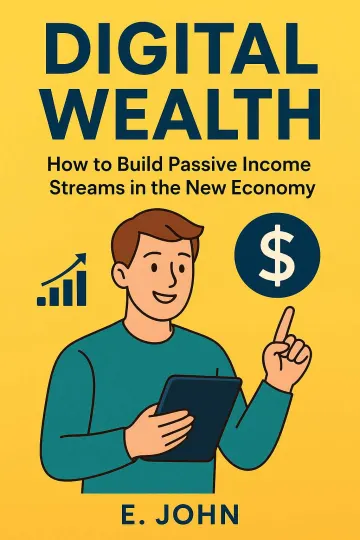
Business ebook
A public example of a focused business title presented as a complete reader-facing book rather than a loose collection of prompts.
View public book
Framework-led business book
A public title organized around a named seven-part framework, which gives each chapter a distinct job.
View public bookData note: Counts come from an aggregate Automateed production snapshot. Public-category counts use the category selected by the publisher and are descriptive, not a market forecast. Snapshot: July 16, 2026.
Quality gate
Run these checks against the actual manuscript, files and reader journey before publishing.
One clear reader and outcome
Real examples and author review
Professional files and branding
A tested next step for the reader
Continue the exact workflow
Editorial note
This page is a practical workflow, not a promise of sales, ranking, publishing approval or a specific reader outcome. Platform rules and professional requirements should be checked at the point of use.
Questions specific to Entrepreneurs
Whichever the quarter needs: pipeline pressure says lead magnet (days, gated, measurable); positioning pressure says authority book (weeks, priced, cited). The second follows on the same pipeline.
The reader’s outcome leads every chapter; the company appears as evidence, not hero. If a chapter’s value requires buying your product, it is an ad wearing a book.
The workflow supports it: you supply frameworks, voice notes and review passes; a marketer runs the brief, generation and editing. Founder review of claims stays non-negotiable.
Share what teaches, redact what exposes — ranges and anonymized cases carry the credibility without the leak. Legal review for anything near contracts or forward statements.
Export the print interior for KDP proof-and-order, or enable print-on-demand from your storefront; conference boxes are an order, not a logistics project.
You do — direct buyers and subscribers land in your storefront list, which is precisely the asset marketplace channels never hand over.
Subscription plus focused editing time — plans run $10–$50 monthly with generation credits included, against five-figure ghostwriting for the traditional route.
Instrument it like a campaign: downloads, subscriber conversion, influenced pipeline, bulk orders. The storefront’s analytics and seller dashboard supply the raw numbers.
Choose the primary reader role for each book, then acknowledge adjacent roles inside the examples. If you serve both operators and executives, write the book for the operator who completes the work, and add short “executive read” recaps at the end of chapters that translate decisions into outcomes. If the two groups require fundamentally different action plans, split into two books rather than mixing objectives.
Use stories to illustrate decision-making and tradeoffs, not to document private data. Keep names, exact figures, and contractual specifics anonymized. Focus on what changed in the process (inputs, checkpoints, timing, communication patterns). If you’re unsure whether a detail could reveal sensitive information or imply a guarantee, either remove it or generalize it into ranges and qualitative outcomes, then have internal review confirm.
Explore next
Keep manuscripts, covers, formats, audio, public pages and author branding connected in one publishing workspace.
Open guideUse a guided outline, preview, editor and publishing checklist so the first project does not become a pile of disconnected files.
Open guidePackage a repeatable method as an ebook or workbook, then connect it to a course, website and direct checkout.
Open guideUse your own topic
Review the outline, visual direction and available chapters before deciding whether to continue the full project.