01
The genre novel
A promise kept — mystery solved, love earned, dread paid off — with the beats your shelf demands, outlined before drafting.
Creator business plan
Move from premise to a scene-led manuscript with explicit character motives, causal turns and a revision plan.
Reviewed by Stefan Mitrović, Founder of Automateed · Updated July 16, 2026
60-second summary
Fiction with AI works when character decisions drive events: build the premise, motivations and world rules before drafting, outline scene-level change, then revise for causality and voice. The failure mode is fiction where things merely happen — escaped by the brief and the outline, not by better prose later. Automateed’s fiction path runs premise to publishable file in one project, with genre-specific creators for shorter forms.
Concrete, not generic
01
A promise kept — mystery solved, love earned, dread paid off — with the beats your shelf demands, outlined before drafting.
02
A compact cast under escalating pressure — the form where causality discipline shows most and drafts finish fastest.
03
Stories sharing a place, theme or consequence — cohesion by design rather than anthology accident.
Step by step
Genre expectations are reader contracts — the brief states the promise and the emotional shape of its payoff.
Motivation in the brief is what makes generated scenes decide rather than describe.
“Then this happens” outlines produce drift; “this choice costs this” outlines produce story.
Two passes: does every scene force the next; does every sentence sound like you. In that order.
Start with a free preview — the outline and early content tell you whether the direction works before anything is committed.
Create a free previewThe commercial path
Fiction income is catalog income: multiple titles, genre consistency, read-through and a reader list. Direct sales add margin (85%) and bundle options marketplaces lack, while the audiobook edition — a flat 10-credit narration — meets the format fiction increasingly sells in. The strategic asset is the mailing list your $0 novella-sampler builds; it launches every future title.
Decisions that change the result
When AI generates fiction, it often treats scenes like independent blobs: good mood, then the next mood, without a stated reason. Your job is to replace “a nice scene happened” with “a decision changed the situation.” In practice, every scene needs three explicit anchors you can check after drafting: (1) the character’s want in that moment, (2) the immediate obstacle that makes the want expensive, and (3) the resulting change to the board state (a new risk, a lost option, a gained leverage, a discovered secret, a broken relationship rule).
To keep long-form continuity, you also need a “genre promise reminder” that stays visible while drafting. For mystery, that reminder is the question the reader is promised a payoff for, and the concrete fairness rule for clues. For romance, it’s the emotional contract (what must be earned, not merely felt) and the reason the relationship can’t be a simple coincidence. For thriller, it’s the escalating consequence ladder and the competence/choice alignment that prevents deus ex machina. Without that reminder, generated beats can drift into thematic similarity but not story obligation.
Think of your project as having a continuity board separate from the prose. In Automateed’s fiction process, you can reflect that board in the brief and the scene progression you draft before you ask for full scene prose. Keep these fields short enough to review quickly, but specific enough that a scene generator can’t “invent” continuity on its own: (a) character baseline (belief, fear, skill, flaw), (b) relationship web (who trusts whom, and why that is temporarily true), (c) world rules (how tech, magic, law, or travel really works in your setting), (d) timeline constraints (what must happen before what, and what cannot happen in your timeframe), and (e) the payoff ledger (the top 5 promises you’ve made and where each will be earned.
After drafting, do not only ask “does this read well?” Ask “does this scene change something I can point to?” A useful test is to write one sentence per scene: “By the end of the scene, X can no longer do Y / now believes Z / has to pay W.” If you can’t summarize that change crisply, the scene is likely atmosphere without consequence, which is where AI fiction commonly repeats emotional beats without forward motion.
AI can produce convincing character description while still missing the internal transformation that makes the story feel coherent. Instead of outlining only plot events, outline character change as a controlled variable: each major scene (or chapter) should move the character one step along an arc you defined earlier. That movement should be measurable in behavior, not only in backstory exposure.
A practical method for fiction authors is to define “decision points” and “cost points.” Decision points are moments when your character chooses between at least two viable options, and the choice reveals their core flaw. Cost points are the immediate consequences that make that choice meaningful. The story becomes a chain of forced decisions rather than a chain of random happenings. This also helps voice consistency because your character’s decision logic can stay stable even as their circumstances escalate.
Worked example
You’re writing a short mystery (expanding later into a novella or novel). Your genre promise is: the solution must be fair, meaning the reader could logically deduce the culprit from information you already placed on the page. You also need continuity across a small cast and a single timeline.
In your brief, write the promise as a constraint, not a vibe. Example: “The culprit must be deducible using clues that appear before the reveal. No new motive or identity information can be introduced in the last chapter.” Then list the early clue types you’ll actually show (e.g., an overheard phrase, a contradiction between two testimonies, a physical detail that only the culprit would know).
Define want + cost for the main character: “Detective: wants to clear the client before public scrutiny. Cost: each delay increases the risk that an innocent person is blamed.” For the primary suspect: “Wants to keep a past mistake hidden. Cost: every lie makes the timeline more fragile and increases the chance someone catches the inconsistency.”
Create a scene progression where each scene changes the situation. Example scene sequence (not full prose): (1) Interview opens with a detail the detective didn’t expect; end state: detective’s theory narrows to two possible identities. (2) A second interview contains a testimony contradiction; end state: a specific alibi element is disproved. (3) A search turns up a relevant object tied to a person’s routine; end state: a new motive appears only as interpretation, not as a secret identity. (4) The suspect tries to steer the investigation; end state: the detective gains one clue and loses time to public pressure. (5) Final deduction: the solution relies only on the previously shown contradictions and object context; end state: public explanation resolves every remaining clue thread.
After drafting each scene’s prose, verify causality with a simple checklist: (a) Does the detective’s next action logically follow from what they learned? (b) Did at least one earlier clue become more significant, not less? (c) Did you avoid introducing new identity facts in the final reveal? If a scene ends with “they felt unsettled” but doesn’t alter options, revise so it either changes the board state (new information, new constraint) or clearly changes tactics (a new plan based on a specific clue).
In this workflow, the key continuity win isn’t “better writing later.” It’s front-loading the rules that stop AI from inventing convenient late-game turns. When every scene ends with a stated board-state change and the reveal is constrained by a clue fairness rule, the manuscript stays revisable and the ending can pay off the genre promise without rewrites that feel like you’re rewriting the book twice.
Avoidable mistakes
A common failure is to outline “the detective interviews X, then goes to Y, then discovers Z” without stating what changes. AI may then reproduce a similar emotional arc across scenes while skipping the logical transfers. Fix it by writing the end-state of every scene in one sentence that a continuity review could confirm.
If your ending works only because you add a new motive, a new identity detail, or a new clue at the last moment, AI will often produce that “clean reveal” because it satisfies the short-term moment. Prevent it with a fairness rule in the brief and a reveal ledger during scene planning.
AI can treat backstory as the engine of change, causing chapters to feel like revelations instead of earned transformations. To avoid this, tie character growth to decisions and costs: what the character chooses differently after understanding something earlier on the page?
It’s easy to judge drafts by voice and tone, then miss that causality is weak. Your revision order should be: causality and constraints first (does this force the next?), then voice and sentence-level consistency. If you reverse it, you may polish prose that still doesn’t connect.
Where to go next
Evidence from Automateed
The platform snapshot shows why character state, chronology and scene consequences need a durable record rather than relying on the model to remember every prior section.
Projects identified as novels in the production snapshot.
Average chapter and subchapter count among novels with generated sections.
Published books whose authors selected the broad Fiction category.
Real public examples
These are live public author pages, not sample titles invented for this guide. They show presentation and positioning; inclusion does not certify every claim inside a book.

Romance fiction
A public fiction example with a visible genre signal and a complete storefront destination readers can inspect.
View public book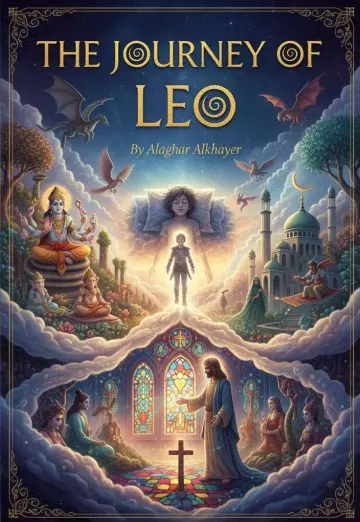
Inspirational fiction
A public story-led title using transformation and faith as narrative themes rather than unsupported outcome claims.
View public bookData note: Counts come from an aggregate Automateed production snapshot. Public-category counts use the category selected by the publisher and are descriptive, not a market forecast. Snapshot: July 16, 2026.
Quality gate
Run these checks against the actual manuscript, files and reader journey before publishing.
The reader is defined from the fiction authors audience
The project includes original fiction authors expertise or examples
Draft scene progression is reviewed for claims and rights
Revise voice and continuity produces a tested next step
Continue the exact workflow
Editorial note
This page is a practical workflow, not a promise of sales, ranking, publishing approval or a specific reader outcome. Platform rules and professional requirements should be checked at the point of use.
Questions specific to Fiction Authors
Plot-forward genres with clear promises — mystery, romance, thriller, fantasy. Voice-led literary work leans harder on your revision passes.
Motivations and continuity rules in the brief, staged reading during generation, and a dedicated continuity check in revision.
Novella — the full craft loop at a scope where your causality and voice passes stay honest, finished in weeks.
They care whether it delivers — pacing, voice, payoff. The revision effort, not the drafting method, is what they experience.
A free novella in your world converts browsers into list subscribers — the launch audience for the priced novels.
By category research: collect your shelf’s current top covers, match the register with the preset designer, test at thumbnail size.
100+ languages for generation — with a native-reader revision pass for idiom, which fiction demands more than any format.
The short-story creator handles compact forms — see the short-story writers page for compression-specific craft.
Use a “named facts list” in your continuity board and treat it like a contract: each scene references only facts that are already established. After each drafting batch, re-check that every named relationship and time reference matches the list. If a scene needs a new fact, you must decide whether it’s a new discovery (allowed) or a contradiction (fix the earlier scenes or reframe the discovery so it doesn’t break established timeline constraints).
Define one persistent consequence and one rotating focus. The consequence is what ties stories together (a changed power balance, a long-term debt, an ongoing investigation, an unresolved grudge). The rotating focus is what each story explores differently (a different character’s want/cost, or a different interpretation of the same event). Then ensure each story’s ending changes the shared consequence rather than resetting it to a neutral state.
Explore next
Keep manuscripts, covers, formats, audio, public pages and author branding connected in one publishing workspace.
Open guideUse a guided outline, preview, editor and publishing checklist so the first project does not become a pile of disconnected files.
Open guidePackage a repeatable method as an ebook or workbook, then connect it to a course, website and direct checkout.
Open guideUse your own topic
Review the outline, visual direction and available chapters before deciding whether to continue the full project.