Table of Contents
When I first started digging into branding for my own business, I kept running into the same problem: it’s easy to get “pretty” ideas, but it’s way harder to figure out what your brand actually means—and then turn that into something you can use. That’s the gap Minimum Viable Brand (MVB) is trying to fill.
MVB is built for founders and small to medium-sized business (SMB) owners who don’t have months (or thousands of dollars) to burn on a long, traditional branding process. The pitch is simple: use AI-powered tools to move faster from concept to a usable brand identity. In my experience, that speed matters because branding work usually stalls when you don’t know what to do next.
What I liked right away is that it doesn’t just throw slogans at you. It pushes you through core decisions—why you exist, who you’re talking to, and how you want to show up—so you’re not guessing. The platform also leans into quick implementation, which is great when you’re trying to launch, refresh, or reposition without hiring a full team.
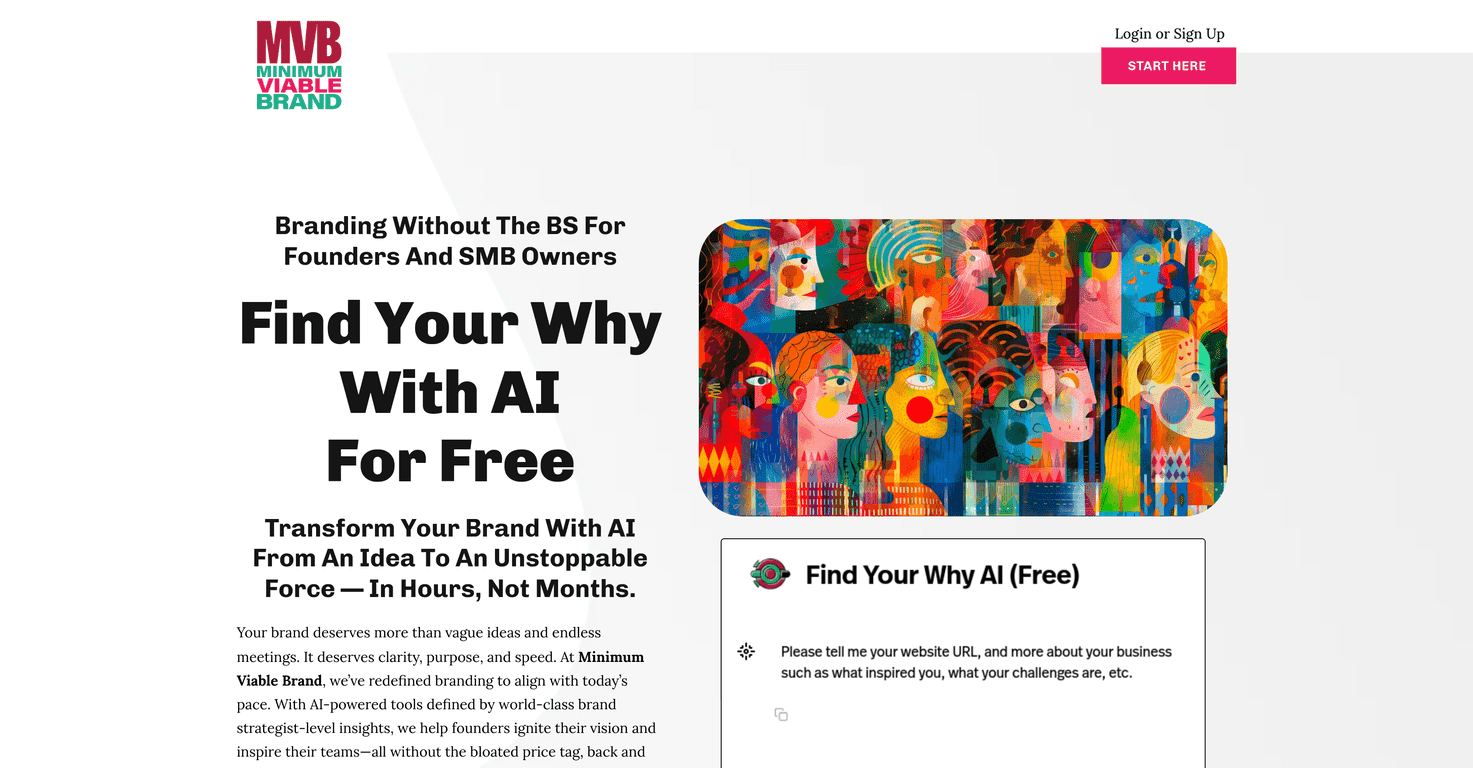
One piece that really stands out is the free ‘Find Your Why’ module. It’s meant to help you nail down your brand purpose—the “why should anyone care?” part. Honestly, if you can’t explain that clearly, everything else (name ideas, visuals, messaging) tends to feel random. MVB tries to fix that early.
After that, there are additional tools for audience definition, visual/brand asset creation, and brand positioning. The goal is to help you stand up a minimum viable brand you can actually use in real life—on a website, in pitches, in social posts, and so on.
Minimum Viable Brand (MVB) Review
Let’s talk about what “minimum viable brand” actually means, because it’s easy to misunderstand. MVB isn’t trying to replace a full brand strategy agency. It’s more like: get you to a confident starting point fast—clear positioning, a defined audience, and enough messaging/visual direction to launch without looking like you just guessed.
Here’s what you can expect when you use it:
- Purpose first with the free ‘Find Your Why’ module, so your messaging isn’t just vibes
- Audience definition so you’re not speaking to “everyone” (which almost always fails)
- Brand assets that help you create usable visuals and verbal elements instead of starting from scratch every time
- Positioning guidance to help you differentiate, not blend in
In my experience, the biggest win with tools like this is reducing decision fatigue. Instead of staring at a blank document, you’re answering structured questions and getting outputs you can build on. That said, you still need to bring real input—if your “why” is generic or your audience is unclear, the results will reflect that.
Key Features
- AI-Powered Branding Tools to help you move through branding steps faster than traditional methods
- Free ‘Find Your Why’ Module to pinpoint brand purpose and turn it into something you can actually communicate
- Comprehensive Branding Toolkit designed to support a complete “minimum viable” brand setup
- Audience Definition Tools for clarifying your target market, not just picking a random customer persona
- Visual and Verbal Brand Asset Development so you can generate essential branding materials (useful for websites, pitches, and social)
- Brand Positioning Insights to help you stand out and avoid sounding like every competitor
- Ongoing Support for Brand Communication to keep your messaging consistent as you publish
Pros and Cons
Pros
- It’s faster than the “traditional” route. If you’re launching soon, this kind of structured AI workflow can save you a ton of time.
- The free ‘Find Your Why’ module is a solid starting point. Even if you don’t upgrade, it’s enough to help you clarify the core message.
- It focuses on strategy, not just aesthetics. The outputs feel more connected to positioning and messaging than typical “logo generator” style tools.
Cons
- Your results depend on your input. If you rush the “why” or don’t think through your audience, the brand assets and positioning won’t magically fix that.
- Some people will want more human personalization. If you’re used to working with a brand strategist who asks follow-up questions, you might feel the AI outputs are a bit broad.
One more honest note: I wouldn’t treat this as a substitute for legal/trademark work, and you’ll still want to sanity-check anything it generates before publishing (especially taglines and positioning claims).
Pricing Plans
MVB includes a Free Plan that gives you access to the ‘Find Your Why’ module at no cost. That’s a nice way to test whether the workflow fits how you think.
Beyond the free module, there are premium modules available at a low price, aimed at helping you fully develop your minimum viable brand—things like audience definition, brand asset creation, and positioning.
If you’re on a budget, my suggestion is to start with the free module first and see how specific you can get your purpose. If you can’t get to clarity there, upgrading probably won’t suddenly fix everything.
Wrap up
Minimum Viable Brand (MVB) is a practical option if you want a structured way to build a brand without spending forever on it. I like that it starts with purpose and then guides you toward audience and positioning—because that’s where most new businesses struggle. The AI helps you move quickly, but the real value shows up when you take the prompts seriously and use the outputs consistently.
If you’re just starting out or you’re trying to tighten up an existing brand, MVB gives you enough direction to get moving. You won’t end up with a perfect, one-and-done brand forever—but you will end up with a usable foundation you can build on.
Promote Minimum Viable Brand (MVB)