Table of Contents
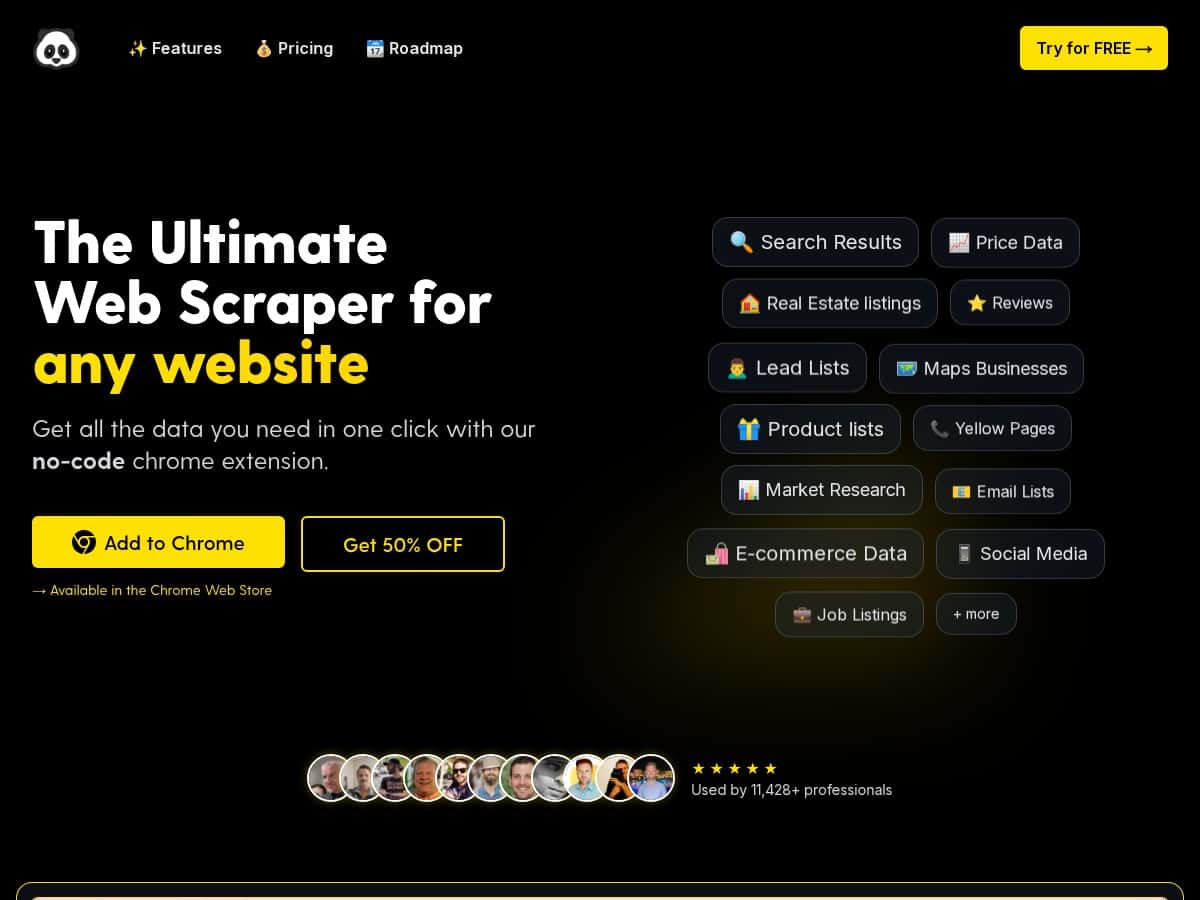
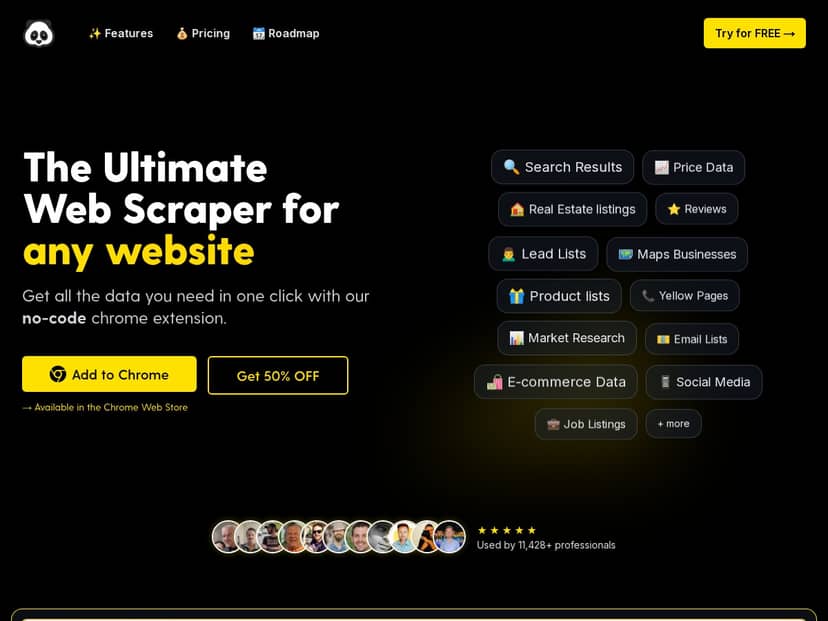
If you’ve ever tried to pull data from a website and thought, “There has to be an easier way than copying and pasting this stuff,” you’re going to relate to PandaExtract. I tested PandaExtract as a no-code web scraper (Chrome extension) to see what it’s really like in day-to-day use—not just what the marketing says.
In short: it feels built for people who want structured data fast. It doesn’t replace every advanced scraping workflow, but for lead lists, market research, and “I need this table/export today” tasks, it’s genuinely convenient. I’ll break down what I did, what worked, what didn’t, and where I think it fits best.
PandaExtract Review
Let me tell you how I actually tested PandaExtract, because that’s where most “reviews” get fuzzy.
Test setup (what I did)
- I installed the Chrome extension and opened a marketing-style page with repeated contact blocks (the kind of layout where you can usually spot the pattern).
- Instead of trying to scrape everything, I focused on specific fields I’d actually use: contact name, email, phone, and company.
- In the extension UI, I used the smart selection to highlight the list/table area. Then I clicked through to extract the individual data points (text + links).
- For pagination, I ran a multi-page scrape so it could carry the same extraction pattern across several pages.
What happened (what I noticed)
- Accuracy was good for the obvious repeated blocks. The exported rows lined up with the page structure pretty consistently.
- Emails were the easiest win. When the site used standard mailto: links, PandaExtract pulled them cleanly. If an address was only shown as plain text, results were still usually fine, but I did notice a couple blanks where the page markup was inconsistent.
- Pagination worked, but only when the “next page” behavior was predictable. On pages where the layout changed slightly between steps, I had to re-select the list container before re-running.
- When layouts changed, it didn’t “break silently”—it just meant I had to tweak the selection/pattern. That’s normal for visual scraping tools, but it’s worth calling out so you’re not surprised.
In terms of time, the biggest difference wasn’t “it’s faster by 10%.” It was more like: instead of spending 45–60 minutes cleaning copy/paste messes, I got to a structured export in a fraction of that time. If you’ve ever built a lead list manually, you already know how painful it is to keep formatting consistent.
Where PandaExtract really shines is when your goal is structured data (tables, repeated contact cards, directory listings) and you want it in a format you can use immediately.
Key Features that actually matter
- Smart selection for lists/tables: it tries to detect repeated data blocks so you’re not manually selecting every row.
- Point-and-click extraction: hover/click to grab text, images, emails, and links from the page.
- Multi-page & bulk URL scraping: useful when you’re collecting data across multiple pages rather than one URL.
- Email/lead extraction: great for lead-gen workflows where email addresses are the main target.
- Image downloading: handy if you’re collecting assets (logos, profile images) alongside contact info.
- Clean text + metadata: helps keep exports readable instead of dumping messy HTML snippets.
- Exports to CSV, Excel, JSON, and Google Sheets: this is the part I care about most—getting data into something you can filter/sort.
- Automation helpers like pattern detection and pagination handling (again: works best when the site structure stays consistent).
Pros and Cons (real-world take)
Pros
- No-code setup: you can get useful results without writing scripts.
- Flexible output formats: CSV/Excel/JSON/Google Sheets means you’re not stuck with one workflow.
- Good for practical use cases like lead lists, directory scraping, and competitive research.
- Handles multi-page jobs well when the site markup is consistent.
- Supports more than text (images, links, emails), which is helpful for real projects—not just demos.
Cons
- Chrome-only: if you live in Firefox/Safari, you’ll need to use Chrome or look elsewhere.
- Some learning is still required: you have to understand what to select (table container vs. individual items) and how pagination behaves.
- Layout changes can require tweaks: if the site redesigns or uses different templates, your extraction selection may need adjustment.
- Complex scraping can get limiting: if you’re doing heavy transformation, deep crawling, or very large-scale operations, you may eventually want more advanced tooling.
Pricing Plans (what I can confirm)
PandaExtract does offer a free trial, and new users can get 50% off their first subscription. That part I can confirm from what’s publicly referenced.
That said, exact pricing tiers and plan limits aren’t shown in the content I received, so I can’t responsibly list numbers like “$X/month includes Y scrapes” without guessing. If you want the most accurate pricing details, check the pricing page directly on the official PandaExtract site before you commit.
What you should look for on the pricing page (so you can compare plans quickly):
- Whether the trial is limited by scrape runs, URLs, or export size
- Any limits on multi-page scraping (for example, max pages per job)
- Whether exports to Google Sheets are included on all plans
- Support for formats like Excel/JSON on higher tiers
Wrap up
PandaExtract is the kind of tool I’d recommend when you need structured web data without building a scraping script. It’s especially useful for lead generation and market research where you’re pulling repeated fields like names, emails, and company details.
Just go in with realistic expectations: if a site’s layout changes or pagination is inconsistent, you may need to tweak your selection/pattern. For me, that trade-off was worth it because the “time to export” was dramatically shorter than manual collection.
If you’re trying to decide whether it’s worth your time, I’d say this: if your target pages follow a repeatable structure (directory listings, contact cards, product tables), PandaExtract will likely feel effortless. If your pages are wildly dynamic or constantly changing, you’ll spend more time adjusting than you want.