Table of Contents
I wanted to see if Vmake was actually useful for real creator work or if it was just another “AI magic” pitch. So I tested the Vmake AI Video Enhancer myself on a couple of low-quality clips—stuff I wouldn’t normally post as-is.
Vmake Review: What I Actually Saw After Testing It
Here’s what I did and what I noticed. I tested Vmake in my browser on April 2026 (desktop setup). The upload flow was painless: I didn’t have to wrestle with a bunch of settings, and there wasn’t any “sign up first” wall for the basic try.
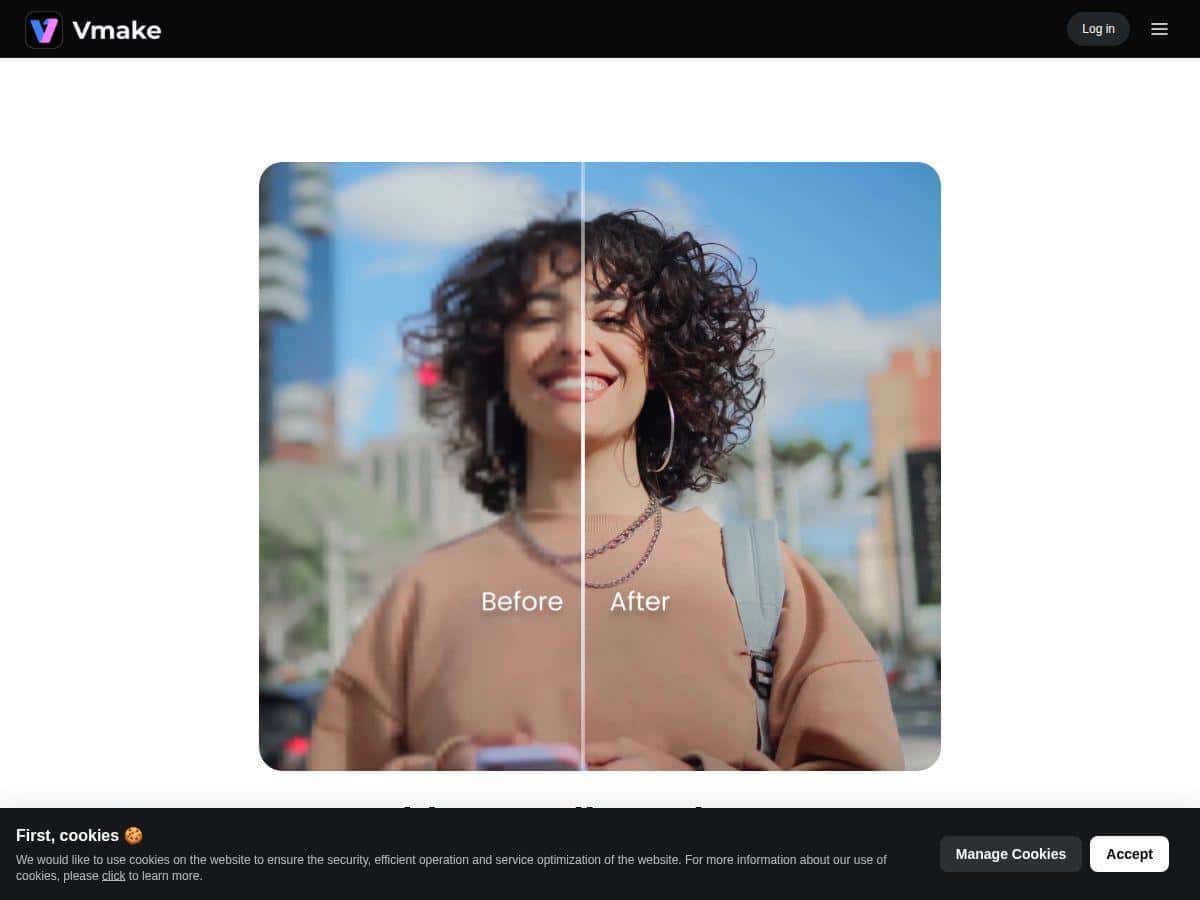
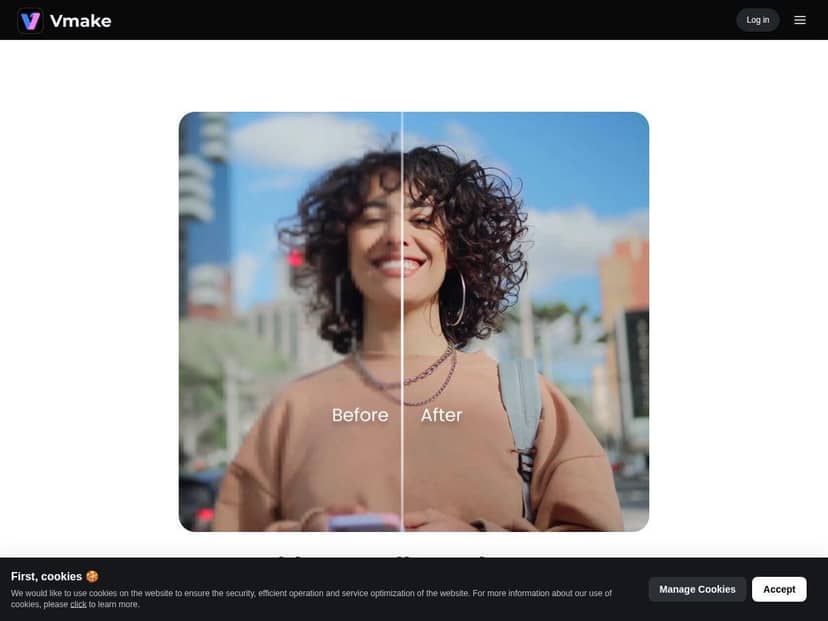
Test clip #1 (noise + softness): a screen-recorded video that was originally 720p, roughly 6–8 minutes, and fairly compressed (you could see the usual blocky noise in darker areas). After enhancement, the image looked cleaner and sharper—especially edges on text and UI elements. The noise reduction was noticeable, but it wasn’t perfect: in a couple of darker scenes, I still saw some texture smoothing that made the background feel a bit “plastic.”
Test clip #2 (upscaling + artifacts around text): a similar low-res clip but with more visible on-screen text. Upscaling did improve readability, but there were moments where letters got slightly “crispy” around the edges—more of a thin halo/ringing effect than a true re-render. If your video has lots of animated captions or fast-moving titles, I’d expect occasional artifacting.
Processing time: for my shorter clips, results came back quickly enough that it felt like a normal online tool (not a multi-hour render). Obviously, longer videos and higher output resolutions will take longer, but the workflow itself is pretty smooth.
So… does it live up to the hype? For what it’s designed to do—quickly making low-quality footage look more presentable—yes. You get a clear improvement without needing editing skills. But it’s not a magic “fix everything” button. If your source is heavily damaged (extreme blur, very low bitrate, or text-heavy motion), you’ll sometimes trade noise for artifacts.
Key Features (and How They Work in Practice)
- AI upscaling to 4K with sharper detail
- In my test, the upscaling improved perceived sharpness and edge clarity. It’s not just resizing either—you can see enhancement around boundaries (like UI borders and high-contrast edges). Still, if the original is too compressed, the “extra detail” can look a bit synthetic.
- Noise reduction + color balancing
- The biggest win for me was the cleaner look in darker areas. Colors also seemed more even, especially compared to the muddy, banded look you often get from low bitrate sources. One thing to watch: heavy noise reduction can slightly blur fine texture in backgrounds.
- Watermark / subtitle / text removal tools
- This is one of the more “power user” features. In practice, removing elements like watermarks or overlays can work well when the background is stable. When the removed element overlaps motion or high-contrast patterns, you can end up with weird smearing or inconsistent cleanup. Also, this kind of feature is typically tied to higher tiers—so the free tier may not give you full access.
- Multiple formats + straightforward editing workflow
- The workflow I used was essentially: upload → choose enhancement → process → download. It’s not trying to be an editor with a timeline. It’s more like “send it through the AI pipeline and get an upgraded file back.”
- Extra tools (background removal, video generation / AI features)
- Vmake also advertises additional AI-driven options beyond enhancement. I didn’t fully stress-test every creative tool in the same way I did upscaling/noise reduction, but the interface makes it clear they’re aiming at creators who want more than just “cleaner video.”
- Mobile apps + social-friendly features
- If you edit on the go, it’s a plus that they support mobile and creator-style workflows like hooks and talking-video concepts. For my use case, I stuck to the web tool, but the mobile angle matters if you’re posting frequently.
Pros and Cons (What I Liked vs. What Didn’t)
Pros
- Good results for low-res footage: noise reduction and edge sharpening were genuinely noticeable on my clips.
- Simple workflow: upload, wait, download. No complicated settings hunt.
- Free basic access: I could test without hitting a “pay immediately” barrier.
- Useful for creator pipelines: if you’ve got older or compressed footage, it can quickly make it presentable for social.
Cons
- Free tier limits: in my experience, the free option tops out at lower resolution (commonly up to 720p), so you won’t get true 4K output without paying.
- Artifacts around text: on text-heavy clips, I saw occasional halo/ringing effects around letters.
- Depends heavily on source quality: very compressed or heavily blurred videos may not “recover” cleanly—they can look smoother, but not always more natural.
- Online-only: you need an internet connection; there’s no offline desktop workflow in my testing.
Pricing Plans (What I’d Budget For)
Pricing can change, so I’m going to be careful here. What I found is that Vmake offers a free tier with limited enhancements and resolution, and then paid plans starting around $9.99/month for more advanced exports and features.
In general, the things that usually push you toward a paid tier are:
- Higher output resolution (like 4K exports)
- Watermark/subtitle/text removal (often not included in the free tier)
- More processing capacity (faster turnaround and/or more credits)
If you’re trying to decide, I’d suggest testing on one short clip first—then compare the export quality you get on free vs. paid. That’s the fastest way to know whether the improvement is worth the cost for your specific footage.
Wrap up
Vmake is a solid option if you want an easy AI video enhancer that makes low-quality clips look better fast. My favorite part was the practical improvement: noise cleaned up, edges looked sharper, and the workflow didn’t require any technical know-how.
Just don’t expect miracles on every type of footage. If your video is extremely compressed or packed with animated text, you may see artifacts—especially around letters and high-contrast overlays. For quick social upgrades and “save this old footage” moments, though? It’s absolutely worth trying.