LIFETIME DEAL — LIMITED TIME
Get Lifetime AccessLimited-time — price increases soon ⏳
AI Tools

Aurora Review – Unleash Market Insights with AI

Updated: April 20, 2026
6 min read
#Ai tool

Table of Contents

If you’ve ever tried to figure out market size for a startup, you already know the annoying part: everyone has a different number, and half the time you can’t tell where it came from. I’ve been there—building a pitch, trying to estimate demand, and realizing “TAM” and “SAM” sound simple… until you have to actually calculate them.

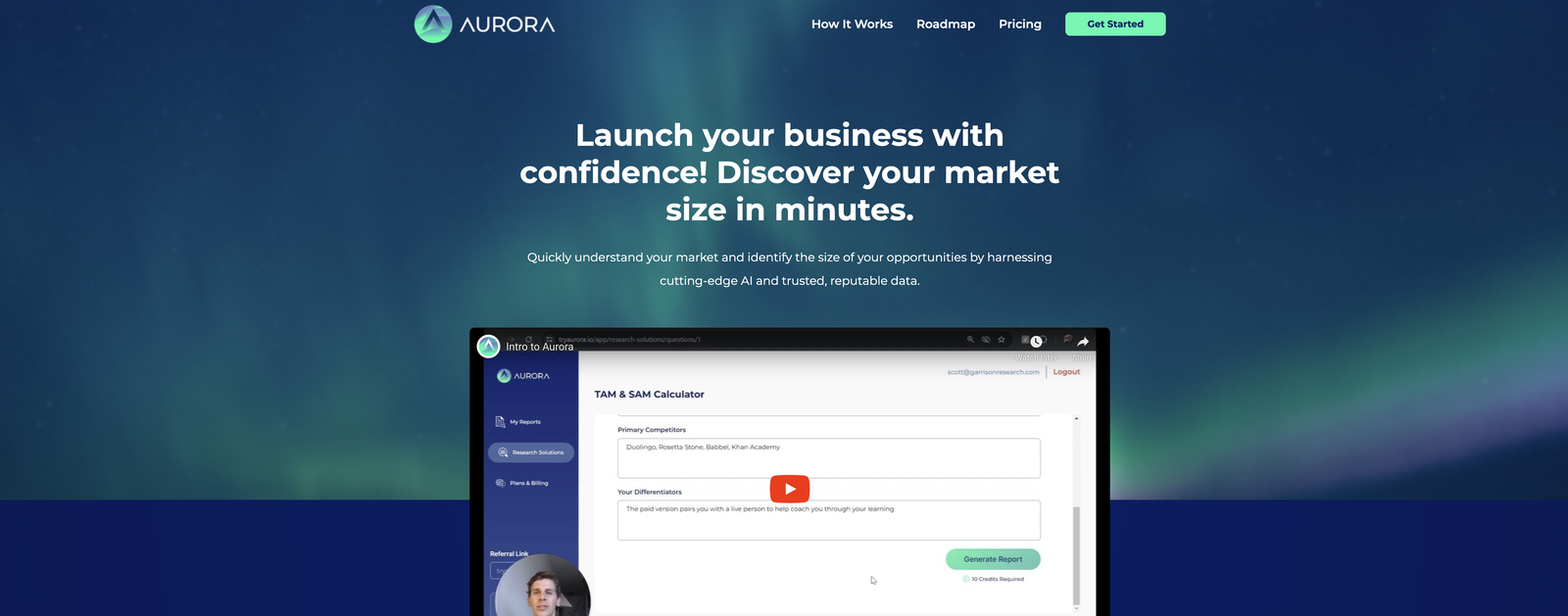
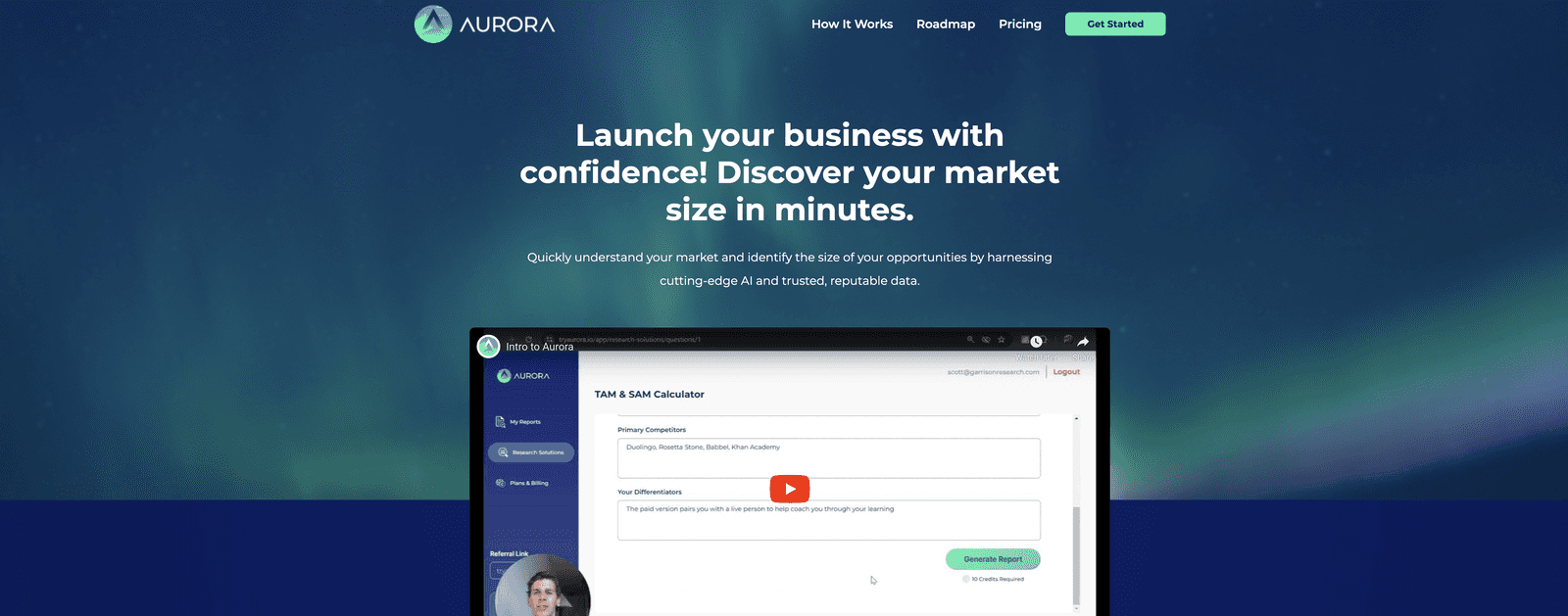
That’s where Aurora comes in. In my experience, it’s one of the easier tools to use when you want a fast, structured view of your market without spending days hunting down reports. You plug in a market idea, and Aurora generates insights around market dynamics—including Total Addressable Market (TAM) and Serviceable Addressable Market (SAM)—with source links so you can sanity-check the inputs.

Aurora

Aurora Review: What I Like (and Where It Can Feel Limited)

Let me start with the big picture. Aurora is built for people who need market research outputs fast—especially when you’re trying to estimate opportunity size and target segments. It focuses heavily on TAM and SAM, which is exactly what most founders and product teams ask for when they’re pitching, planning, or deciding what to build next.

What stood out to me right away is how practical the results feel. Instead of vague “market is growing” statements, you get structured market sizing and segmentation. And yes, the tool includes source links so you can verify the information. I really appreciate that because so many “AI research” tools spit out numbers with no trail—you’re just supposed to trust it. Here, you can actually check.

In terms of workflow, I found the interface pretty straightforward. You don’t need a market research background to get something usable. I was able to go from a market idea to a segmented view without feeling like I needed to learn five new frameworks first. Still, if you’ve never worked with TAM/SAM before, you might need a couple attempts to get your inputs right. That’s not a dealbreaker—it’s just reality.

One feature I liked a lot: custom market segmentation. Instead of being stuck with generic categories, you can tailor segments to match how you actually sell. For example, if you’re targeting mid-market companies in a specific region, you can shape the segment around that. That makes the output more relevant to your go-to-market, not just theoretically “correct.”

Also, Aurora’s approach to data synthesis is built around using credible sources and combining them into a coherent output. I don’t mean “it looks good.” I mean the results read like they’re grounded in real references. That matters when you’re trying to avoid embarrassment in front of investors or internal stakeholders.

One more thing: there are upcoming plans for CRM integration. I’m not going to pretend it’s live in every account right now, but if you’re already tracking leads and customer data in a CRM, the idea of turning market insights into something you can act on is pretty compelling. It’s the difference between “insights” and “follow-through.”

Key Features That Actually Matter

  • TAM and SAM market insights so you can estimate opportunity size quickly
  • AI-driven analysis designed to synthesize information into a usable market view
  • Intuitive interface that doesn’t require you to be a market research specialist
  • Data validation with source links so you can verify claims instead of blindly trusting numbers
  • Custom market segmentation to focus on the segments that match your actual business
  • Planned CRM integration aimed at making insights more actionable

Pros and Cons (My Honest Take)

Pros

  • Fast results for market sizing and segmentation—useful when you’re under time pressure
  • Source links make it easier to back up your numbers in a deck or discussion
  • Flexible plans depending on how many times you need to run/revise your analysis
  • Lifetime access option if you know you’ll use it regularly

Cons

  • Credit system can be annoying if you like experimenting (you’ll feel it if you run lots of revisions)
  • Learning curve for brand-new users—mostly about choosing the right inputs and refining segments
  • Limited free features if you’re just testing the waters

Pricing Plans (What You Get for Your Credits)

Aurora has a credit-based pricing structure. Here’s what’s listed:

10 Credits: $24.99 (originally $49.99) – One run of the market size calculator.
25 Credits: $59.99 (originally $119.99) – One run of the market size calculator with up to three rounds of revisions.
50 Credits: $119.99 (originally $229.99) – Ideal for multiple market research ideas.
100 Credits: $199.99 (originally $399.99) – Great for broader market understanding.
Lifetime Access: $3,999 – Includes 100 credits per month and a monthly expert call (limited to first 50 signups).

If you’re deciding which plan to start with, here’s the practical approach I’d use: pick the smallest bundle that still gives you room for revisions. If you’re likely to tweak your target segment a few times, going too small can get expensive fast because credits don’t stretch.

Wrap up

Overall, I think Aurora is a solid option if you want to simplify market research and get to TAM/SAM outputs without drowning in spreadsheets. The biggest wins for me are the structured results and the fact that it includes source links—that’s the difference between “sounds right” and “I can defend this.”

That said, the credit system is real, and there’s a bit of a learning curve if you’re new to market sizing. If you’re expecting a fully free playground, you’ll probably be disappointed. But if you’re using it to support decisions—pitching, planning, prioritizing segments—Aurora can absolutely earn its keep.

Promote Automateed

DARK

Automateed

Embed code copied to clipboard!

Stefan

Stefan

Stefan is the founder of Automateed. A content creator at heart, swimming through SAAS waters, and trying to make new AI apps available to fellow entrepreneurs.

Related Posts

author tax featured image

Author Tax: Top Strategies & Trends for 2026 Income Tax

Discover the latest author tax research, best practices, and tools to optimize your income tax strategies in 2026. Stay compliant and maximize deductions today!

Stefan
indie writers featured image

Indie Writers in 2026: Essential Strategies for Success

Discover how indie writers are thriving in 2026 with direct sales, AI tools, and community strategies. Learn expert tips to boost your indie author journey today!

Stefan
urban publishing companies featured image

Urban Publishing Companies: Top Trends & Self-Publishing Tips for 2026

Discover the latest in urban publishing companies, including top publishers, self-publishing platforms, and industry trends shaping urban fiction in 2026. Learn how to succeed today!

Stefan

Create Your AI Book in 10 Minutes