01
The framework book
Your method with stages, evidence and limits — teachable, testable, honest about who it does not fit.
Creator business plan
Turn a bounded method into explanation, practice and responsible expectations instead of generic encouragement.
Reviewed by Stefan Mitrović, Founder of Automateed · Updated July 16, 2026
60-second summary
Self-help earns trust by teaching a bounded method responsibly: a named framework, honest evidence, exercises that produce insight, and claims that survive a skeptical read. The genre’s failure mode — motivational filler with guaranteed-outcome energy — is exactly what unedited generation produces, so the brief defines limits and the revision pass strips overpromise. The market rewards the responsible version: it earns reviews instead of refunds.
Concrete, not generic
01
Your method with stages, evidence and limits — teachable, testable, honest about who it does not fit.
02
Teaching and implementation as a pair — the format the genre’s buyers repeatedly choose.
03
A bounded commitment with daily structure — completion rates and reviews both love the constraint.
Step by step
Who it serves, what it claims, where it stops — limits written first survive generation.
The draft frames; your studies, cases and honest caveats — added in editing — separate method from motivation.
A dedicated pass for guarantee-flavored sentences, universalized experience and missing “this is not therapy” lines.
Book, companion workbook and $0 starter — the genre’s proven ladder, on your storefront at 85%.
Start with a free preview — the outline and early content tell you whether the direction works before anything is committed.
Create a free previewThe commercial path
Self-help buyers ascend: $0 starter → $15–$25 book → $19–$39 workbook → course or group program — the same method at deepening commitment, all direct at 85% with the subscriber list connecting rungs. The audiobook edition matters disproportionately here (commute-and-walk listening is the genre’s natural habitat), and the flat 10-credit narration makes it a default rather than a decision.
Decisions that change the result
Most self-help disappointment comes from a mismatch: the reader expects a method that they can run, but receives encouragement that feels good for a day and then collapses. To prevent that, write your book as instructions for a specific change process, not a celebration of potential.
A bounded method has three visible parts. First, the entry point: what situation the practice is for (for example, rumination after setbacks, procrastination driven by avoidance, conflict spirals in close relationships). Second, the boundary: what the method is not designed to treat (for example, trauma processing, diagnosis, or crisis situations). Third, the operating steps: what the reader does, in what order, with what kind of reflection or measurement at the end of each session.
To write responsibly for self-help authors, define the reader using observable patterns that match your experience or evidence. “People who want to stop repeating X cycle” is more useful than “people who feel anxious.” If your method targets a cognitive or behavioral loop, name that loop and describe what it looks like from the inside.
A practical way to do this: list the top 3-5 “tells” you saw repeatedly in your coaching notes, writing community, workshops, or personal practice. Then describe the typical attempt-and-fail sequence (what they tried first, why it didn’t work, and what it costs them). This keeps your guidance from sounding like generic personal growth.
Your limits should be visible on the page, not buried in a disclaimer. The goal isn’t to scare readers; it’s to ensure your method is used as education and practice, not as treatment. When the topic approaches mental-health territory—especially harm risk, self-harm, abuse dynamics that require specialist support, or persistent impairment—your book should redirect to qualified help and non-self-help resources.
Use signposting language that matches the reader’s moment. Instead of saying “seek help” in abstract terms, connect it to thresholds: for example, “If you’re in danger or feel you can’t stay safe tonight, contact local emergency services or a crisis line.” For non-crisis issues, frame it as, “This book is not a substitute for professional assessment; if these patterns persist or escalate, consider speaking with a licensed clinician.”
Worked example
Imagine you have a self-help framework you’ve taught before: “Stop-Start Attention,” designed for people who repeatedly get stuck between overthinking and avoidance. You want the book to teach a responsible method with exercises and realistic expectations, without promising a guaranteed personality overhaul.
Week 1: STOP—Identify the attention loop. Exercise: the reader tracks a single repeatable trigger (one per day) and writes a 3-sentence summary: Trigger → Inner story → Avoidance behavior. Week 2: START—Choose one alternative micro-action. Exercise: from the day’s entry, they write one 5-minute action that is difficult but safe (e.g., draft one paragraph, send one message, do one household task). They define what “done” means and when it will happen. Week 3: STAY—Practice a low-drama review. Exercise: they complete a daily “Loop Log” that records the moment attention drifts, what they did for 30 seconds, and how they returned. Week 4: TRANSFER—Build a cue for future use. Exercise: they create a one-page “If-Then Map” with three future situations and their pre-decided response.
For each week, include one short evidence block: a summary of what your method is based on (your prior teaching experience, documented patterns from your notes, or a small body of published work you can cite). The key is proportionality: don’t use evidence to promise outcomes; use it to justify why the steps exist. Add an honest caveat after the evidence: what happens if the reader skips parts, if they only do one exercise, or if the trigger is outside your method’s boundary.
Before drafting, list the statements your reader would challenge. Examples for your method: “This helps you notice the loop sooner,” “This reduces avoidance behavior in the next attempt,” “This improves follow-through on small actions.” Then rewrite universal-sounding lines into scorable versions. Replace “you will stop overthinking” with “you will record the loop and practice a return routine, so your next session becomes easier to start.” Make sure every claim connects to something the reader does in the exercises.
Include a section called “What a good week feels like.” Then write three possibilities: a first week where tracking is messy but honest, a week where avoidance still happens but the reader returns faster, and a week where the method doesn’t fit and the reader recognizes that early. Also include a “Restart rule.” For example: if they miss two days, they don’t restart the whole process; they pick up at the next micro-action step and re-create the loop log for that day only.
A responsible self-help book reads like a method the reader can run and verify: steps produce observable behaviors, evidence supports the choice of steps, and boundaries explain where the method stops. The book feels less like inspiration and more like a tool.
Avoidable mistakes
If your draft uses blanket outcomes (“guaranteed calm,” “permanent change,” “one method fixes everything”), you’re training readers to mistrust you. Rewrite promises so they point to what the practice reliably changes: attention awareness, initiation speed, or follow-through on defined micro-actions.
A disclaimer is not the same as a boundary. If your method touches topics that can be clinical, add signposting at the point of need and state what readers should do instead of applying your practice.
If you say “this will reduce avoidance,” the exercises must include avoidance-relevant recording and a behavior change attempt. Otherwise it’s “reflection theater.” Ensure each exercise produces either a data point, a decision, or a completed action.
Stories are useful when they show the method in motion: the moment the loop appears, the choice the reader made, the consequence, and what changed after repetition. If the story only ends with a triumphant outcome, it becomes inspirational filler instead of a teachable model.
Where to go next
Evidence from Automateed
The category count describes publisher activity, not proof of effectiveness. Responsible authors still need boundaries, sources and proportionate promises.
Published books whose authors selected Self-Help as the public category.
Average section count among generated ebook projects with chapter data.
Real public examples
These are live public author pages, not sample titles invented for this guide. They show presentation and positioning; inclusion does not certify every claim inside a book.
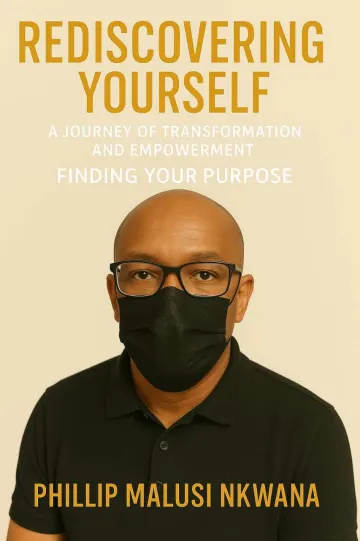
Personal-development ebook
This public example frames personal development as a guided reader journey rather than a stream of generic encouragement.
View public bookData note: Counts come from an aggregate Automateed production snapshot. Public-category counts use the category selected by the publisher and are descriptive, not a market forecast. Snapshot: July 16, 2026.
Quality gate
Run these checks against the actual manuscript, files and reader journey before publishing.
The reader is defined from the self-help authors audience
The project includes original self-help authors expertise or examples
Add exercises and evidence is reviewed for claims and rights
Review claims produces a tested next step
Continue the exact workflow
Editorial note
This page is a practical workflow, not a promise of sales, ranking, publishing approval or a specific reader outcome. Platform rules and professional requirements should be checked at the point of use.
Questions specific to Self-Help Authors
A named, bounded method with your evidence — the crowded shelf is crowded with unbounded motivation, not with honest frameworks.
Ones you can support, scoped to the practice — “this exercise builds the habit” survives; “this will change your life” invites the one-star audit.
Education and practice on one side; diagnosis, treatment and crisis response on the other — with signposting to qualified help wherever topics approach it.
Together if possible — the pair converts better than either alone, and the workbook is where the method proves usable.
In self-help, most — the genre’s consumption is audio-heavy, and the narration flow prices it at a flat 10 credits.
As evidence, honestly told — real, consented, proportionate. Composite inspiration reads as filler to exactly the buyers worth keeping.
$15–$25 direct for the book, more for the system bundle — the genre supports value pricing when the method is real.
One exercise from the method, complete and useful — proof of usefulness that earns the email and presells the system.
For each exercise, define three completion signals: (1) what they record or write, (2) how long it should take or how many items to produce, and (3) what they should have at the end (a completed log entry, a chosen micro-action, or an “If-Then Map”). If completion isn’t clear, readers will abandon the practice and then blame themselves instead of your method.
Use a clear split inside the book: “What I learned from teaching” versus “What published work suggests.” When you’re writing from experience, you can still be rigorous by describing the pattern you saw and the conditions under which it applied. When you reference published support, keep the citation tight to the specific idea you’re justifying, and avoid stretching it to cover the whole outcome.
Explore next
Keep manuscripts, covers, formats, audio, public pages and author branding connected in one publishing workspace.
Open guideUse a guided outline, preview, editor and publishing checklist so the first project does not become a pile of disconnected files.
Open guidePackage a repeatable method as an ebook or workbook, then connect it to a course, website and direct checkout.
Open guideUse your own topic
Review the outline, visual direction and available chapters before deciding whether to continue the full project.