01
Habit-change guide
Teach a bounded behavior process with tracking and realistic relapse planning.
Book format playbook
Turn a responsible method into clear explanation, examples and exercises without replacing evidence, professional judgment or the reader’s agency.
Reviewed by Stefan Mitrović, Founder of Automateed · Updated July 16, 2026
Direct answer first
Write a self-help book with AI by naming the exact reader, problem and method before generation. Outline the book in Automateed so each chapter moves from diagnosis to practice, generate the chapter drafts, then add your own cases, exercises and limits in the editor — AI cannot supply evidence or professional judgment. Pair the book with a companion workbook, have a qualified professional review consequential claims, and export PDF, EPUB or DOCX.
Built for
Coaches
Core output
Reader ebook
Quality focus
Claims match the evidence
The real job
Encouragement can make a book readable, but it does not establish that advice is safe or effective. Readers need to know who the method is for, what it can reasonably support and where professional help may be necessary.
AI can help structure explanations and generate exercise variants. The author must provide the real framework, evidence, examples and boundaries that distinguish the book from generic motivational prose.
See the format, not a placeholder
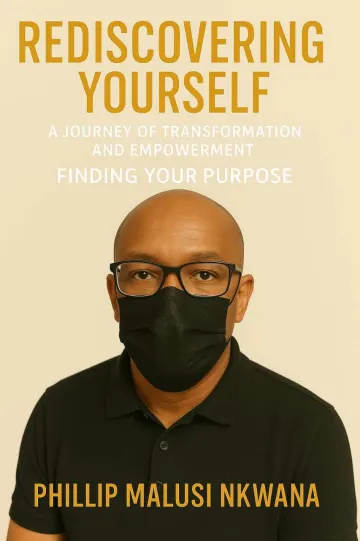
A strong self-help promise needs a specific method and responsible boundaries behind the motivational language.
The visual is only the promise. The structure, examples and reader outcome described in this guide are what make the finished book useful after someone opens it.
Choose the right angle
The format should follow how the reader will use the book. These are distinct editorial structures, not title variations applied to the same outline.
01
Teach a bounded behavior process with tracking and realistic relapse planning.
02
Connect beliefs to observable choices instead of promising thought alone changes outcomes.
03
Teach general patterns without diagnosing partners or replacing professional support.
04
Combine reflection, market reality and actionable decision tools.
05
Use graded practice and evidence collection rather than affirmations alone.
06
Draw proportionate lessons from lived experience without universalizing one outcome.
Inside the finished project
The reader should understand the method, its evidence, its limits and how to adapt it safely.
Step-by-step workflow
These stages describe the real product flow — creators, outline editor, chapter editing, cover tools and the Export Center — plus the author judgment each stage still requires.
Before opening the creator, write down who the book serves, what your framework can honestly deliver and where professional help begins. These boundaries belong in the brief so generation inherits them.
Brief Automateed’s ebook flow with your framework named and staged, then work the outline editor until chapters run diagnosis, method, practice, adaptation — deleting any chapter that only re-motivates.
Supply your terminology, stage order and real examples so drafts sound like your method rather than generic advice, and instruct the model to flag claims that need evidence instead of asserting them.
Convert key stages into actions: exercises inside the book, or a companion volume from the workbook creator, which mixes twelve interactive page types such as reflections, goal setting and progress reviews.
Have a qualified professional check psychological, health or outcome claims and crisis language. Then apply a PDF style, run the readability check, and export PDF, EPUB or DOCX — or add a narrated audiobook edition with a chosen voice.
Prompt templates
Replace the bracketed fields with real constraints, examples and source material. A longer prompt is not automatically better; specific production rules are.
Use when: You have a real personal-development framework
Outline a self-help book for [reader] addressing [specific problem] through [method]. State scope and exclusions, explain the mechanism, add cases and exercises, include failure and adaptation guidance, and flag every health or outcome claim requiring qualified evidence review.
Use when: You have a self-help draft
Identify guaranteed outcomes, unsupported psychological or health claims, diagnostic language, advice presented without context, exercises that may be unsafe, missing professional boundaries and stories used as universal proof. Return issues for qualified review before rewriting.
Use the guided Automateed flow to turn the brief into an outline and inspect a free preview before continuing.
Create a free previewself-help book ideas
Strong self-help ideas are narrow enough to be testable: recovering focus after a layoff, rebuilding routines as a new parent, confidence for non-native speakers in meetings. Each names a reader, a situation and an observable change — which is exactly what the brief and outline stages need to produce a distinct book.
Weak ideas are unfalsifiable: unlock your potential, live your best life. They generate fluently, because there is nothing specific to get wrong, and that is the warning. If a chapter could appear unchanged in a hundred other books, the outline editor is where it should die.
self-help workbook
Advice becomes change through repetitions, and repetitions need somewhere to live. A companion workbook built in Automateed’s workbook creator turns each stage of your method into interactive pages — reflections, goal setting, checklists, progress reviews — with genuine writing space at the default 7×10 print size.
Keep the pair synchronized: match workbook sections to book chapters by name, reference exercises from the prose, and version both together. A book-plus-workbook bundle also creates an honest pricing ladder without inventing new content.
write a book about your life lessons
Decide which book you are writing. A memoir asks readers to live your story; a self-help book asks them to use it. The self-help version extracts the repeatable method from your experience, states where your path generalizes and where it does not, and spends most of its pages on the reader’s situation.
The test is proportion: if a chapter is 80% your narrative and 20% application, it is memoir wearing a framework. Flip the ratio — your story earns one strong scene per chapter, and the lesson gets the argument, the exercise and the limits.
Publishing formats
PDF or EPUB can support explanation, exercises and direct distribution.
Separate longer exercises into a format with enough space and clear completion instructions.
Keep general education in the book and individualized decisions inside the qualified service.
Who this serves
Teach a defined framework with clear limits.
Create general education with professional review.
Share honest lessons without presenting one journey as proof.
Translate evidence-aware personal development into accessible action.
Self-Help Book FAQ
Still weighing it up? Start a free preview and judge the outline on your own topic.
Create a free previewRelated tools and guides
Evidence from Automateed
A large public category is not proof that every claim is sound. Clear scope, evidence and boundaries are what separate responsible guidance from generated motivation.
Published books whose authors selected Self-Help as the public category.
Average section count across ebook projects with generated chapter data.
Real public examples
These are live public author pages, not sample titles invented for this guide. They show presentation and positioning; inclusion does not certify every claim inside a book.
Personal-development ebook
This public example frames personal development as a guided reader journey rather than a stream of generic encouragement.
View public bookData note: Counts come from an aggregate Automateed production snapshot. Public-category counts use the category selected by the publisher and are descriptive, not a market forecast. Snapshot: July 16, 2026.
Quality gate
Run these checks against the actual manuscript, files and reader journey before publishing.
Claims match the evidence
Advice avoids guaranteed outcomes
Exercises are safe and specific
Professional disclaimers are appropriate
Continue the exact workflow
Editorial note
This page is a practical workflow, not a promise of sales, ranking, publishing approval or a specific reader outcome. Platform rules and professional requirements should be checked at the point of use.
Our broader publishing report is based on an anonymized analysis of more than 77,000 Automateed book projects across 216 countries.
Read the independent press releaseExplore next
Turn one focused idea into an outlined, illustrated and professionally formatted ebook you can edit, export, publish or sell.
Open guideShape expertise, research or lived experience into a coherent argument with evidence, examples and a serious editorial process.
Open guideCreate a focused cookbook with consistent recipe fields, original food visuals, practical organization and files built for real kitchen use.
Open guideUse your own topic
Review the outline, visual direction and available chapters before deciding whether to continue the full project.