☀️ HOT SUMMER SALE — Beat the Heat with Lifetime Access
Get Summer Deal

Publishing field guide

Ebook Marketing: Build demand before asking for the sale

Connect positioning, sample content, an author site, email capture and a measurable launch path around one clear reader promise.

Reviewed by Stefan Mitrović, Founder of Automateed · Updated July 16, 2026

60-second summary

Quick answer

Ebook marketing is demand-building for a digital product: position the ebook around one urgent reader problem, give away a small piece that proves the value, capture emails before asking for money, and route everything to one page that can actually take payment. The sequence matters — samples build lists, lists absorb launches, launches feed reviews — and each stage is measurable on its own.

Real product steps

How to market an ebook with Automateed’s built-in assets

These steps use only what ships with the platform — public pages, $0 books, author sites, subscriber broadcasts — so the loop works before any ad budget exists.

Ebook marketing funnel

Traffic becomes revenue one measurable handoff at a time

01

Visits

Search, social posts and interviews point to one useful free asset.

02

Subscribers

The free book or preview earns permission to continue the conversation.

03

Buyers

Email and the author site connect proof to the paid ebook offer.

Track each stage separately. More traffic cannot repair a weak subscriber offer, and more emails cannot repair an unclear book page.
  1. 01

    Position the ebook for one search intent

    Rewrite the listing title and description around the single problem a buyer types into a search box. The AI draft gets you started; your edit makes it specific enough to exclude the wrong readers.

  2. 02

    Split off a lead asset

    Take the ebook’s most self-contained quick win and publish it as a $0 book, or rely on the free preview. This is what cold traffic meets first — value before invoice.

  3. 03

    Wire the path from free to paid

    On your Publisher Site, place the lead asset and the paid ebook in sequence, enable subscriber capture, and add the funnel offer so a $0 download can become a same-session purchase.

  4. 04

    Broadcast on a rhythm

    Use the Subscribers tab to send a steady cadence — one useful email, then one that sells. Every send points at the same two pages, so the numbers stay comparable.

  5. 05

    Recycle proof into the listing

    As reviews and reader results arrive, fold the strongest lines back into the description and your emails. Proof is the only marketing asset that appreciates.

  6. 06

    Watch the three-stage funnel

    Visits (analytics), subscribers (list growth), sales (seller dashboard). Improve whichever ratio is worst this week — that is the entire optimization method.

Every step above describes the current Automateed interface — open a free preview and follow along with your own project.

Create a free preview

The full guide

Lead magnets and free samples: the honest bribe

The free asset works when it solves a real slice of the paid problem — not a teaser that withholds, but a tool that delivers and leaves the reader wanting the system. A checklist from chapter three, the diagnostic quiz, the first framework in full: each proves the author can help by actually helping. Publishing it as a standalone $0 book with its own page gives every channel a friction-free destination.

The test of a good lead asset is embarrassing simplicity: would a stranger thank you for it even if they never bought anything?

Ebook launch sequencing that respects the list

A launch is an email sequence with a calendar: an announcement that frames the problem, a value email that teaches something real from the book, and a close that names the deadline or bonus honestly. Three to five sends over a week outperforms one blast, because each email catches a different day’s attention. Everything after the launch window reverts to the useful cadence — subscribers who felt farmed unsubscribe; subscribers who felt taught stay for book two.

Pricing promotions and bundles without eroding trust

Discounts move ebooks, but repetition trains readers to wait. Healthier levers: time-boxed launch pricing announced as such, bundles (book plus workbook, book plus audio) that raise value instead of cutting price, and a permanent free tier that does the discounting job structurally. Direct-sales margins — 85% on Automateed — leave room for genuine promotions that would be impossible at marketplace splits.

Content marketing that sells ebooks quietly

Every chapter contains ten pieces of content: the framework as a thread, the example as a post, the contrarian claim as a short video script. Publishing these consistently on one platform does the discovery work while the ebook does the monetizing. The discipline is the link path — every piece ends at the same owned page, because content that ends nowhere markets nothing.

Decisions that change the result

One-reader promise: how to write it so pages and emails agree

An ebook’s marketing usually breaks at the first translation step: the author thinks they’re selling “an ebook about X,” but the reader is searching for “what do I do when Y happens?” Your promise has to be written in the reader’s situation language, not your topic language. This is why ebook marketing works best when every asset says the same thing in different formats: the listing says it, the lead sample proves it, the author site reinforces it, and the email close repeats it. If any one of those pieces drifts, you get traffic that doesn’t convert because they feel like they’ve arrived at the wrong help.

Decide the promise by forcing three checks. First, write a single sentence that begins with a reader condition (not a subject). Example: “If you’re trying to decide between options and you keep getting stuck, this ebook gives you one clear method to choose in under an hour.” Second, list the three concrete outcomes the reader can expect after finishing. Outcomes must be observable actions, not vague benefits (“clarity,” “confidence,” “success”). Third, write what the ebook will not do. A short “not included” line prevents disappointment and reduces refund requests because you set expectations early. This also helps your sample selection: the lead asset should deliver one of the listed outcomes completely, not partially.
Build your proof around the smallest credible unit of evidence

Readers buy ebooks when the author demonstrates competence, not when the author claims authority. Proof doesn’t have to be a pile of accolades; it has to be specific evidence that the method works for the exact situation you promised. Start with a “proof inventory” and label each item as one of three types: process proof (you show how the method works), outcome proof (you show what changes after applying it), and source proof (you cite or summarize credible material the method is built on). For many new authors, process proof is the fastest and safest to publish because it relies on your own explanation and examples, not on other people’s experiences.

Once you have proof candidates, translate them into ebook marketing assets. The listing can include one process line (“Here’s the 3-step selection loop you’ll use”), the lead sample can include a full version of the most repeatable step, and the email can include a short before/after story—only if you clearly separate what’s your experience from what’s an anonymized illustration. Keep an “attribution note” doc as you go: where you got each example, whether you have permission to use images or quotes, and whether any names are changed. You’re building a system that stays consistent later when you recycle updates into broadcasts.

Free asset design: deliver a complete win without giving away the book

A lead asset is not a teaser. It’s the reader’s first proof encounter, and it should end with a feeling of progress. Your goal is to create completion while keeping the deeper structure inside the paid ebook. A practical way to do this is to identify one “module” in your ebook that can stand alone: a checklist, a diagnostic, a template, a step-by-step worksheet, or a framework walkthrough that answers one urgent sub-question the reader would ask immediately. Then publish that module as a $0 book or a structured preview that has an end point.

When you draft the free asset, write it like a standalone artifact with its own intro and its own “what you’ll do next” section. That next step is the bridge to the paid ebook, so the reader understands why they’re being asked to continue. For example, if your ebook’s paid promise is about choosing an approach, your free module might be the diagnostic that produces a recommended category. The paid book can then cover how to execute the category-specific steps, common failure modes, and how to review results after a week. This reduces the “you gave me everything already” reaction because the free asset solves a narrower job completely, not the entire contract. At the end of the free asset, include one short section that previews the rest of the method without presenting it as full content; readers should feel guided, not cheated.

Worked example

Worked example: a free-to-paid path for an ebook promise about decision-making

Imagine you’re preparing an ebook called “The Quick Decision Method.” You want to market it to readers who feel stuck when they must choose between two or more options and they keep revisiting the same issue. You have enough time to create one free module and one paid ebook, plus an email broadcast series.

  1. 01

    Write the one-sentence promise and validate it against the reader’s situation

    Promise draft: “If you get stuck revisiting decisions, this ebook gives you a repeatable way to pick one option in under an hour and set a review point so you don’t loop forever.” Outcomes list: (1) complete a decision worksheet, (2) identify the deciding constraint, (3) schedule a review to confirm the choice is working, (4) avoid common analysis traps. Not included: “This ebook does not try to predict future outcomes with certainty; it helps you choose and then verify.”

  2. 02

    Create a lead asset that delivers one complete outcome

    Pick Module 1: the decision worksheet. Publish it as a $0 book page that includes a usable worksheet template plus an example walkthrough using one fictional scenario. End with a clear bridge: “Once you’ve identified your deciding constraint, the next chapters show how to turn that constraint into an action plan and a review schedule.”

  3. 03

    Sequence the free asset and the paid ebook in your author site

    On your author site, place the $0 decision worksheet first. Make the “start here” button go to the worksheet capture area (subscribe) and then to the worksheet. After the worksheet, include a second button that goes to the paid ebook page that explains what else the reader gets: action plan, failure modes, review checklist. Ensure the copy on both buttons matches your promise sentence and does not shift into generic claims.

  4. 04

    Run a short launch broadcast that repeats the same promise

    Send three emails across a week. Email 1: frames the looping problem and points to the worksheet as proof of how the method works. Email 2: teaches one part of the paid method by referencing what’s in the worksheet and what comes next (without dumping more templates). Email 3: names the limited-time offer window and includes a specific “what you’ll do after purchase” line (finish the worksheet refinement, create the action plan, set the review). Every email links to the same two places: the worksheet and the paid ebook page, not to unrelated content.

When your free module solves a complete, narrow job and your promise stays identical across listing, lead asset, and emails, you reduce misfit traffic. The reader experiences competence first, then sees the paid ebook as the natural next step rather than a separate product.

Avoidable mistakes

What usually breaks this workflow

Using the ebook topic as the selling point instead of the reader’s situation

If your pages say “about X,” but your reader searched for “what do I do when Y,” you’ll attract the wrong clicks and your email list will grow with people who won’t buy when the offer appears. Fix it by rewriting the promise around the condition and aligning the free asset’s job to one outcome promised in that sentence.

Giving away the whole method in the free asset

If the free sample includes every core step and every worksheet, readers will feel you already delivered the book. The fix is to publish one module as a complete win (deliver completion) while leaving the rest of the system inside the paid ebook (provide progression).

Changing the offer message between emails and the book page

A common failure is that the email headline is about one problem, then the paid page emphasizes a different benefit or a different audience. Keep your promise and your “not included” boundaries consistent so the reader’s expectations do not reset after they click.

Trying to optimize everything at once

ebook marketing improves with weekly ratio checks: visits to subscribers, subscribers to buyers, and visits by channel. If you try to rewrite multiple assets every day, you won’t know what caused improvements. Choose one bottleneck stage and make one change at a time.

Evidence from Automateed

A public book page creates a measurable destination

Traffic only becomes useful when the author can connect a message to a specific book page and then distinguish views, checkout activity and purchases.

recorded ebook views
1.61M

Cumulative public ebook-page views in the production snapshot.

public book listings
3,236

Combined public ebook, storybook, cookbook, coloring-book and uploaded-book entries.

Real public examples

Books readers can inspect now

These are live public author pages, not sample titles invented for this guide. They show presentation and positioning; inclusion does not certify every claim inside a book.

The Purposeful Wealth Blueprint book cover

Framework-led business book

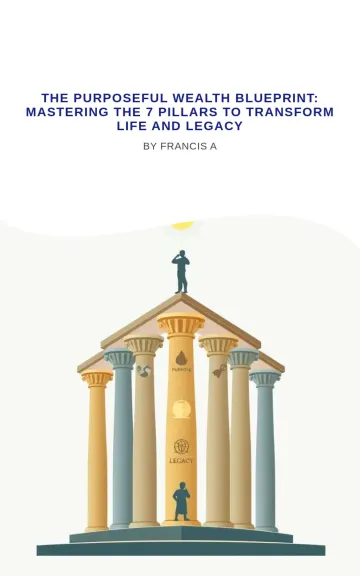
The Purposeful Wealth Blueprint

A public title organized around a named seven-part framework, which gives each chapter a distinct job.

View public book
Connie Conquers Conversations book cover

Children's educational storybook

Connie Conquers Conversations

A public visual storybook that combines an age-specific learning objective with a recurring character and page-by-page format.

View public book

Data note: Counts come from an aggregate Automateed production snapshot. Public-category counts use the category selected by the publisher and are descriptive, not a market forecast. Snapshot: July 16, 2026.

Quality gate

What to verify before acting on ebook marketing

Run these checks against the actual manuscript, files and reader journey before publishing.

Message matches the book

CTA has one job

Links include attribution

Sales are separated from clicks

Editorial note

What this guide does and does not prove

This page is a practical workflow, not a promise of sales, ranking, publishing approval or a specific reader outcome. Platform rules and professional requirements should be checked at the point of use.

Questions specific to Ebook Marketing

Before you start

How is ebook marketing different from general book marketing?

Distribution is instant and margins are digital, so free assets, bundles and direct-sales funnels play a much larger role than physical launch events. The positioning work is identical.

What should my free sample contain?

A complete, usable win from the book — a full framework or checklist, not a cliffhanger. Generosity converts better than teasing at every list size.

How big should my email list be before launching?

Launch to whatever exists; even fifty warm readers produce first-day sales and reviews. The list grows fastest when a real book gives people a reason to join.

Do I need a funnel tool?

Not a separate one. The author site includes subscriber capture, broadcasts and a one-time-offer funnel, which covers the free-to-paid path most authors actually need.

What email cadence works for authors?

One useful send every two to four weeks, with short daily-or-so bursts only around launches. Consistency beats frequency; silence beats spam only barely.

How do I promote without an audience?

Borrow audiences honestly: podcast interviews, guest posts, community answers where your reader already gathers — each pointing at the $0 asset, not the checkout.

Should I discount my ebook?

Occasionally and loudly — a launch window or anniversary with a stated end. Quiet permanent discounts just reset the perceived price downward.

What metrics matter weekly?

Three ratios: visitor-to-subscriber, subscriber-to-buyer, and channel-to-visitor. Whichever is worst is this week’s work; the rest is vanity.

Can reviews be reused in marketing?

Yes — quote real reviews accurately in the description and emails, with permission where the platform requires it. Proof from readers outsells claims from authors.

When do paid ads become sensible?

Once a page converts organic traffic predictably — then ads scale a working machine. Before that, they are an expensive way to discover the description is vague.

How do I decide whether my lead asset should be a $0 book or just a preview?

Choose based on where your traffic lands first. If you want cold traffic to have an effortless “arrive, get value, decide” experience, a $0 book page that clearly contains a complete worksheet or checklist tends to perform better because the reader knows what they’re receiving immediately. If your audience already trusts you and is likely to click into longer content, a preview can work as long as it still ends with completion and a clear next step. In both cases, the decision is judged by whether the lead asset produces subscribers who later buy, not by how long the free piece is.

What should I put in my paid ebook page when my sample already taught something?

After a free module, the paid page should do three jobs: (1) restate the promise in the same reader-situation language, (2) show what the paid ebook adds beyond the free outcome (action planning, review, templates, or additional modules), and (3) address expectation boundaries (“not included” or who it’s for). Avoid re-listing the free content or repeating generic claims. The paid page should feel like the continuation of the same work.

Explore next

More publishing guides

Use your own topic

Test the “Clarify the book promise” direction with a free preview.

Review the outline, visual direction and available chapters before deciding whether to continue the full project.

Create a free preview
Your book in 10 minutes