Table of Contents
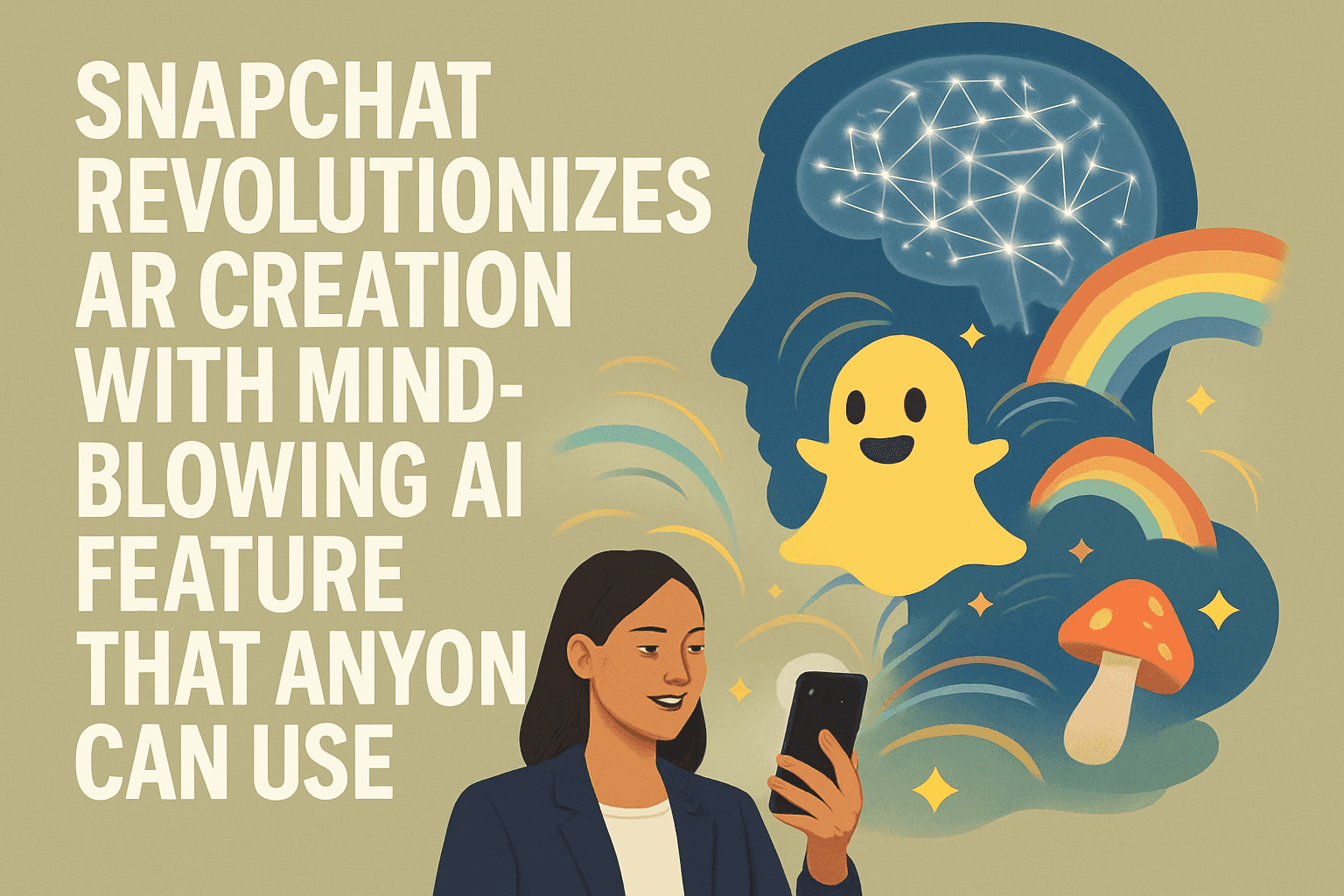
Snapchat just dropped a pretty wild idea: using AI to help people create augmented reality (AR) lenses just by describing what they want. No 3D modeling class. No complicated setup. Just… type it out and see what happens.
In my experience, Snapchat is usually the app where you try something fun in seconds and then immediately forget you ever had to learn anything. This new AR creation feature feels like it’s designed for that exact moment—when you want a lens that matches your vibe, not something you have to build from scratch.

AI-Powered Lens Creation: Describe It, Then Wear It
So how does it work? The basic premise is simple: you describe an AR concept in plain language, and the system generates a lens based on your description.
For example, you might type: “underwater world with floating jellyfish”. Then Snapchat produces an AR lens that tries to translate that idea into something you can actually use right away.
What I noticed right away is how much this reduces the “blank page” problem. Usually with AR tools, you’re stuck thinking, What do I build? or How do I make it look right? Here, you start with the creative direction first. The tool handles a lot of the heavy lifting.
And yes—this is meant to feel fast. The goal isn’t to make you wait around tweaking settings for an hour. It’s about getting to the fun part quickly.
Why This Matters for Everyday Users (Not Just Developers)
Let’s be honest: most people don’t want to learn AR pipelines. They want results.
With Snapchat’s AI lens creation, you can go from idea to lens without needing advanced skills. Want a background that looks like a dreamy sunset? Want a playful effect that changes how you look? You can experiment without becoming an AR expert first.
It also makes the whole experience feel more personal. Instead of using whatever lenses are already trending, you can create something that actually matches what you’re doing—your outfit, your event, your joke, your theme.
In other words, it’s not just “cool tech.” It’s a shortcut to creativity.
Quick Creative Examples People Will Actually Try
- Face effects: subtle changes, stylized looks, or playful transformations for selfies.
- Scene backgrounds: adding an imaginary setting behind you (think: underwater, space, neon city).
- Character-style visuals: jellyfish, creatures, or themed props that match the prompt.
- Event lenses: party vibes, seasonal themes, or “going live” style effects.
Those are the kinds of prompts that fit how Snapchat is used—quick, social, and made for sharing.
What This Could Mean for Creators and Brands
Before this, making branded lenses could be a time sink. You’d typically need a bigger budget, more planning, and more technical resources—especially if you wanted something polished and consistent across campaigns.
With this AI-assisted approach, companies can move faster. That’s the big deal. Instead of waiting weeks to get a lens ready, brands can test ideas, iterate on concepts, and launch promotions with less friction.
In practice, that could look like:
- Seasonal promos with updated visuals on shorter timelines
- Limited-time campaigns where speed matters more than perfection
- Smaller marketing teams creating interactive AR experiences without hiring an entire AR department
And for smaller businesses, this is especially interesting. High costs used to keep a lot of them out of AR advertising. If the creation process becomes more accessible, you’ll likely see more local shops and niche brands jumping in with lenses that feel “made for them,” not copied from a template.
Lens Studio Gets AI Boosts for Developers
Snapchat isn’t stopping at the end-user experience. They’ve also improved Lens Studio, which is the platform developers use to create AR lenses.
What stands out here is that developers get access to AI-powered features that can speed up the creation process. Basically, tasks that used to take longer—complex setup, repetitive work, or complicated steps—can be automated or simplified.
From a creator perspective, that’s huge. Instead of spending most of your time wrestling with technical details, you can focus on the concept: the story, the interaction, the look, and the “why would someone want to use this?” part.
Of course, I’ll say this plainly: AI tools don’t magically remove every challenge. You still need good design instincts. But if the tool helps you get to a working draft faster, that’s a win.
Where Developers Might Notice the Difference
- Faster iteration cycles when building or refining lenses
- Less time spent on complex setup tasks
- More experimentation because it’s easier to try variations
A Realistic Take: What AI Lenses Still Need to Get Better At
I’m excited about this, but I don’t think it’s perfect yet. AI-generated visuals can be hit-or-miss depending on how specific the prompt is and how complex the lens concept becomes.
Sometimes prompts that sound clear to a human can still produce results that need tweaking. And if you’re aiming for brand-grade consistency—exact colors, exact placement, exact style—AI-assisted creation may still require hands-on refinement.
Still, that’s not a dealbreaker. It’s actually what makes this useful: you can start with an idea and refine it rather than starting from nothing.
What I’d Do First If I Were Trying It
If you want to test this feature (and honestly, you probably do), I’d start small and specific. Try prompts like:
- “A neon outline effect of a cat face”
- “A Halloween pumpkin background with floating dust”
- “Underwater scene with jellyfish, soft lighting, playful bubbles”
Then adjust your wording based on what you see. If the result isn’t right, don’t just give up—change one detail at a time. That’s how you’ll learn what the system responds to best.
Also, keep in mind that Snapchat is a social platform. The best lenses aren’t always the most complex—they’re the ones people instantly understand and want to share.
Watch Snapchat’s Creativity Push in Action
If you want a closer look at Snapchat’s direction with AR creation, this video is worth checking out:
Bottom line: Snapchat is making AR creation feel a lot less intimidating. If they keep improving speed, quality, and control, this could turn AR lenses from “something only creators build” into something regular people play with every day.