Table of Contents
In medias res means “into the middle of things.” A story starts with a situation already unfolding, then fills in the earlier events as we read. You might open with someone destroying a train ticket instead of showing how they bought it. The technique doesn't require a fight or chase; even a quiet conversation can begin in the middle of an existing conflict. collinsdictionary.com
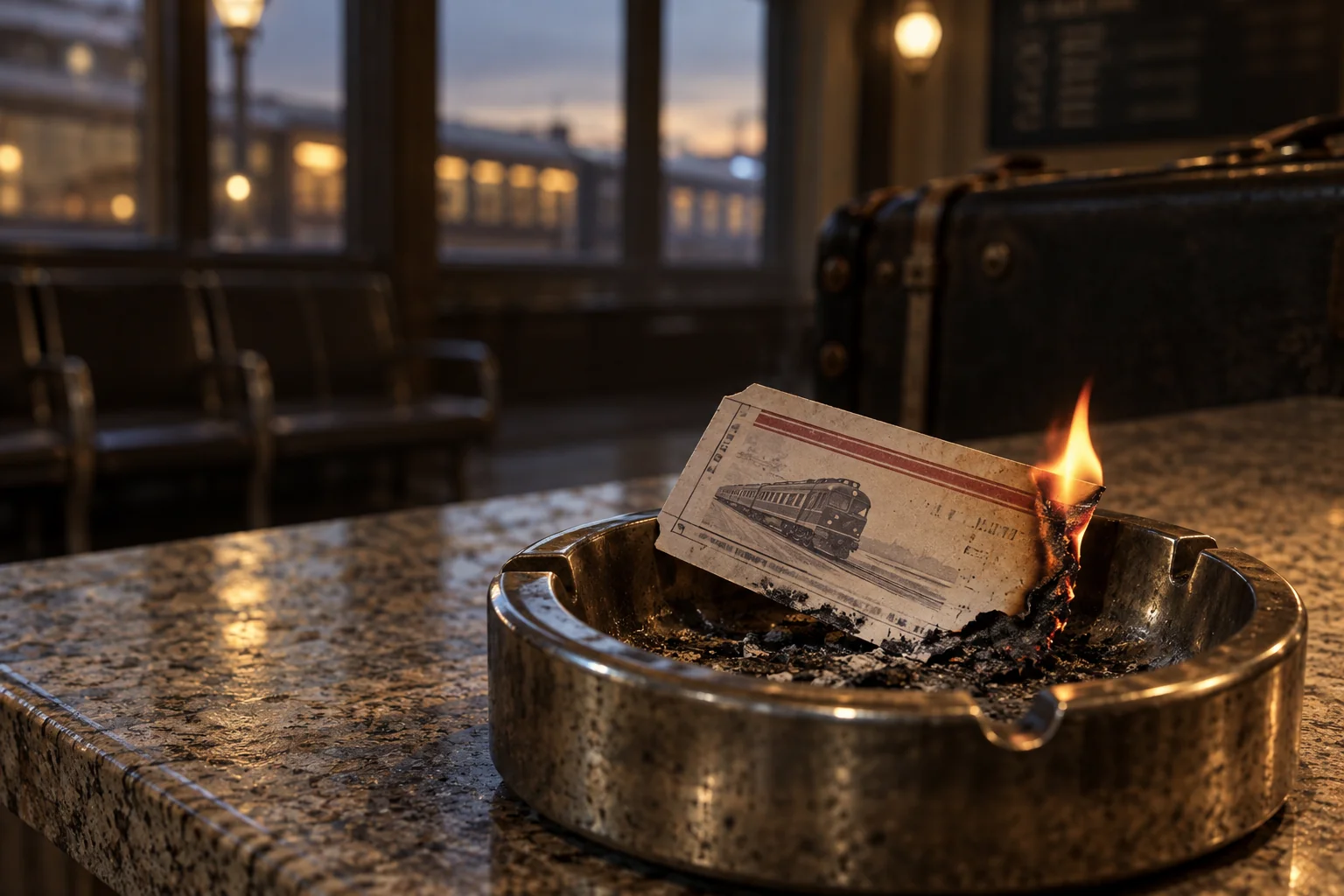
Imagine Mara burning a ticket before her brother can stop her. We immediately want to know why. Later, we discover who bought it and whose name was written on it. A chronological version would show those discoveries first. Both tell the same story, but they give readers different reasons to turn the page.
What does in medias res mean?
Cambridge defines in medias res as starting a story or play without an introduction. The standard spelling is in medias res, with an s at the end of medias; in media res omits that letter. “Middle” means amid developing events, not necessarily halfway through the plot. (dictionary.cambridge.org)
The phrase comes from Horace’s Ars Poetica. Discussing Homer, Horace praises the choice to move into consequential events rather than trace the Trojan War to its remote origins. He also stresses that the beginning, middle, and ending must fit together. The Poetry Foundation publishes the text and historical introduction. (poetryfoundation.org)
Separate what happened from when you tell us about it. The ticket was bought before it burned, but the burning can be your first scene. You don't then have to replay the entire day. One accusation from Mara might reveal the purchase while the confrontation with her brother keeps moving.
How to recognize an in medias res opening
Look for a situation already in progress, then ask which earlier events give it meaning. These three questions will help you identify the structure:
- What is already in motion? Find the choice, conflict, investigation, relationship, or loss that predates the opening. Be specific: Mara has accepted a ticket, discovered something troubling, and decided to destroy it.
- Which causes have readers not witnessed? Separate missing history from missing orientation. Readers may not know why Mara fears the ticket, but they should be able to recognize that she is deliberately burning it.
- How does the telling handle that earlier context? Look for later explanation, recollection, or enough evidence to infer it. A full return to the beginning is not required.
A fast opening isn't automatically in medias res. A race beginning at the starting gun might be entirely chronological. Meanwhile, two people quietly deciding how to hide a betrayal may already be deep inside the story's conflict. Focus on where the telling begins, rather than how noisy the scene is.
A funeral could work either way. If it opens an existing dispute about the death and the story gradually reveals what led there, it may be in medias res. If strangers meet at the funeral and only then begin their adventure together, it may be the natural chronological start. Decide which story you're actually telling.
Try this: place the missing setup before the opening and read both versions. Does knowing the cause change how you judge the character? Does it remove a question you wanted readers to ask? If so, the later starting point has a purpose. If it merely makes the first paragraph louder, look again at what the rearrangement achieves.
Benefits of using in medias res
In medias res lets readers meet a character through a consequential choice. Mara's burning ticket gives us something concrete to interpret before we know her history. Once we discover that someone else bought it, the action changes: she isn't just destroying paper, but disrupting a plan another person made for her.
The arrangement gives you several revision options. You can delay routine setup until it matters, let behavior introduce character, or invite an initial judgment that later evidence complicates. Mara might first appear reckless. Learning that another passenger’s name was on the ticket could make her seem frightened, implicated, or protective instead.
That change in meaning can be more valuable than speed. Plant details that still make sense after the revelation: the second name, the saved corner, the brother's suitcase. Later information should help readers understand those details. It shouldn't ask them to forget what you showed in order to accept the explanation.
Challenges of writing in medias res
Confusing the audience
Give readers enough to picture the immediate scene. Here, that's Mara in the station waiting room, holding a ticket over the stove before her brother arrives. We can wonder about her reasons while still following what her hands are doing. Mystery about the past works better when the present action is clear.
“Why is she destroying her way out?” is a question that can pull readers onward. “Is she burning the ticket now, watching someone else or remembering a fire?” may simply mean the scene is hard to picture. Keep the first kind of uncertainty and fix the second with clearer staging.
Keep the paragraph close to Mara's task. Footsteps matter because they tell her time is running out. A list of unfamiliar station terms or minor characters may only distract from that pressure. During revision, underline each new name and object, then ask whether readers need it to understand what she does next.
Revealing too much too soon
Choose an opening consequence that creates another problem, rather than automatically selecting the latest or most spectacular scene. Burning the ticket can answer an earlier discovery while producing a fresh difficulty: Mara has destroyed a record she may need.
Now you have two useful questions. What frightened Mara enough to burn the ticket? And how will she prove what happened after destroying it? Answering the first can make the second more urgent. That's one way to keep the story alive after the opening mystery starts to become clear.
You can open with the final outcome, but decide what will remain unsettled. A known ending might leave responsibility, motive, or the reliability of the account unresolved. If every meaningful question is settled in the opening, a return to earlier events needs another attraction, such as a distinctive voice or a morally difficult path to that result. A late chronological position alone is not a suspense plan.
Bring in backstory when it matters
Reveal the earlier fact when it changes the current exchange. Her brother asks why she hasn't packed; we learn that he bought the ticket. Suddenly the question sounds like a demand. He expects her to take the escape he arranged, while she may have a very different understanding of what that journey means.
A childhood memory can deepen the relationship if it changes how Mara responds now. Perhaps she recognizes his habit of presenting orders as favors. Without that connection, a long flashback may interrupt the confrontation just as it becomes interesting. Ask what the memory helps her decide before giving it space here.
Use the form that fits the information. A line of dialogue can reveal who bought the ticket. A record can establish a date. A full flashback is useful when readers need to witness a disputed choice. Start with a brief version and expand when the emotional or causal detail really needs more room.
Maintaining interest after the initial hook
Give each explanation a present consequence so the story progresses after the opening mystery becomes clearer. Once Mara admits that she burned the ticket, she might need to find a second record of the journey before the station closes.
That discovery gives Mara something to do next. She needs another record before the station closes, and her brother can help, refuse or send her toward the wrong person. Their disagreement now affects the search. The backstory becomes part of the obstacle instead of a conversation that pauses the plot.
Try outlining the next scenes with verbs: confront, search, bargain, hide. If your notes only say “explain the ticket” or “explain the brother,” add a decision and consequence. What becomes harder after each answer? Access to a ledger, trust in an ally or time to reach a platform can keep the revelations moving the story forward.
Keeping the narrative coherent
Keep a short timeline of what happened, then a second column showing when readers learn each fact. Include what Mara already knows. This can catch contradictions before you spend time polishing sentences.
| Scene | Present event | Past fact revealed to readers | Mara’s knowledge | Reader’s new question |
|---|---|---|---|---|
| Opening | Mara burns a train ticket | She had a way to leave that night | She knows whose name she found and fears the connection | Why destroy her escape? |
| Chapter 2 | Her brother asks about the unpacked suitcase | He bought the ticket | She knows he arranged the journey, but not his full motive | Why did he want her gone? |
| Chapter 4 | Police search the station | The ticket could connect her to a passenger taken from the platform | She already feared that link; the search makes it urgent | What did Mara witness, and can she prove it? |
The table is one possible plan for our invented story, not a chapter formula. Its most useful distinction is between Mara learning something and readers learning it. If she understood a fact while burning the ticket, don't make her react to it as a brand-new discovery several chapters later.
Check the objects too. What writing survives on the corner she saves? How does she know a duplicate record might exist? Decide those details before using them to solve the problem. Readers may not know the past yet, but the past still has to explain the things characters hold, notice and do.
Famous examples of in medias res
The Iliad by Homer: The poem begins with Achilles’ anger and the dispute with Agamemnon during an ongoing Trojan War, not with the war’s origins. Book I supplies the immediate causes of their quarrel within that larger conflict. As a structural model, it demonstrates an important distinction: an opening can be late in a broad history while remaining near the start of the work’s central action. (gutenberg.org)
The Odyssey by Homer: Odysseus is already far into his troubled return when the poem begins. The opening moves from the gods’ discussion to the household consequences of his absence; substantial earlier adventures emerge later in his account to the Phaeacians. Project Gutenberg provides a public-domain English text for checking the sequence. The useful craft lesson is to establish the unfinished problem before recounting the route that created it. (gutenberg.org)
Beloved by Toni Morrison: The opening places Sethe and Denver in a house already haunted in 1873. Earlier suffering is not introductory background that the novel neatly finishes before proceeding; memories and retellings bring it into the present. The publisher’s excerpt and reading guide support reading this as an opening amid an unresolved history. For a writer, its lesson is that withheld context can deepen emotional understanding, not just create a puzzle. (penguinrandomhouselibrary.com)
Notice how those books help you enter the situation even while much of the past remains unknown. Your own opening can use a council meeting, a strained household or an argument. You don't need a chase. You need an existing problem that becomes interesting as readers begin to understand it.
How to explain what happened before the opening
You can reveal earlier events without rewinding to chapter one of the characters' lives. Choose the method that helps the current scene. In Mara's story, the following approaches each give the missing history a different role.
Gradual revelation through dialogue
Make the missing fact part of an accusation, correction, bargain, or refusal. The characters then have a reason to mention shared history beyond informing the reader.
When her brother asks about the suitcase, Mara can say, “You bought it.” He answers, “I bought you a way out.” That exchange establishes the purchase while disputing its meaning. Was the ticket a gift, an instruction, or an attempt to remove a witness?
Compare that with “As you know, I purchased that ticket yesterday after our argument.” Why would her brother explain what they both remember? Give him a goal in the conversation instead. If he wants her to leave and she wants him to admit something, their disagreement can reveal the history naturally.
Flashbacks and memory sequences
Use a flashback when witnessing the earlier event gives readers something a brief report cannot. Establish when the remembered scene occurs, why it matters here, and what changes upon returning.
A scorch mark on Mara's sleeve might bring back the discovery that led her to the stove. Stay with the decisive detail rather than replaying the afternoon. Remembering a conductor enter a duplicate number in a ledger gives her a place to go next, so the memory earns its interruption of the present scene.
Mark the return with present action: she shuts the stove door, interrupts her brother, and asks where the conductor went. A phrase such as “Earlier that evening” may be enough to locate a short recollection; larger jumps may benefit from a scene break or dated heading. Choose signals proportionate to the timeline’s complexity. If the earlier account becomes a substantial story told within another, see nested story structure.
Let the narrator fill in the right details
Let the narrator summarize what readers need, but keep that knowledge consistent with the chosen viewpoint. A retrospective narrator can explain an insight gained later; a close account limited to Mara’s current understanding cannot casually confirm her brother’s secret motive.
For example, “Only later would she understand why he had insisted on the last train” announces hindsight while withholding the answer. In a closer present-time account, you might instead show her noticing that he asks about departure before asking whether she is hurt. That gives her grounds for suspicion without turning suspicion into fact.
You can summarize the walk to the station in a sentence while spending much longer on Mara recognizing the passenger's name. Give space to the moments that establish fear, responsibility or changed loyalty. Readers don't need every missing hour accounted for; they need the earlier events that make the current choices understandable.
Incorporating letters, diaries, or other documents
Give a document an identifiable source and a consequence in the current scene. A letter or ledger should change what a character believes, can prove, or intends to do.
Suppose Mara finds a duplicate ticket number beside another passenger’s name in the station ledger. Establish who made the entry, when it was written, and whether it could contain an error. The record may contradict her brother without automatically becoming the complete truth.
Make obtaining the document part of the problem. Mara may need permission from the person she suspects, or the entry may point toward a platform police are searching. Show the relevant words and her response. If a long document adds atmosphere but changes nothing, a shorter detail may do the job better.
Pacing the revelations
Answer a meaningful part of the opening question before adding several new uncertainties. Plan disclosures around changes in the scene, not a fixed number of pages between secrets.
In one version of Mara’s story, establish that her brother bought the ticket before explaining its connection to the detained passenger. The first disclosure makes his involvement personal; the second raises the stakes of the destruction. Separate scenes let readers reassess him, and let his responses develop, rather than compressing both effects into one explanation.
Distinguish the reader’s incomplete understanding from Mara’s. If she already knows the passenger’s name, do not give her artificially vague thoughts whenever it matters. Either reveal the name, establish why she avoids dwelling on it, or use a viewpoint that does not enter her mind. Similarly, an unopened envelope needs a credible reason to remain unopened: danger, lack of access, or a competing obligation—not repeated convenient interruptions.
Keep backstory connected to the present scene
Remove each backward-looking passage temporarily and identify the specific present action or interpretation that becomes weaker. Keep the passage when it supplies a necessary causal or emotional connection.
Try removing the fact that her brother bought the ticket. Does Mara's accusation still make sense? Does he still have the same stake in her leaving? If nothing changes, the detail may need a stronger connection to the confrontation. If the scene loses its meaning, you've found backstory that belongs there.
The effect can be emotional rather than physical. A memory might explain why Mara refuses sensible help or hears a threat in a small kindness. Give that betrayal enough room to make her reaction believable, then return to the choice in front of her. Ordinary background may need only a sentence.
A revision test for the opening
Write the events chronologically, then try opening with a consequence. Compare what each order does for tension, closeness to the character and the timing of understanding. Keep the later start because it helps this story, rather than because you've heard every novel should begin in the middle of action.
- List the causal sequence. For Mara: ticket purchase, discovery of the second name, decision to destroy it, brother’s arrival, search for another record.
- Select an opening event. Begin with the burning, where an earlier discovery has already forced a choice and the brother can still interfere.
- Preserve orientation. Identify who is acting, where, on what object, and under which immediate pressure.
- Assign the missing facts. Decide whether the purchase emerges through dialogue, the discovery through memory, and the duplicate record through investigation.
- Draft the next scene. Check that the confrontation produces an answer, refusal, or lie with consequences instead of yielding to pages of setup.
Read beyond the first paragraph in both versions. A striking opening can lose momentum if the next chapter stops for a long explanation. The chronological version may let readers understand Mara's fear before judging her. Compare a full stretch of story so you can see which opening creates a better reading experience overall.
The same opening written in two orders
Chronological version: Mara’s brother bought her a ticket for the last train and told her to leave before the station search. While packing, she found a second name written on the ticket sleeve. It belonged to the passenger she had seen taken from the platform. Afraid the ticket would connect her to him, she carried it, still in its sleeve, to the waiting-room stove and held it over the flame.
In medias res version: The second name disappeared first. Mara turned the ticket and its sleeve above the stove until the paper curled into ash. Behind her, the waiting-room door opened. “You’ll miss it,” her brother said, setting down the suitcase. Mara pulled back the ticket’s unburned corner. “Whose seat did you buy me?”
The two versions share the same situation but ask readers to do different things. The chronological version lets us understand the purchase, recognition and fear before Mara acts. The in medias res version makes us watch the destruction first, then wonder about the passenger and her brother's intentions. Neither needs to change the underlying facts.
The second opening still tells us where Mara is and what she's doing. Keeping the history back doesn't mean keeping the staging vague. It also leaves her with a surviving corner of the ticket. Decide what remains readable, because that small piece of paper can give the next scene something concrete to work with.
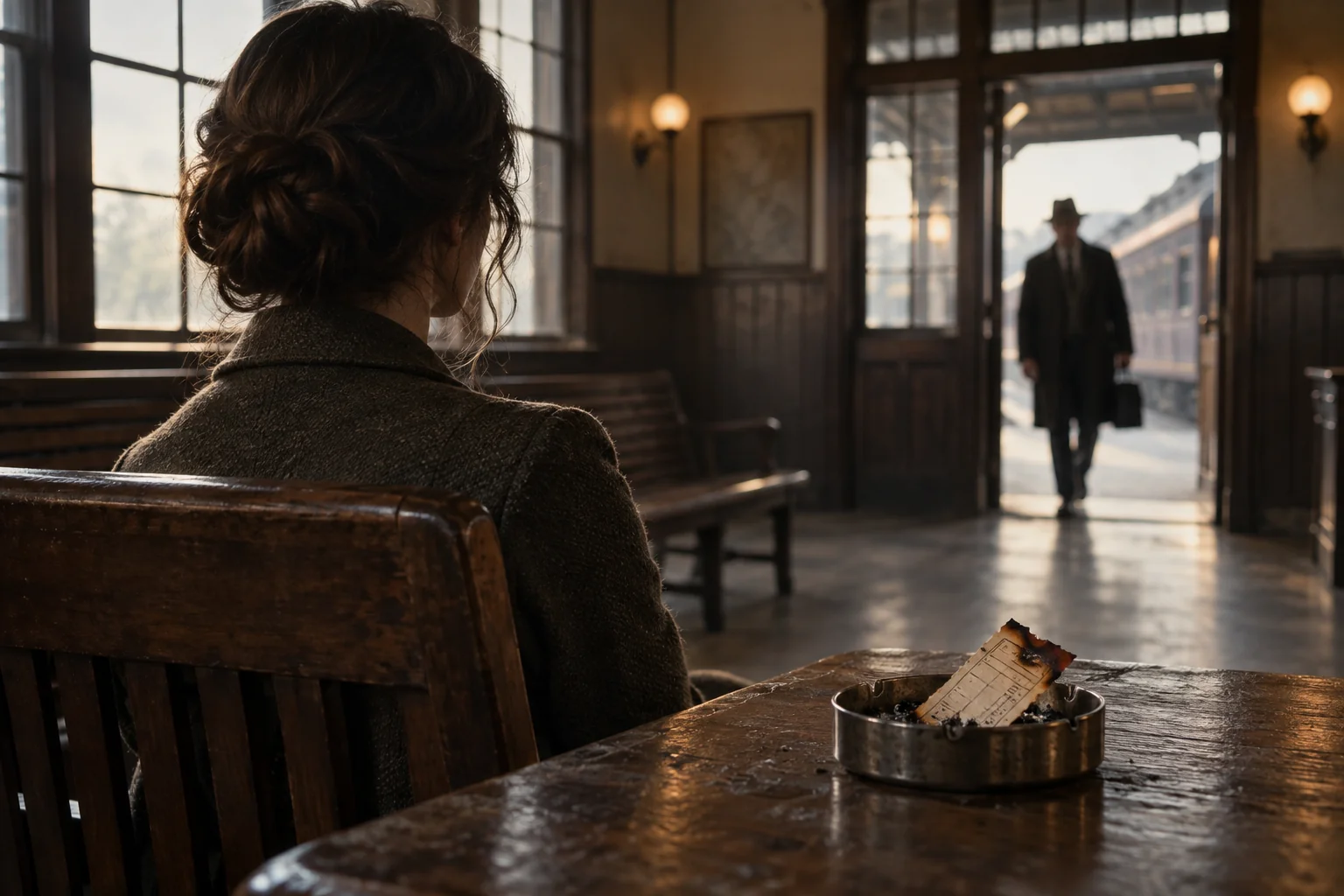
Let her final question change what happens next. Her brother could deny knowing the passenger, reach for the saved corner or insist that the ledger will explain everything. Each response sends the confrontation somewhere different. Choose one before leaving the present scene for more history, so the opening's energy has somewhere to go.
Choose the opening that gives readers the experience this story needs. Start with the purchase if they should understand Mara's fear before seeing her burn the ticket. Start with the burning if you want them to witness her choice and reconsider it later. In either version, connect what they learn about the past to what can still happen next.