Table of Contents
To write believable military fiction, give your characters real jobs, understand who they answer to, and make the limits of their unit affect the plot. Readers need to know what the characters are trying to accomplish, what stands in their way and why failure matters. Ranks, weapons and acronyms come after that.
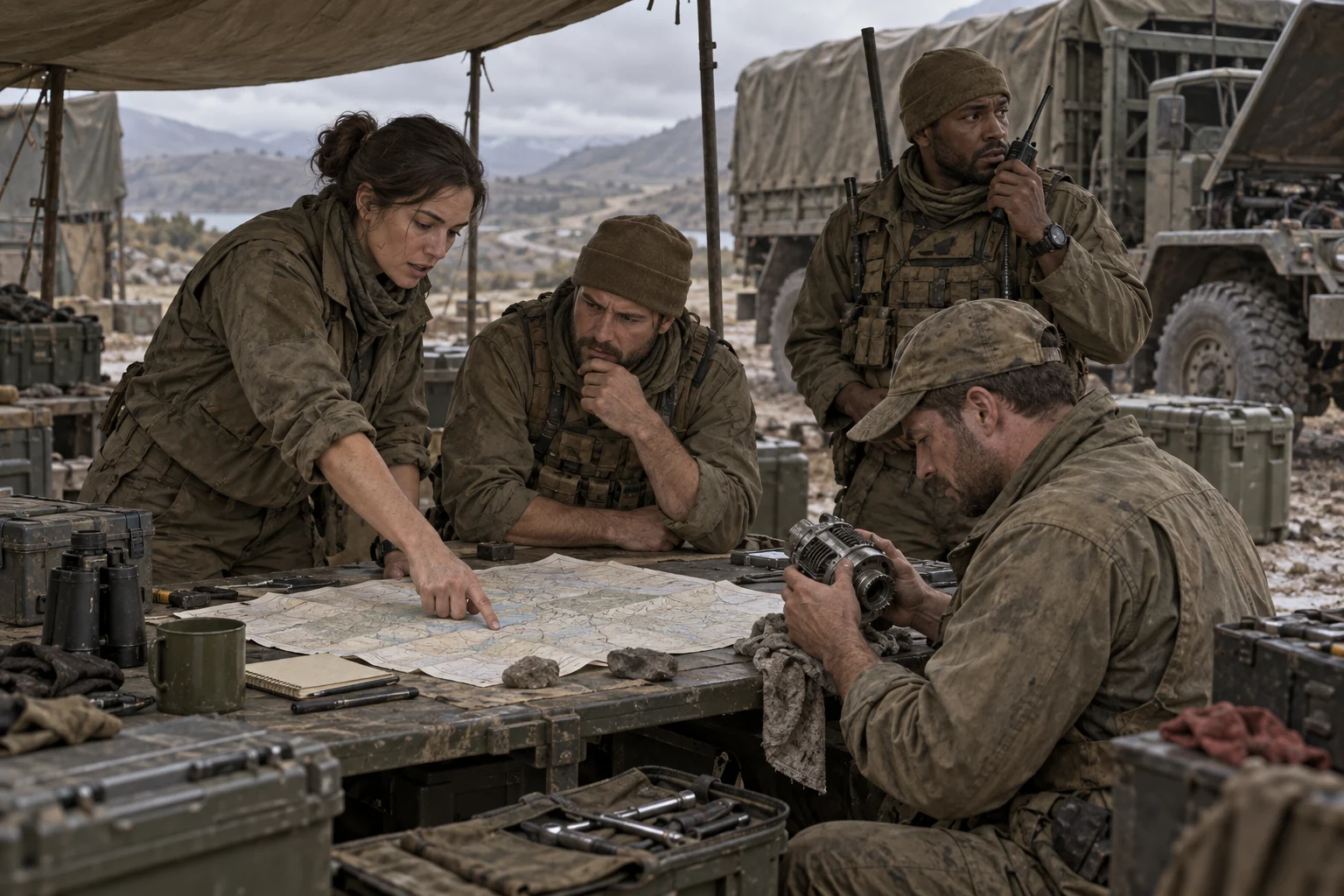
Start with something concrete: a crew needs to leave by noon, a mechanic needs a replacement part, or an officer must send a report she doesn’t trust. Each problem brings other people into the story. Who can help? Who has already promised the same resource elsewhere? What happens if your protagonist asks for an exception?
We’ll work through these questions using an invented transport unit and a short dialogue scene. Its procedures are fictional. For a real military setting, research the service, period and specialty you’re writing about rather than treating one example—or one veteran’s experience—as universal.
Give your character a specific military job
“She’s in the army” tells us much less than “she keeps the unit’s vehicles running.” The second description suggests skills, daily work, deadlines and people who depend on her. It also gives you ways for her to succeed or disappoint someone before the story reaches a major crisis.
Start with the part of the organization you’ll actually show. For a flight-crew story, map the crew and the people who prepare and support its work. For a headquarters story, focus on who gathers information, makes recommendations and decides. Expand outward when the plot needs another part of the organization.
A short unit brief can keep these decisions straight:
| Field | What to establish | What it gives the story |
|---|---|---|
| Assigned task | A concrete output, its recipient and its deadline | A recognizable success or failure instead of a mission slogan |
| Parent organization | Who directs the unit, evaluates it and supplies support | A source of orders, scrutiny and conflicting priorities |
| Internal roles | Each important duty position and the work attached to it | Reasons characters matter beyond their rank |
| Attached support | Transport, maintenance, medical, intelligence, supply and communications help | A distinction between capabilities the unit controls and those it must request |
| Operating limits | Staffing, terrain, access, equipment condition, policy and time | Obstacles with causes that readers can follow |
Add a sentence about a normal successful day. What gets done without anyone making a fuss? Who hands work over to whom? That baseline helps the reader recognize when a demand is unusual. If every routine errand is already a disaster, the truly difficult moments lose some of their force.
This applies to invented armies and space navies too. A new engine may shorten a journey while still requiring trained operators, maintenance and someone to schedule its use. Decide which problem your technology solves and which limits remain. Otherwise it can turn into a convenient answer whenever the characters get stuck.
Give them a life beyond the uniform
A character can care about doing the job well and still worry about a sibling, resent a promotion decision or miss an ordinary routine at home. Choose a few personal concerns that affect their behavior. You don’t need to attach an elaborate trauma history to everyone to make them interesting.
Let relationships grow through work. One person notices a mistake before it embarrasses a colleague; another always volunteers someone else for the unpleasant task. Those small patterns can explain later trust or resentment. When the pressure rises, readers already understand why a request between these two people is difficult.
For dialogue, research how people in the relevant setting address one another, but don’t confuse an authentic voice with a constant stream of slang. Character comes through in what someone notices, avoids, jokes about or refuses to say. A quiet answer can tell us as much as an elaborate insult.
Work out who can actually make each decision
A rank chart is useful, but it won’t answer every question in a scene. Who assigns the task? Who controls the vehicle? Who can confirm that it’s ready? Who can change the schedule? Those responsibilities may belong to different people.
Draw a few boxes for the roles your plot needs. Label the connections with plain phrases such as “reports to,” “supports” and “needs approval from.” If someone receives a request, check whether they can approve it or must pass it on. You’ll quickly spot scenes where one convenient senior character seems able to do everything.
Test the arrangement with an urgent transport request. Someone already controls the vehicle, and someone may already have booked it. Giving it to your protagonist could delay another task. Work through those details in your notes, then put the disputed part of the request into the scene.
In our fictional section, the dispatcher allocates vehicles, the workshop confirms their condition, and the driver reports whether the trip is feasible. A senior visitor may be able to change priorities, but still needs information from those people. Saying the journey is important doesn’t finish the repair.
Personal influence matters as well. A mechanic might persuade a dispatcher to hold a slot because they’ve helped each other before. Establish that history and its limits. A favor can make someone more willing to cooperate; it doesn’t automatically give them permission to ignore every other obligation.
Let supplies, repairs and time create choices
Show the consequence of a shortage before giving the reader a long explanation. A departure is postponed. Someone loses a seat. A team learns that the specialist it needs has been sent elsewhere. Now the resource matters to a person, and the reader has a reason to understand the problem.
For recurring equipment or support, keep track of what limits it and what would restore it. Use this table to ask questions about your fictional setup, then verify specific technical details for the real equipment and period:
| Capability | What consumes or limits it? | What restores it? | Where can the consequence appear? |
|---|---|---|---|
| Vehicle movement | Distance, terrain, load, damage and crew fatigue | Fuel, inspection, repair, recovery or a relief crew | A changed route, departure time or passenger list |
| Communications | Range, obstruction, congestion, power loss or compromised equipment | A relay, alternate channel, replacement equipment or messenger | Two groups making decisions from different information |
| Medical support | Demand relative to staff, supplies, transport and receiving capacity | Resupply, evacuation or reinforcement; prioritization when demand remains unmet | A care or movement decision that cannot be left off-page |
| Technical system | Wear, weather, software problems, calibration or operator availability | Maintenance, replacement, correction or specialist assistance | A promised function becoming restricted or unavailable |
Show routine competence too. A careful handover, an early request for a part or an inspection that catches a fault can reveal the work people do to prevent trouble. The unit doesn’t need to fall apart in every chapter. Seeing it function makes a later failure more meaningful.
Suppose the section has three usable vehicles at dawn. One is reassigned, and another develops a fault you’ve already hinted at. That leaves one. It can carry repair parts or additional passengers, but not both. The arithmetic is simple; the scene becomes interesting when somebody has to choose who waits.
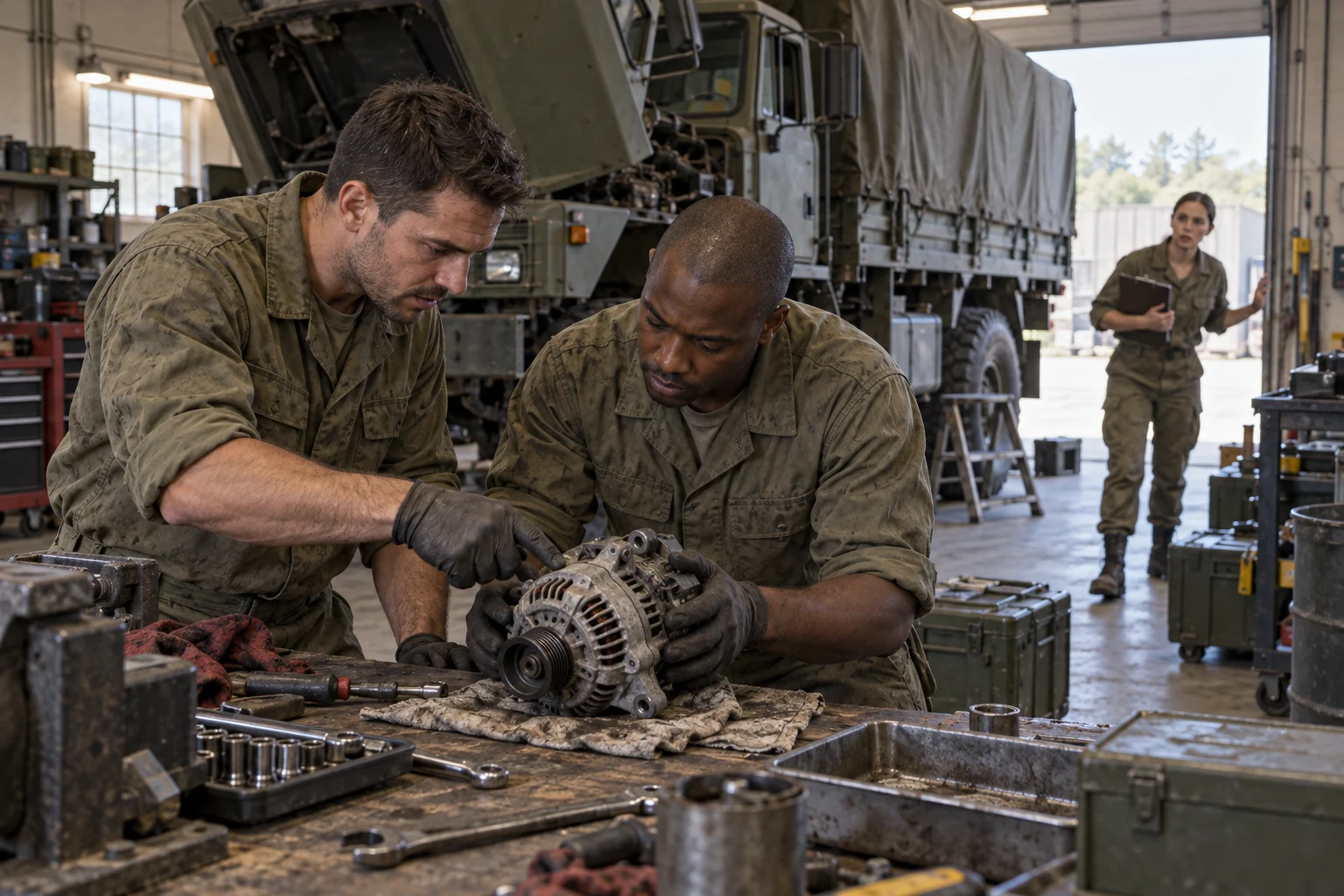
Follow repairs through the story. A part has to be requested, transported, received, installed and checked. You don’t have to dramatize each step, but the timeline must leave room for them. “The part is coming” shouldn’t become “the vehicle is ready” between paragraphs with no explanation.
A workaround should have a cost or a limit. Borrowing a technician can save one deadline while delaying another unit’s work. An injured specialist’s absence can matter after the hospital scene. Note when temporary arrangements end and who is relying on their return to normal.
Keep track of what each person knows
The author knows the whole situation. Your characters don’t. An officer may still be acting on an order whose assumptions have changed, while a driver has seen something important that hasn’t reached headquarters. These gaps can create tension if you keep them consistent.
For each major character, jot down what they have observed, what they’ve been told, what they suspect and what they don’t know. Treat a character’s confidence as their belief, not proof that the information is correct. A mistaken but understandable conclusion is different from the narration forgetting an established fact.
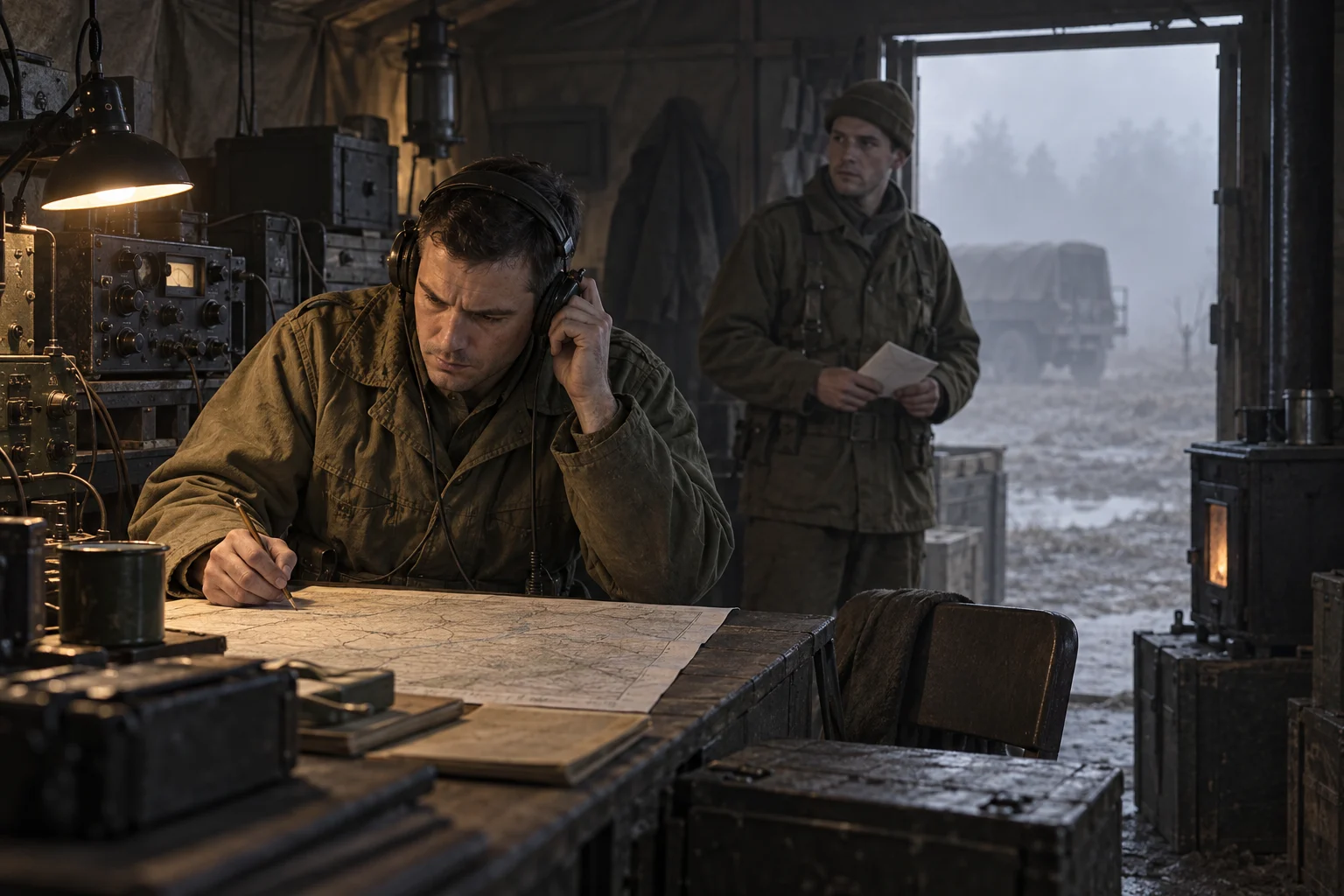
When an update matters, decide who noticed it, how they sent it, when it arrived and how the recipient understood it. Put the message on the page if the exchange creates a useful scene. Otherwise, keep the timing in your notes so nobody reacts before they could have learned the news.
Orders need their own notes: the desired result, deadline, limits, promised help and choices left to the person carrying them out. If your character departs from an instruction, give them a specific reason and follow the consequences. Urgency by itself shouldn’t make authority vanish.
In one fictional example, the transport section last checks in at 08:00 and headquarters receives a road-closure report at 08:10. At 08:05, the driver can’t already know that report. The driver might see the closure directly, but that would be a different source of information you need to establish.
Receiving a message doesn’t necessarily solve the problem either. The section could understand that a road is closed but lack permission to choose another route. Or it could have that discretion but misunderstand which road the message means. Pick a clear problem and follow it, rather than making communications fail whenever you need suspense.
Research the right service, period and role
Use official publications to understand how an organization is supposed to work, then look for dated evidence of how the relevant people actually worked. A general manual and someone’s recollection answer different questions. Neither should automatically replace the other.
For U.S. subjects, the National Archives military research portal lets you begin with a branch, conflict or topic. The U.S. Army Center of Military History offers research by period, series and collections, plus a publications catalog. Narrow the search before gathering interesting details that don’t belong in your setting.
The Joint Doctrine Library organizes material into subjects such as logistics and communications. Its full publication list points to JEL+, which requires a Common Access Card, so not every resource you encounter will be publicly accessible. Use the available material for the question it actually addresses.
Don’t treat doctrine as identical to every binding rule. CJCSI 5120.02G, dated November 13, 2025, describes joint doctrine as official advice requiring judgment and distinguishes it from more detailed regulations and procedures. That isn’t permission for your character to disregard any inconvenient order.
Beside a useful fact, record the service, date, unit level and equipment it concerns, along with the page or record reference. Note whether you found a formal requirement, evidence of actual practice, a recollection or an inference of your own. If two accounts differ, check whether they describe different jobs or periods.
Ask knowledgeable readers focused questions: “Who would receive this fault report in this unit?” is easier to answer than “Does this sound military?” If you can’t establish an exact repair time or reporting label, don’t invent precision for atmosphere. You can keep the scene’s pressure while changing the detail it depends on.
Can you write it without having served?
You can research and write characters whose lives differ from yours. Be honest about the experience you bring, and leave room to be corrected. Speaking with people who know the relevant work can reveal assumptions you didn’t realize you were making.
Ask about ordinary routines as well as dramatic incidents. Who did the paperwork? What happened during a delay? What did newcomers misunderstand? Explain what you’re writing and let the person choose what they want to discuss. Don’t treat access to someone as a right to their most painful memories.
One person’s experience won’t cover every service or specialty. Where a detail controls the plot, compare it with appropriate records or another relevant account. You’re trying to understand a particular setting well enough to write it convincingly, not collect a universal stamp of approval.
Give both sides of an argument something to lose
A believable disagreement doesn’t require an incompetent commander and a protagonist who is always right. Give each person a responsibility worth taking seriously. Then make those responsibilities difficult to meet at the same time.
Our maintenance officer has promised two vehicles before a convoy leaves. One needs a part held by another unit. The qualified technician is trying to meet a different deadline. The commander wants a positive readiness number because the larger movement may lose its departure slot.
Now consider the choices. A delay gives the workshop time but disrupts transport. Borrowing a part, if the fictional institution permits it, may transfer the shortage elsewhere. A temporary repair raises questions about who can authorize it and what the vehicle can safely do afterward. Each choice should help someone and cost someone else.
Use these questions to outline the exchange:
- What result is the viewpoint character responsible for delivering?
- Which required person, resource or decision is missing or contested?
- Who controls that dependency, and what are they trying to accomplish?
- Which rule, previous promise or relationship complicates the request?
- Who experiences the consequence later, and how will the reader see it?
Then add personal history. Perhaps the officer’s last optimistic estimate was wrong, or the technician has stopped trusting her promises. Let that affect what she asks, what she admits and what responsibility she accepts. The reader should feel the relationship through the conversation, not through a speech about institutional pressure.
Example: the report that could delay a departure
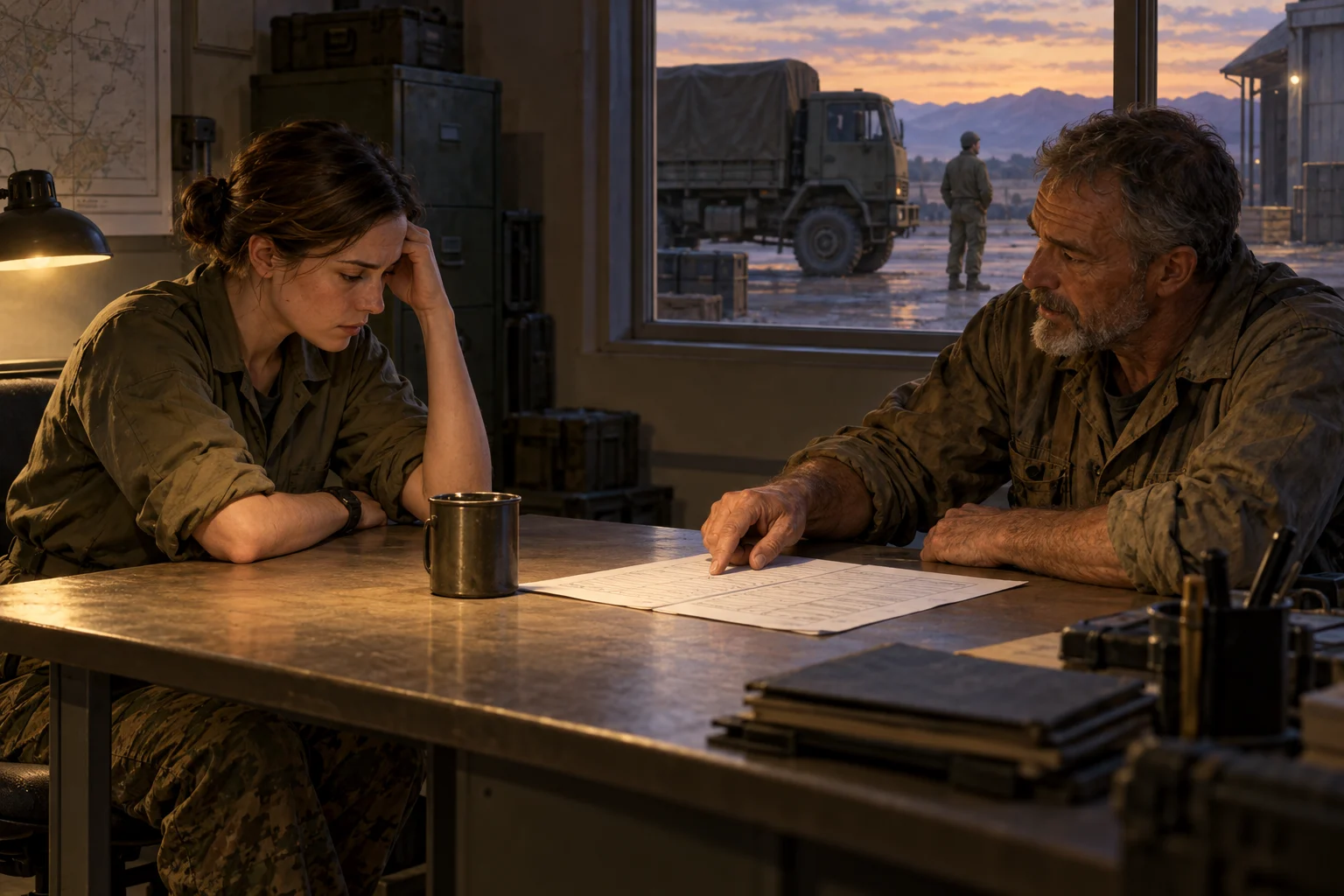
At 10:30, our officer is asked whether two vehicles will be ready by noon. One has been repaired but hasn’t completed its final check. The other still needs a part that hasn’t arrived. She has a forecast, but she doesn’t yet have two available vehicles.
The commander needs a number to hold the movement’s transport window. The officer needs that number to mean something others can rely on. Both have a real problem. Establish that this fictional report counts vehicles only after the required check, then let them argue:
“Can I put two?” the commander asked.
“You can put one awaiting its check.”
“The form has a number.”
“Then put zero, and let me call you in twenty minutes.”
The commander pushed the paper back. “If I lose the window, whose name goes beside the delay?”
She took the pen. “Mine. Beside the reason.”
The officer offers a next step she can actually take: an update in twenty minutes. The commander names the cost of waiting. Neither wins the argument by making the mechanical problem disappear. That’s what keeps the scene from becoming a simple lesson delivered by the author’s favorite character.
Remember the promised call at 10:50. If the check has finished, she reports the result. If it hasn’t, she still calls and explains what has changed. Keeping that smaller promise can affect how the commander treats her later, even if they lose the departure slot.
| Scene point | Established fact | Choice it creates |
|---|---|---|
| Initial request at 10:30 | One vehicle awaits its check; the other lacks a part. | Separate present readiness from expected availability, or let the report blur them? |
| The officer’s reply | Neither vehicle has completed the required check. | Accept responsibility for a report that may cost the movement its slot? |
| Update at 10:50 | A check result or a revised estimate must be communicated. | If one vehicle is available, seek a partial departure or keep the group together? |
| Later consequence | Another team has inherited the lost transport time. | Explain the decision, negotiate a remedy or conceal its effect? |
If the part arrives, leave time for installation and verification. If another team loses transport time, let that team appear in the aftermath. The officer’s decision can be defensible without being painless or popular.
For a real unit, verify the reporting categories and responsibilities before keeping this dialogue. The example’s categories are invented, but the dramatic distinction is useful: being ready, expecting to be ready and promising an update are three different statements.
Make the language accurate and readable
Keep a technical term when readers need the distinction it makes. Explain it through the situation where you can: a vehicle can’t leave until a particular check is complete, so the reader understands why the check matters. You don’t always need a textbook definition before the scene can continue.
The DoD Terminology Program is a source for standardized official meanings. Research spoken usage separately. Two specialists probably won’t explain familiar basics to one another, but one may correct a misunderstanding or refuse a request in a way that helps the reader follow it.
Keep a small list of important terms, their meanings and who would use them. Include the relevant service and date, especially when writing historical fiction. A familiar expression from a modern film may not fit a different branch or era.
Ask two kinds of readers to review the work:
- Knowledgeable-reader pass: Ask a reader with relevant service, period or specialty knowledge to flag impossible authority, missing support, implausible timing and terminology assigned to the wrong role. Ask them to distinguish a documented error from a different personal experience.
- General-reader pass: Ask someone unfamiliar with the setting to identify who wants what, who can decide, what prevents progress and why the outcome matters. Have them mark the exact sentence where they lose the thread.
Give each person a manageable task. Someone can know maintenance thoroughly without knowing another specialty, while a civilian reader can tell you where the scene stops making sense. Check factual corrections against sources and solve clarity problems in the prose. A glossary can’t rescue an argument whose central request is unclear.
Keep notes on important corrections so they don’t creep back into a later draft. If you use a composite unit or deliberately change a procedure, explain consequential choices where appropriate. The scene itself still needs enough context for readers to understand its cause and effect.
Check that the setting shapes the story
Change one fact in your outline. Give control of the vehicle to another person, delay the message or remove the only qualified repairer. Would the characters need to act differently? If the dialogue and outcome stay identical, the organization may be decorative rather than part of the plot.
Try the same test with the aftermath. Who has to explain the delay? Who now owes a favor? Which team missed its own deadline? Let a later scene acknowledge that cost instead of giving everyone fresh equipment and uncomplicated relationships at the start of each chapter.
Finally, describe the scene without using military terminology. You should still be able to say who wants what, who can help and why the decision matters. Once that is clear, the accurate details can make it richer without making it harder to follow.
A story about occupation, displacement or families outside the unit needs a wider view too. Our war novel guide covers civilian life, historical research and the consequences that continue beyond a battle. Choose the focus that fits the story you want to tell.
Bring the ending of a scene back to its people. A repair determines who gets to leave. A report makes someone change a plan. An order leaves a character responsible for a choice made with incomplete information. Those consequences give the military setting its weight.