Table of Contents
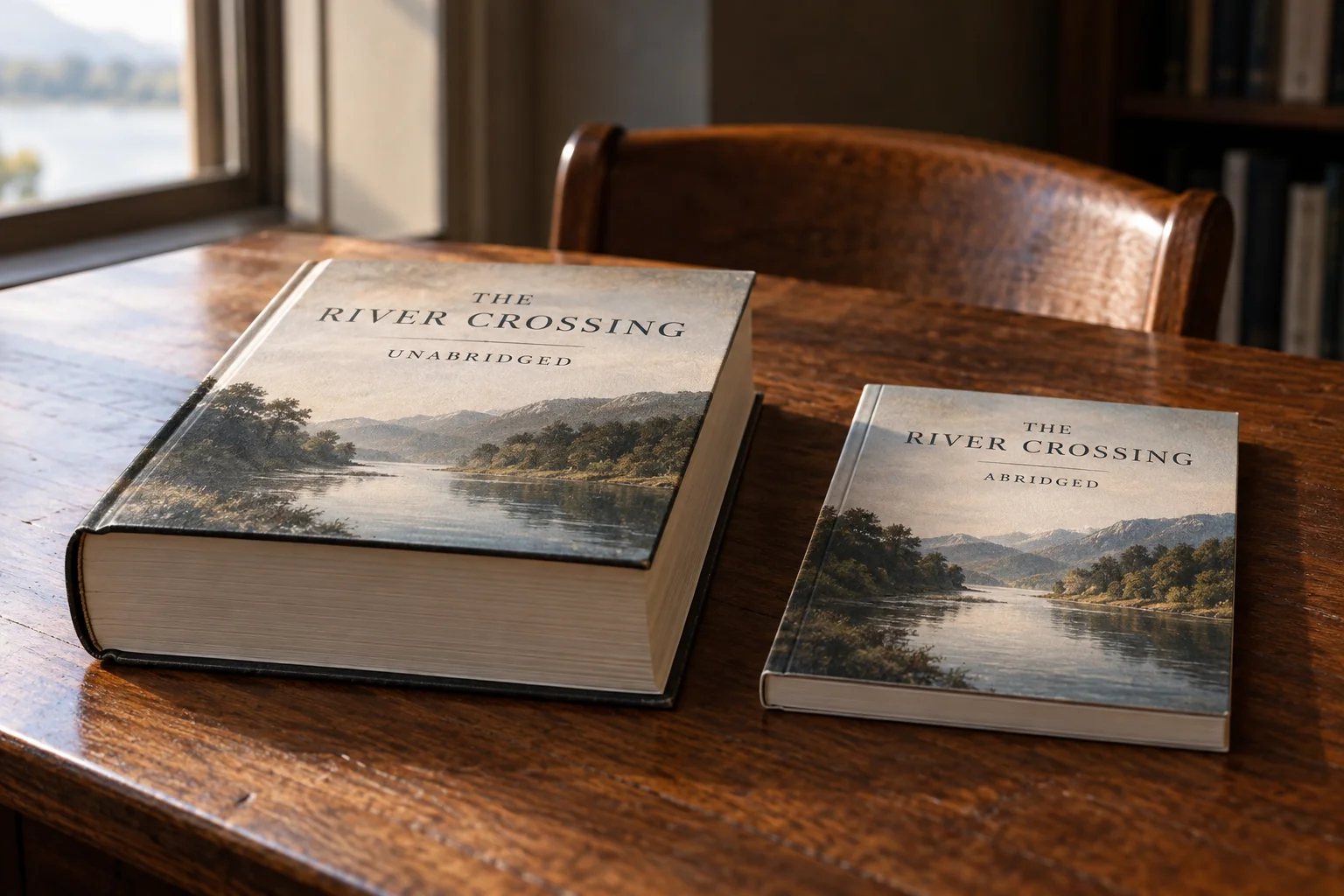
Abridged means shortened. Unabridged means the full text of that edition, without cuts. An abridged audiobook may remove descriptions, scenes or other passages to reduce listening time. An unabridged one reads the complete text. Choose unabridged if you want the whole book; choose abridged if you deliberately want a shorter version. help.kobo.com
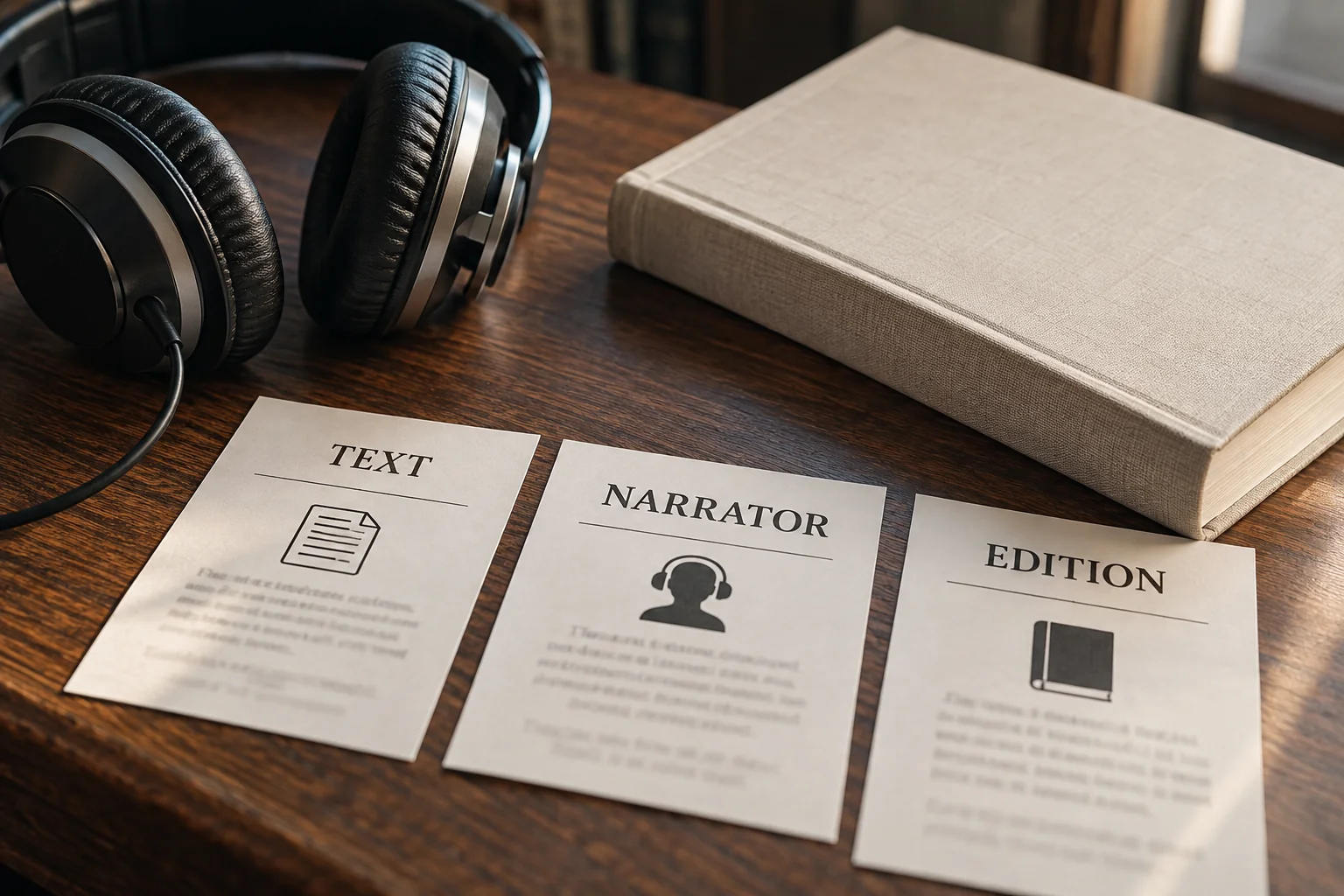
There's one more detail worth checking: which edition are you buying? Two unabridged recordings can use different translations or include different introductions. Check the publisher, edition and ISBN where available, then listen to the sample. Runtime can alert you to a difference, but a shorter recording isn't automatically missing part of the book.
What gets cut
An abridgement shortens a work by removing or condensing material, rather than meeting a fixed percentage reduction. Merriam-Webster defines abridged in terms of shortening, especially through omitted words or passages; its definition gives no numerical threshold. The label alone therefore cannot tell you how extensive the cuts are. (merriam-webster.com)
An editor might trim descriptions, remove a minor scene, reduce a subplot or cut repeated explanations. What matters is how those choices affect the book. Does a nonfiction argument still include the evidence behind its conclusion? Does a character's change of heart still make sense? Keeping the headline events isn't always enough to keep the same experience.
Think about why you're reading. If you want an introduction to a long story, its central plot may be enough. If you're studying the language, discussing a particular chapter or evaluating an argument, you may need the passages an abridger left out. Your purpose is a better guide than assuming one edition is always the right choice.
One title can produce two different experiences
Imagine a 90,000-word mystery with a quiet subplot about the hero's distrust of a friend. A shorter edition keeps the mystery and its solution but removes most of that subplot. You can still follow who committed the crime. What becomes harder to understand is why the hero's eventual reconciliation with the friend matters so much.
In the full version of our fictional story, the friend hides a letter, admits why and later returns to help at a personal cost. The shorter version keeps only the rescue. Both show the same action, but the full version has built the distrust that makes the rescue emotionally important. That's a difference you won't see from the plot summary alone.
Some cuts work beautifully; others remove something you wanted from the book. If your class or book group plans to discuss the hidden letter in this example, check that the scene is included. The same title and cover aren't enough. Look at the relevant passage or ask about the edition before deciding.
How to check an audiobook listing
Find the explicit abridged or unabridged label first, then establish which text the recording uses. Kobo's help page explains what those labels mean, but does not specify a standard amount of shortening. Treat an unlabeled recording as unresolved rather than automatically complete. (help.kobo.com)
- Open the full product details. Look for an abridgement or edition field rather than stopping at the cover or search-result card.
- Identify the underlying text. Check the language, translator, revision, and any named source edition. For a classic, the translator’s credit can be as important as the author’s.
- Record the narrator and publisher. Use these details to distinguish recordings with otherwise similar names.
- Compare runtimes only after matching the work. A substantial difference should prompt a closer look at the edition notes, not an immediate conclusion that the shorter recording is cut.
- Listen to the sample. Assess whether the delivery suits you, and compare a passage with your intended text when exact wording matters.
Runtime also depends on performance. Two narrators reading the same words can take different amounts of time because of pace and pauses. One edition might add an introduction while another starts with chapter one. Treat a large runtime difference as a reason to check the listing, rather than proof that one recording has been cut.
If you still aren't sure, ask a specific question: “Is this an unabridged reading of this translation, and does it include the editor's introduction?” That gives the seller something clear to answer. Asking for the “full version” can leave you talking past each other when several complete editions exist.
How to check a print or ebook listing
Read the edition description and sample before relying on the page count. Search for terms such as abridged, condensed, adapted, and retold, then inspect any editor or adapter credit. Publishing metadata distinguishes shortened editions from adaptations for another audience or medium, so these clues deserve separate attention. (ns.editeur.org)
Next, compare the publisher, edition, and ISBN with the book you actually need. ISBN.org explains that a new edition receives its own ISBN, even when its title stays the same. However, different formats and bindings also receive separate ISBNs. A paperback and hardcover can therefore have different identifiers without one being abridged. (isbn.org)
Open the copyright page and sample, then look at the edition statement and contents. For coursework, begin with the ISBN your instructor supplied. If you'd prefer an ebook or audiobook, ask which equivalent edition is acceptable. A complete text can still use different wording or page references from the edition the class is discussing.
A page count is a clue, not a verdict. Larger type and illustrations can add pages without adding words. Removing notes can make a book shorter while leaving the main text complete. If one listing has far fewer pages, look for the explanation in its description, sample and edition details before assuming it is abridged.
Example: three versions of the same audiobook
Let's compare three imaginary recordings of The Quiet Harbor. A is an unabridged reading of the original text, lasting 10 hours. B is explicitly abridged and lasts 6 hours, with the same language and publisher. C is unabridged but uses a new translation and includes an introduction; it runs for 11 hours 20 minutes. Here's what those details tell us.
| Listing | Supported conclusion | Unsupported conclusion |
|---|---|---|
| A: unabridged, 10 hours | It presents the complete text of its identified edition. | Its wording and supplementary material must match every other edition. |
| B: abridged, 6 hours | It is shortened, and its runtime is four hours less than A’s. | Exactly 40% of the written words have been removed. |
| C: unabridged, 11 hours 20 minutes | It presents a different identified text and includes an introduction. | Its greater length proves that A has undisclosed cuts. |
B’s runtime is 40% shorter than A’s: (10 − 6) ÷ 10 × 100 = 40%. That measures the difference in listening duration, not the proportion of words deleted. To calculate a word-cut percentage, you would need comparable word counts from the source text and abridgement.
C is 1 hour 20 minutes longer than A, but we don't know how much comes from the translation, introduction or reading pace. Choose A if you need the original text, C if you want the new translation and B if you knowingly prefer the shorter version. The longest recording isn't automatically the closest match for your purpose.
What unabridged does and does not promise
Unabridged is a completeness claim, not a promise that every edition is identical. Kobo describes an unabridged audiobook as containing the full text without cuts. Apply that claim to the text identified in the product details, rather than assuming it includes every introduction or annotation published elsewhere. (help.kobo.com)
Separate three questions: Which version of the work is this? Has that version been shortened? Which additional materials are included? Publishing metadata treats features such as annotations and restored passages separately from abridgement status. An unabridged label does not answer all three questions at once. (ns.editeur.org)
If an assignment requires a particular introduction, make sure it's included. If you need an author's revised text or a named translation, find that edition first and compare formats afterward. When quoting, cite the version you actually read. That way, someone following your reference can find the same wording instead of wondering why their copy differs.
Abridged is not the same as adapted or summarized
Abridgement concerns shortening; adaptation concerns changing a work for a different purpose, audience, or medium. They can overlap, but one label should not be substituted for the other. EDItEUR’s ONIX edition codes distinguish these categories and recommend describing the nature of an adaptation. (ns.editeur.org)
| Label | What to expect | Best buying check |
|---|---|---|
| Abridged | A work shortened through omissions or condensation | Read the edition statement and any explanation of the cuts. |
| Unabridged | The complete text of the identified edition | Confirm the source edition or translation as well as the label. |
| Adapted or retold | A reworked presentation, potentially changing language, structure, or medium | Check the adapter’s credit, intended audience, and sample. |
| Selected | A choice of works or material from a larger body | Inspect the contents; do not assume every selection is itself complete. |
| Excerpt | A passage or section rather than the entire work | Check where the extract begins and ends. |
| Summary | An account of the main argument or plot, not the original work itself | Read the description and check who wrote the summary. |
For a younger reader, look at retellings if the main problem is difficult vocabulary. Cutting pages doesn't necessarily make the language easier. For an audiobook listener who wants the author's prose, check whether a dramatization uses a rewritten script. Both can be enjoyable choices, but you want to know which experience you're buying.
Listen to the sample before you choose
The label tells you whether the text was shortened; the sample helps you decide whether you'll enjoy this version. Listen to the narrator, look at the translation and check the presentation. “Unabridged” doesn't promise a favorite performance, and “abridged” doesn't mean a carefully prepared shorter edition can't suit you.
Read reviews with the edition details in mind. A complaint about missing scenes or praise for a narrator may refer to a different release under the same title. Look for the recording, publisher and narrator the reviewer names. A library catalog can also help you compare editions when the store listings are difficult to untangle.
Price doesn't settle the question either. A cheap edition can contain the full text, and an expensive one can be shortened. Find the version that includes what you need, then compare prices for that version. Otherwise, saving a few dollars may leave you buying another copy to get the material you were looking for.
If you bought the wrong audiobook
Check your purchase against the seller’s return requirements before buying a replacement. Audible’s US policy, dated September 3, 2026, says active Premium members in good standing may return eligible titles purchased with credits within 365 days of purchase. It requires starting the return on the website, not directly in the app. Consult Audible's US help page for the terms applicable when you request the return. (help.audible.com)
Save your receipt and the listing details that explain the mismatch. Then open the seller's purchase history on its website and look for a return option. If you can't find one, contact support with the order information. It's better to check the original purchase than keep buying similar-looking alternatives and hoping one is correct.
Do not assume that discovering another edition makes your purchase eligible, or that Audible’s US terms apply to another store or country. Ask support about your particular transaction. Before replacing it, confirm the new product’s label, narrator, translation, and format so that the same uncertainty does not follow you to the next purchase.
When an abridged edition can make sense
Choose an abridged edition when the shorter text itself meets your purpose. That might mean an introduction to a long work, a specifically assigned classroom edition, or a shorter performance approved by the author. Look for a clear explanation of who prepared the edition and what kind of shortening was intended.
If you want the whole text but have less listening time, try a comfortable faster playback speed. If you want simpler language, compare adaptations or retellings. Those are different needs. An abridged recording gives you less text, while faster playback keeps the recording intact and changes how quickly you hear it.
For the original worked example, a 10-hour unabridged recording takes 8 hours at 1.25× speed, assuming continuous playback: 10 ÷ 1.25 = 8. That saves two hours without removing any part of the recording. Pauses, rewinds, and breaks increase the real time you need.
The six-hour abridgement of our fictional book saves more listening time, but it changes the material you receive. The ten-hour recording at a faster speed keeps the full recording. Choose according to whether you want a shorter version of the story or simply a quicker way to listen to all of it.

The dictionary use of unabridged
An unabridged dictionary offers broader coverage, not a record of every word ever used. Merriam-Webster explains that a large unabridged dictionary has room for more entries than its collegiate dictionary, including words supported by fewer citations. Editors still evaluate evidence of usage when deciding what to include. (merriam-webster.com)
For dictionaries, look at the audience and coverage notes rather than choosing by size alone. A specialist reference may explain the terminology you need better than a much larger general dictionary. For everyday reading, clear definitions and helpful usage examples may matter more than the largest possible number of entries.
Imagine comparing a medical dictionary with a general one. The medical book may explain a technical term in detail while omitting an ordinary household word. That reflects what the book is for. Ask whether the coverage suits your task, just as you would ask whether a particular edition of a novel contains the text you want.
Publishing and rights
Before publishing an abridgement, establish the right to use and shorten the source text. The US Copyright Office's guidance on derivative works identifies abridgements and condensations as examples of derivative works. For a copyrighted source, obtain the appropriate authorization unless a relevant legal exception applies; merely removing material does not establish permission. (copyright.gov)
Check the exact source, not just the age of the underlying story. A recent translation or newly added material can have protection separate from a public-domain original. Also establish the intended markets: copyright protection is governed by national law, so a conclusion for one country is not a worldwide clearance. Seek qualified rights advice when the position is uncertain. (copyright.gov)
Keep a practical rights and edition record containing the source edition, the person preparing the abridgement, the permission or public-domain basis relied upon, and the intended territories and formats. Separately, prepare a description that tells buyers what has been shortened and identifies the new edition. Treat ISBN assignment as product identification—not as rights clearance.
Before buying, match the title and author, check the edition or translation, find the abridged or unabridged label and confirm the format. Then read or listen to a sample. Once you know the book contains the material you need, you can choose the version you'll most enjoy spending time with.