Table of Contents
Are you mostly reading on commutes, in bed, or at a desk? That’s usually the real question behind “ebook vs paperback.” I’ve noticed people don’t actually disagree about the books—they disagree about the way they want to read day to day. And once you look at cost, convenience, and comfort side by side, the choice gets a lot less fuzzy.
In my experience, ebooks win when you want instant access and easy searching. Paperbacks win when you want your eyes and hands to feel like they’re “really” in the story. So let’s compare them in a practical way—what you’ll pay, what you’ll notice while reading, and what matters if you’re studying or reading with accessibility needs.
By the time you reach the decision rules below, you should be able to say, “Yeah, I know which one I’d pick for my life.”
Key Takeaways
Key Takeaways
- Cost + convenience: Ebooks are usually cheaper upfront and carry easily (especially if you’re juggling multiple titles). Paperbacks cost more per book on average, but you get a physical reading experience—pages, weight, and a “no charging required” factor.
- Real-world pricing: Digital editions avoid printing and shipping. Paperbacks have paper/ink/binding/distribution costs, though print-on-demand can help reduce risk for small runs.
- Accessibility: Ebooks can adjust font size, enable text-to-speech, and support dyslexic-friendly fonts. Paperbacks can be easier for some readers who dislike screens or need a stable, glare-free setup.
- Comprehension + recall: It’s not that one format magically improves memory for everyone. In research reviews, differences tend to be small and depend on reading purpose (pleasure vs study) and how people interact with the text (notes, highlights, device settings).
- Best choice depends on your use case: Pick ebooks for searching, adjustable reading, and travel. Pick paperbacks for long uninterrupted sessions, collecting, or when you want fewer screen distractions.
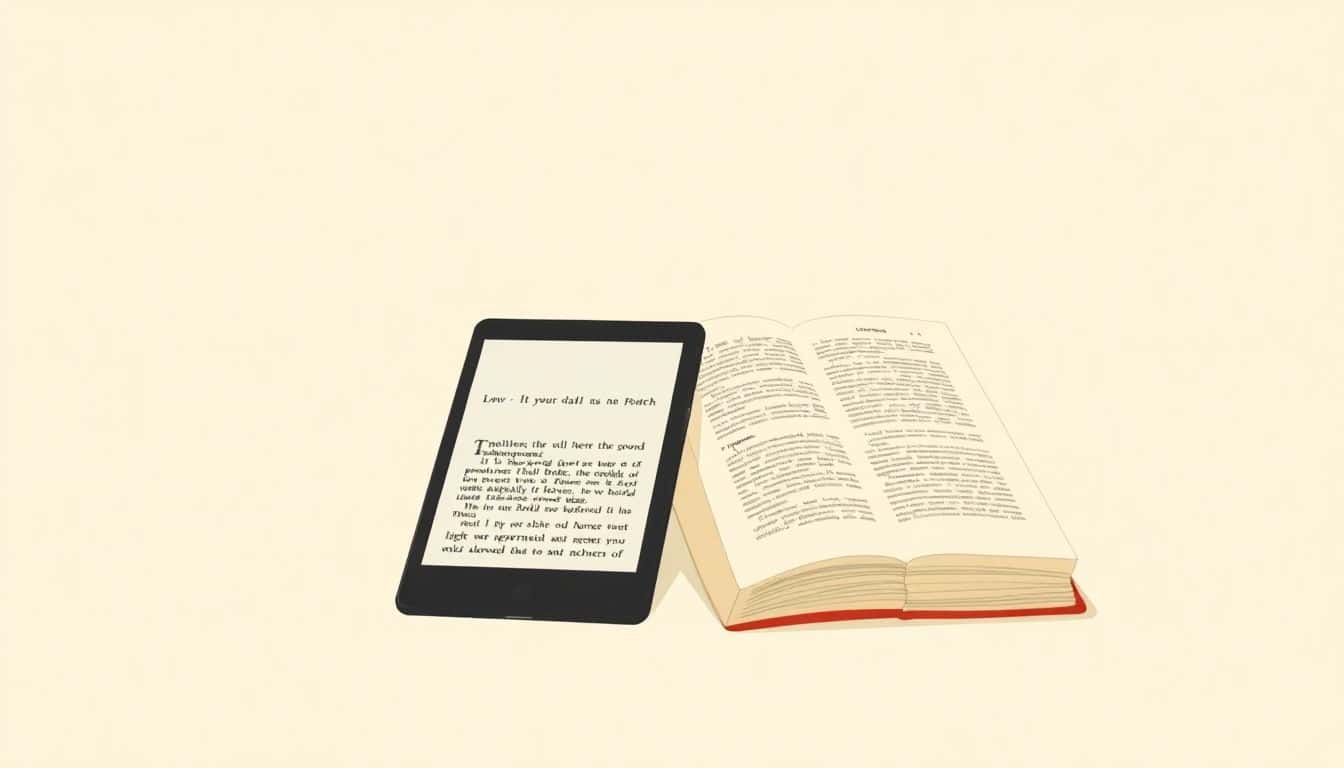
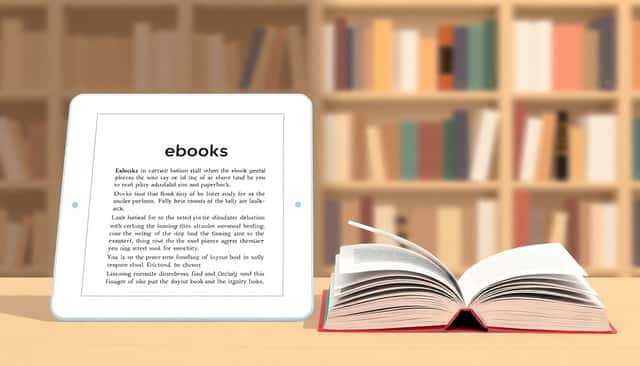
When comparing ebooks and paperbacks, the biggest difference isn’t “quality” so much as format and how you interact with the text.
Ebooks are digital files you read on devices like tablets, smartphones, dedicated eReaders, or computers. What I notice right away is how fast you can move around—search a word, jump to a chapter, adjust font size, and highlight without digging for a pen.
Paperbacks are physical books. You turn pages by hand, and that tactile routine matters more than people expect. There’s also something grounding about not worrying about battery levels, glare, or notifications.
Now, let’s talk money—because price is usually what starts the whole debate.
Cost-wise, ebooks usually win upfront. A lot of ebooks land for just a few dollars, and you don’t pay for printing or shipping. If you’re self-publishing, ebook production can be dramatically cheaper since you’re not paying for paper, binding, or distribution to stores.
But paperbacks aren’t always “more expensive”—they’re just pricier per unit. Printing involves paper, ink, binding, and distribution. Print runs and quality choices can swing costs a lot. If a publisher does a small run, the per-copy price can be higher; if they do bulk, unit costs drop.
For a bigger picture view, Statista tracks ebook revenue growth. The figure that’s often cited for global ebook revenue (around $14.92B in 2025) comes from Statista’s market forecast reporting. One thing to keep in mind: revenue isn’t the same as “number of books sold,” and it can vary by region and definition (revenue vs units, consumer vs institutional sales, etc.).
On the print side, the U.S. still buys a lot of physical books. That “hundreds of millions of copies” type of number you’ll see for 2024 is usually based on industry tracking that counts copies sold, not revenue. It’s a good reminder that print isn’t going anywhere—especially for genres people like to collect.
There’s also the environmental angle. In general, ebooks avoid paper and ink, but eReaders and the electricity behind devices aren’t free of impact. Paperbacks require raw materials and manufacturing, but paper products can be kept for years (or decades if you treat them well). The best approach depends on your habits: if you re-read, lend, or keep books, paper can make more sense; if you’re constantly buying new titles you won’t revisit, ebooks can be the lighter-footprint option.
Reading comfort: this is where personal preference shows up hard. I’ve read long chapters on an eReader with the brightness turned down, and I can go for hours. I’ve also had nights where my eyes felt “dry” from screens and I switched to a paperback and suddenly felt better. Neither is universally better—your lighting, your device settings, and even how long you read at a time matter.
One claim that comes up a lot is that print improves comprehension and memory because it’s tactile. The truth is messier. Research reviews comparing digital and print reading often find small or inconsistent differences, and outcomes depend on task type (learning vs entertainment), how readers navigate, and whether they take notes/highlights.
For example, a well-known meta-analysis by R. Delgado and colleagues (2018) examined reading comprehension across formats and found effects were not consistently in favor of either medium. Another large review by Ward and colleagues (2017) (and related work in the digital reading literature) generally points to the idea that interaction—like searching, annotating, and rereading—can matter as much as the device itself. If you want the practical takeaway: the format doesn’t automatically make you learn better; your study behavior does.
Convenience: ebooks are hard to beat if you travel or read on the go. I can keep an entire “to-read” stack on one device. Paperbacks are heavier and take up space, but they’re still convenient in a different way—no charging, no app updates, and no “where did my reading app go?” moment.
In surveys and usage reports, ebooks are commonly read on tablets, smartphones, and laptops. That matches what I see in real life: people grab their phone for short sessions, use tablets for longer reading, and sometimes move to laptops for work-related reading.
Also worth mentioning: physical books are easier to share without worrying about digital rights or platform restrictions. You can hand a paperback to a friend and be done. With ebooks, sharing can be limited depending on retailer and licensing.
If you’re interested in turning your ideas into a published book or exploring different publishing options, you might find resources on how to get a book published without an agent helpful.
9. Cost Considerations for Ebooks and Paperbacks
Let’s get real about the costs. If you’re deciding between ebooks and paperbacks, you’re not just comparing “$X vs $Y.” You’re comparing how those dollars get spent.
Ebooks usually have a lower upfront price. Sometimes it’s a few dollars less, sometimes it’s a lot more—depends on the publisher and whether there’s a sale. The big reason is simple: no printing, no shipping, and no shelf inventory.
If you’re self-publishing, the costs can be even more favorable. You can publish an ebook without paying for physical inventory. But don’t confuse “cheaper to produce” with “cheaper to do well.” Editing and cover design still matter, and those costs show up whether you publish digitally or in print.
Paperbacks include more moving parts: paper, ink, binding, packaging, and distribution. Quality choices (paper thickness, cover type, trim size) also affect price. And if you’re doing small batches, the per-copy cost can feel surprisingly high.
That’s where print-on-demand (POD) can help. You avoid large upfront print runs, but POD often has slightly higher per-copy costs than bulk printing. If you’re selling, the break-even point depends on your retail price, your margin, and POD fees.
Here’s a tip that actually helps: if you’re unsure whether a paperback will sell, don’t guess—model it. For example, if POD costs you $4.50 per copy (printing + fulfillment) and you sell it for $12.99, you might keep around $7–$8 after platform and shipping (varies by retailer). If you only expect a handful of sales, POD can be fine. If you expect hundreds, bulk printing usually makes more financial sense.
For more details on the expenses involved in different publishing routes, visit how much does it cost to write a book.
10. Accessibility and Ease of Reading
Accessibility isn’t a “nice-to-have” for ebooks—it’s one of their strongest practical advantages.
Ebooks can be customized on the fly. In settings, you can usually change font size, line spacing, and margins. Many readers also benefit from text-to-speech and built-in screen reader support. If you use dyslexic-friendly fonts or need a specific background color for readability, ebooks make that adjustment much easier than swapping paper editions.
In my own reading sessions, I’ve noticed that when I increase font size and bump line spacing, I naturally slow down just a bit—and that can actually help comprehension for dense nonfiction. It’s not magic. It’s just making the text easier to track.
Paperbacks have their own accessibility benefits, too. A physical book doesn’t require a backlight. No glare from a bright screen, no app menus, no battery anxiety. For some readers, that means fewer distractions and easier long-form reading.
Also, paperbacks don’t “reflow” like ebooks. That matters for people who rely on consistent layout cues—like headings, indentation, and page structure.
And yes—eye strain is real. If you’re prone to it, a paperback can feel easier during long reading sessions. But it’s worth adding: plenty of ebook readers fix this with device brightness, warm/night mode, and the right font size.
Tip: If you read paperbacks, consider small upgrades like a clip-on book light (warm color temperature), a desk lamp positioned to reduce glare, or even a magnifier for smaller print. If you read ebooks, spend 2 minutes in your device settings—turn on night mode, set a comfortable font size, and test a line spacing you can stick with.
Want to enhance your understanding of digital accessibility options? Check out how to write in present tense for tips on clear communication.
11. Impact on Comprehension and Retention
People ask this like it’s a yes/no question: “Does print help me remember more than digital?” I get why—when you’re studying, you want certainty.
But research and real-world reading both point to something more nuanced. Studies that compare ebook vs print often find that any differences tend to be small and influenced by how readers interact with the material.
Here’s what I’ve noticed in practice: ebooks make it easy to search, jump, and quickly revisit a section. If you’re taking notes digitally, you can tag ideas and find them later in seconds. That can improve “review efficiency,” especially for textbooks, manuals, or anything you’ll reference again.
Paperbacks, on the other hand, encourage a slower reading rhythm. Notes in the margins (or sticky notes) also create a physical memory cue. For some learners, that tactile routine helps them form a stronger mental map of where information lives in the book.
Handwritten notes matter here. If you’re reading a paperback and you underline or jot quick summaries, you’re doing an active learning behavior. That’s the part that can drive comprehension—not the paper itself.
Another approach that works well: use a hybrid workflow. Read digitally for navigation and highlighting, then print (or re-read in print) the most important chapters for deeper focus. I’ve seen this strategy work especially well for exam prep and dense nonfiction.
So if you want a decision rule: choose the format that helps you stay engaged and practice active recall (notes, summaries, rereading). That’s where the gains come from.
Curious about how to boost your writing skills? Visit how to write a play for actionable tips on storytelling techniques.
12. The Future Trends in Ebook and Print Markets
Both formats are evolving, and honestly, that’s what makes this comparison interesting. It’s not “ebook replaces print.” It’s more like print and digital keep borrowing each other’s strengths.
Ebooks are likely to keep growing as more people read on tablets and eReaders, and as audiobooks and interactive features become more common. Also, ebooks are easier to update—new editions can be pushed without reprinting thousands of copies.
Print will keep its foothold, especially for collectors, special editions, and niche markets where people want a physical artifact. There’s also something about print that feels “finished”—like you’ve got the book, you own it, you’re done.
Self-publishing platforms have made it easier for authors to offer both formats without jumping through as many hoops. That competition tends to improve availability and pricing, which benefits readers either way.
Eco-conscious buyers might lean toward ebooks for less paper use, but the environmental story includes device manufacturing and e-waste. Print has its own footprint too, but longevity (keeping books for years) can shift the equation.
Trend: hybrid models are becoming more common—think print-on-demand paired with digital extras, or digital supplements that make a print book more useful without requiring constant screen time.
Stay updated on evolving trends by visiting resources like how to publish a coloring book for ideas on blending formats and reaching wider audiences.
FAQs
Most of the time, ebooks cost less because they don’t require printing or shipping. That said, pricing varies by publisher, promotions, and whether the book is new or part of a catalog. Paperbacks usually include more production and distribution costs, so they’re often higher per title.
Paperbacks feel tactile and don’t require charging, which can make long sessions feel easier for some people. Ebooks offer adjustable fonts, quick navigation, and easy search/highlights—but you’re reading on a screen, so comfort depends on your device settings and lighting.
Ebooks are usually more convenient because one device can hold hundreds of titles. Paperbacks are bulkier and heavier, but some people still prefer them for the offline, no-battery experience and the “grab-and-go” simplicity.
Paperbacks can wear out from handling, sunlight, and humidity, but a well-kept paperback can last for years. Ebooks don’t “degrade” like paper, but access depends on devices, apps, and the survival of your purchased files/accounts.