LIFETIME DEAL — LIMITED TIME
Get Lifetime AccessLimited-time — price increases soon ⏳
AI Tools

Liner Write Review (2026): Honest Take After Testing

9 min read
#Ai tool

Table of Contents

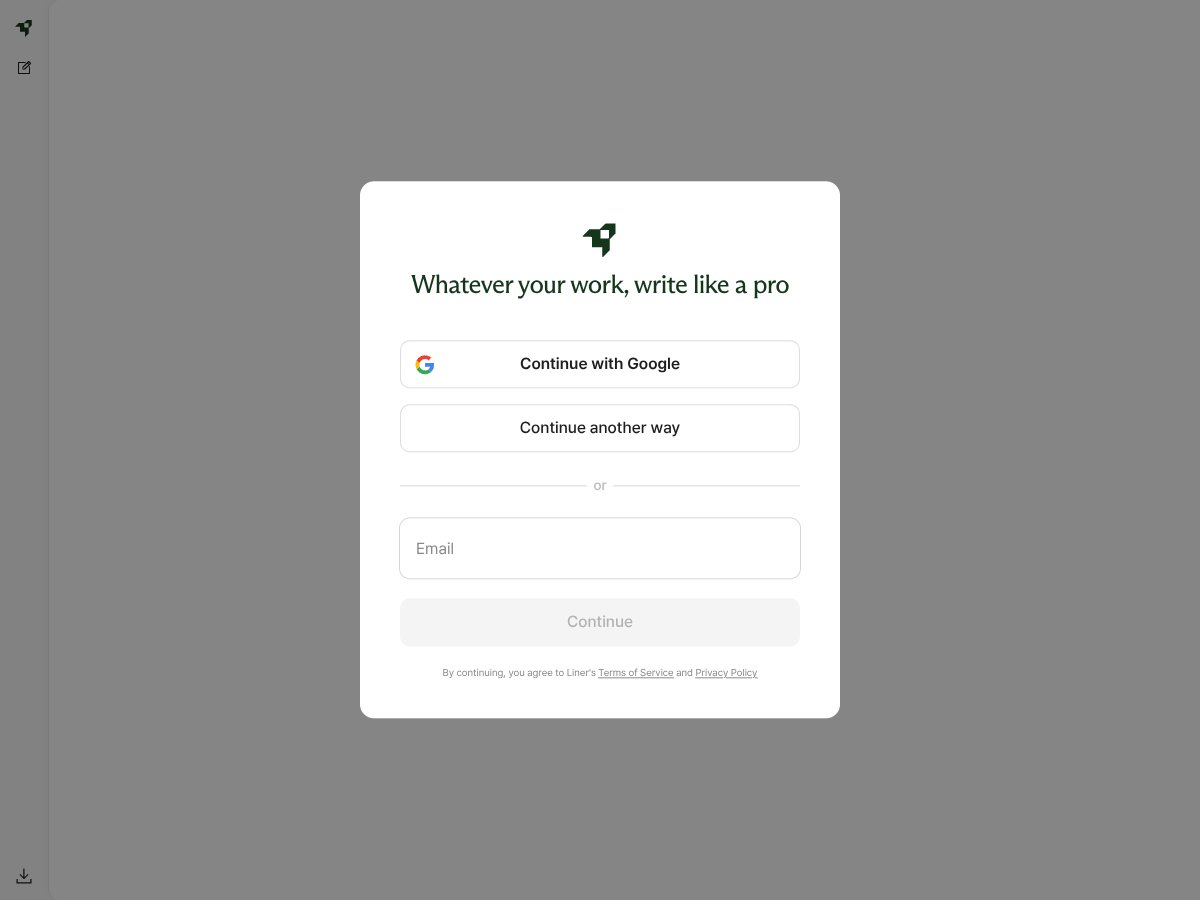
Liner Write screenshot

What Is Liner Write?

Honestly, when I first heard about Liner Write, I was a bit skeptical. The idea of an AI tool that helps draft emails, business plans, or reports while also verifying sources sounded almost too good to be true — especially for someone who’s seen a lot of so-so AI writing tools that overpromise and underdeliver. But I was curious enough to give it a shot.

What Liner Write claims to do is pretty straightforward: it’s an all-in-one workspace designed for professionals who need to produce accurate, structured documents quickly. The tool combines drafting, research, and editing—supposedly without jumping between multiple apps or tabs. Its main selling point seems to be source-backed writing, with real-time source verification and citation support integrated directly into the writing process.

From what I could gather, Liner Write comes from the team behind Liner, which is known for its research and note-taking platform. So, there’s some credibility there—they’re not just some random startup throwing together an AI tool. Their focus on research-backed output suggests this is aimed at academics, researchers, or professionals who care about citations and accuracy.

My initial impression? It’s as advertised—at least on the surface. The interface looks clean enough, and the core idea of combining research and writing in one place makes sense. That said, I want to be upfront: this isn’t a magic bullet for casual writing or creative projects. It’s built more for structured, source-heavy documents. Also, I couldn’t find any pricing details or clear instructions on how to actually get started, which is a heads-up to keep in mind.

In the end, I’d say it’s promising, but it’s not a universal solution. If you’re someone who needs to write with citations and verify sources quickly, it might be worth exploring further. But if you’re just looking for a casual writing assistant, you might find it overkill or a bit complicated.

Liner Write Pricing: Is It Worth It?

Plan Price What You Get My Take
Free Tier Unknown / Possibly limited Access to basic drafting and research features Could be enough for casual or light users, but details are vague. Watch out for limitations on usage or features.
Pro Plan Not publicly confirmed Enhanced research, citation support, possibly more exports and integrations Given the lack of clear pricing, it's hard to say if it’s a good deal. The promotional discounts suggest it might be premium-priced, so compare this carefully against competitors like Grammarly or Notion AI.

Honest assessment: Here's the thing about the pricing — the lack of clear, publicly available prices makes it tricky to evaluate value upfront. If you're considering this, I’d recommend trying the free tier first (if available) to see if the features meet your needs before committing to a paid plan. And be wary of any hidden costs or feature gates that might limit your experience once you upgrade.

Who should consider paying for Liner Write? Probably professionals involved in research-heavy writing—academics, policy analysts, or legal professionals—who need source-backed, structured documents. If you’re just looking for a quick, casual writing tool, this might be overkill or too expensive.

The Good and The Bad

What I Liked

  • Source-backed writing: The real-time citation support is a standout feature—saving me the hassle of manual sourcing and reducing the risk of unsupported claims.
  • All-in-one workflow: Combining research, drafting, and editing in one workspace streamlines the process, especially if you’re juggling multiple sources.
  • Structured output: The ability to generate professional, formatted reports or papers helps maintain clarity and professionalism, saving time on formatting.
  • Research integration: The in-editor source lookup and claim verification are handy for ensuring accuracy without breaking your flow.
  • Custom editing instructions: Telling the AI to adjust the tone, structure, or clarity directly in the workspace can make revisions smoother.

What Could Be Better

  • Unclear feature accessibility: The lack of detailed official info on what features are behind a paywall makes it hard to gauge if the upgrade is worth it.
  • Pricing opacity: Without transparent costs, it’s a gamble whether this tool fits your budget, especially if you’re a small team or solo user.
  • Learning curve: The broad set of features and research tools might feel overwhelming for new users or those wanting a simple writing assistant.
  • Limited info on integrations: If you rely on other tools like Google Docs or project management platforms, it’s unclear whether Liner Write plays nicely with them.
  • No user reviews or testimonials: This makes it hard to gauge real-world effectiveness or customer satisfaction at this stage.

Who Is Liner Write Actually For?

If you're a researcher, academic, or professional who regularly creates source-backed reports, proposals, or papers, Liner Write could be a game-changer. It’s best for those who need precise citations and verified claims, especially if your workflow benefits from integrating research and drafting into a single platform. For example, if you’re a policy analyst drafting reports that require rigorous sourcing, this tool might help you save time and improve accuracy. Similarly, legal professionals preparing documents with references could find value here.

On the other hand, if you're a casual writer, content creator, or someone who doesn’t need strict source verification, this might be more tool than you need. The structured, research-heavy approach is tailored for professional environments where credibility matters.

Who Should Look Elsewhere

Fair warning: if your main goal is creative writing, storytelling, or casual blogging, Liner Write probably isn’t the right fit. Its focus on sourcing and structured documents can feel too rigid or complex for informal projects. Additionally, if you’re looking for a simple AI assistant that just helps generate ideas or rough drafts without source verification, tools like Grammarly, Jasper, or Notion AI may serve you better. Also, if transparency around pricing is crucial for your decision-making, the current lack of clear costs might be a dealbreaker.

How Liner Write Stacks Up Against Alternatives

Notion AI

  • What it does differently: Notion AI is embedded within the popular Notion workspace, offering versatile writing, note-taking, and task management. It’s great for teams and project organization, but its AI is more general-purpose and less focused on source-backed research.
  • Price comparison: Notion AI offers a free tier with limited AI credits, then charges around $8/month for the AI feature, which is cheaper than many specialized tools.
  • Choose this if... you want an all-in-one workspace for collaborative project management and light AI writing, and source-backed citations aren’t your top priority.
  • Stick with Liner Write if... you need detailed, source-verified research integration and professional citations for formal documents, which Notion AI doesn’t specialize in.

Perplexity

  • What it does differently: Perplexity is a conversational AI that excels at quick fact-checking and answering questions but lacks structured document creation and citation support.
  • Price comparison: Perplexity is free to use, but it’s more of an information tool than a writing assistant, so costs are minimal unless you subscribe to premium research tools.
  • Choose this if... you need quick answers and research summaries without the need for formal drafting or citations.
  • Stick with Liner Write if... you’re working on professional documents that require source-backed evidence and structured formatting.

Jenni AI

  • What it does differently: Jenni AI focuses on generating long-form content like blog posts or articles with a simple interface, but it offers limited source verification and citation features.
  • Price comparison: Jenni AI is generally priced around $20/month, making it more affordable but less research-focused than Liner Write.
  • Choose this if... you want quick, casual content creation without the need for rigorous sourcing or citations.
  • Stick with Liner Write if... accuracy and verified sources matter more than just generating text quickly.

Writesonic

  • What it does differently: Writesonic is a versatile content generator aimed at marketing copy, ads, and blog content, with less emphasis on research or citations.
  • Price comparison: Plans start around $15/month, making it a budget-friendly option but lacking in the source-backed features of Liner Write.
  • Choose this if... your main goal is marketing content, not formal research or professional reports.
  • Stick with Liner Write if... you need source verification, citations, and structured professional documents.

Bottom Line: Should You Try Liner Write?

Overall, I’d give Liner Write a solid 7 out of 10. It’s a robust tool if you’re serious about research-backed, structured writing and need source verification built in. The interface can feel a bit complex at first, especially if you’re used to simpler writing tools, but the payoff is in the quality and credibility of your output.

If you’re a researcher, academic, or professional who regularly drafts reports, proposals, or papers requiring verified sources, this is definitely worth trying—especially the free tier to see if it fits your workflow. The paid plans might be worth upgrading to if you need more advanced citation tools or seamless integration with larger research workflows.

Personally, I’d recommend it for anyone who values accuracy over casual writing. But if you’re just jotting down quick notes or creative writing without needing sources, a simpler tool like Notion or even a basic AI writer might suit you better.

If your main work involves detailed research and source verification, give Liner Write a shot. If your needs are more casual or creative, your money might be better spent elsewhere.

Common Questions About Liner Write

  • Is Liner Write worth the money? If source-backed, structured documents are your priority, yes. It’s a bit pricey but offers features that many other tools lack.
  • Is there a free version? Yes, there is a free tier with limited features, perfect for testing or light use, but the full capabilities require a paid plan.
  • How does it compare to Notion AI? Liner Write offers more precise source verification and citation support, while Notion AI is better for general project management and collaboration but less focused on professional citations.
  • Can I get a refund? Refund policies depend on the platform’s terms, but typically, paid plans have a cancellation window. Check Liner’s support for detailed info.
  • Does it support multiple citation styles? Yes, it supports various citation formats and exports, making it adaptable for different professional or academic needs.
  • Is it suitable for non-English writing? The primary focus is English, but it may support other languages depending on the complexity and source availability.

As featured on

Automateed

Add this badge to your site

Stefan

Stefan

Stefan is the founder of Automateed. A content creator at heart, swimming through SAAS waters, and trying to make new AI apps available to fellow entrepreneurs.

Related Posts

Goodreads Review Tips: How to Write Clear, Honest, and Engaging Reviews

Goodreads Review Tips: How to Write Clear, Honest, and Engaging Reviews

If you’ve ever felt stuck trying to leave a helpful Goodreads review, you’re not alone. Writing good reviews can seem tricky—how do you stay honest while being polite? Luckily, a few simple tips can turn your reviews into friendly, useful voices that help others find great books and share your thoughts clearly. Keep reading, and … Read more

Stefan
how long to write 500 words featured image

How Long Does It Take to Write 500 Words? Proven 2026 Tips

How long does it take to write 500 words? Real 2026 typing and essay benchmarks, plus simple, proven ways to write faster. Try these tips now.

Stefan
How Long Does It Take to Write a Book? Plan for Efficiency

How Long Does It Take to Write a Book? Plan for Efficiency

Have you ever wondered how long does it take to write a book? It’s a question that doesn’t have a one-size-fits-all answer, but it’s certainly one that tickles the curiosity of many authors. The process of writing a book is influenced by a variety of factors. These can range from the writer’s daily routine to … Read more

Stefan
best practices for honest affiliate reviews featured image

Best Practices for Honest Affiliate Reviews in 2026

Discover proven strategies for creating honest, transparent affiliate reviews that build trust, boost conversions, and ensure compliance in 2026. Learn more now!

Stefan
How to Write a Preface - Tips for Engaging Readers

How to Write a Preface – Tips for Engaging Readers

of like setting the stage before the main event. You want to give your readers a little heads-up about what they’re getting into. It’s not just any old intro; it’s your chance to chat with your readers before they jump into the heart of your book. In your preface, you get to share a bit … Read more

Stefan
how to write acknowledgements featured image

How to Write Acknowledgements: Complete Guide for 2026

Learn how to craft professional acknowledgements for your academic or scientific paper. Tips, examples, and best practices to enhance your publication.

Stefan
Your AI book in 10 minutes150+ pages · cover · publish-ready