Table of Contents

What Is Markia?
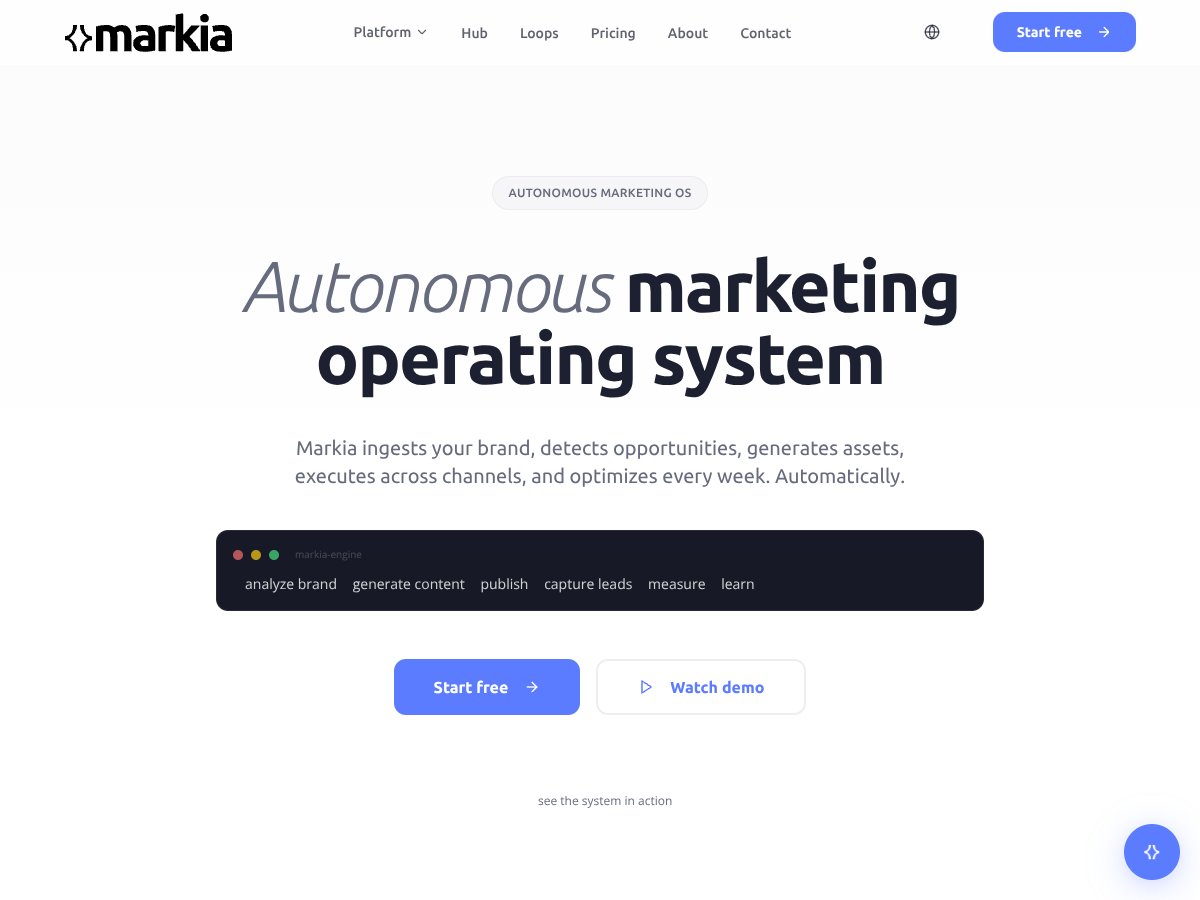
Honestly, when I first heard about Markia, I was intrigued but also skeptical. It promises to be an autonomous marketing system that handles everything from strategy to content creation, execution across channels, and even optimization — all automatically. Basically, it’s pitching itself as a one-stop-shop for your entire marketing growth loop, which sounds great in theory but makes me wonder how much actually gets automated versus just managed in the background.
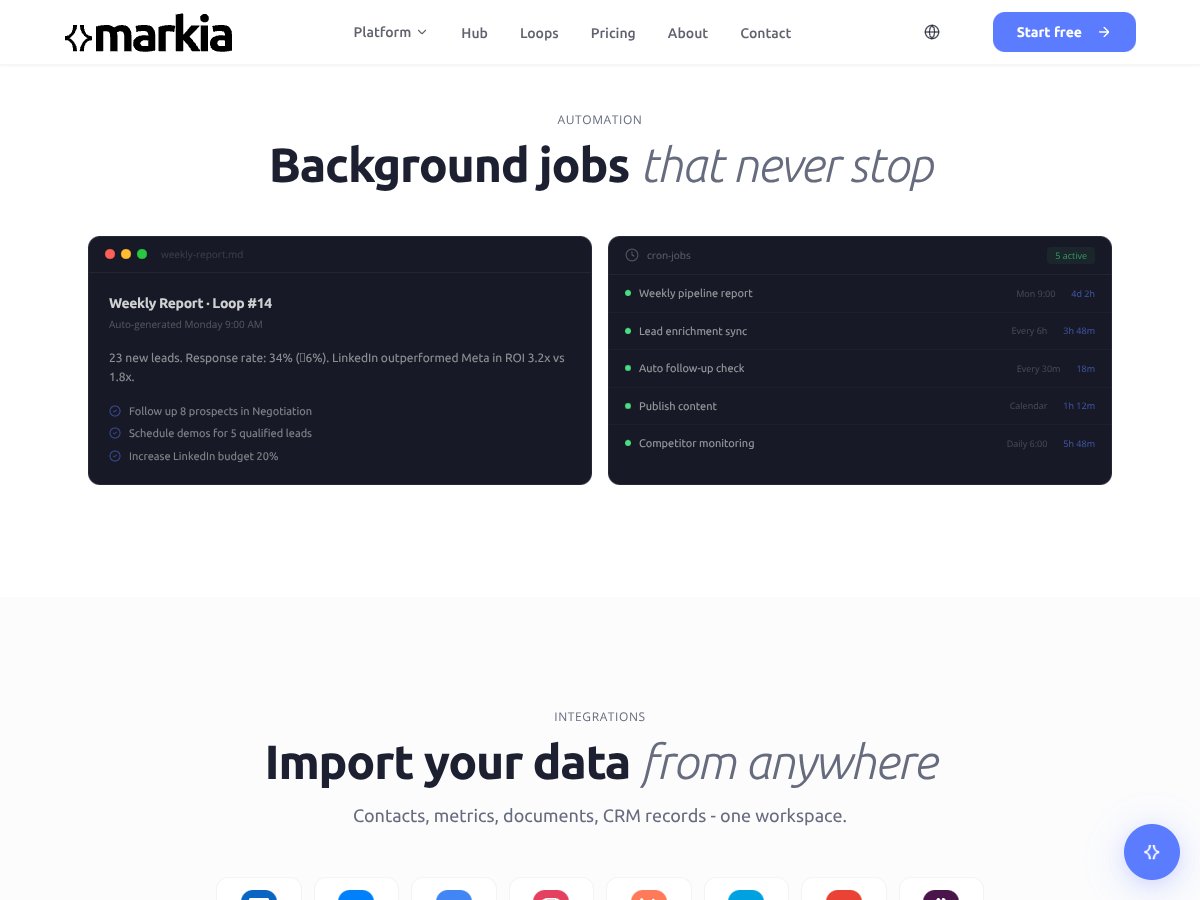
What it’s trying to solve is the common headache many small to medium businesses face: juggling multiple tools for content scheduling, social media management, CRM follow-ups, and analytics. Markia claims it ingests your brand, detects opportunities, generates assets, executes across channels, and keeps improving weekly — all without much manual intervention. If it works as advertised, it could save a ton of time and effort. But the thing is, it’s a pretty tall order for an AI-powered system to really handle all that smoothly.
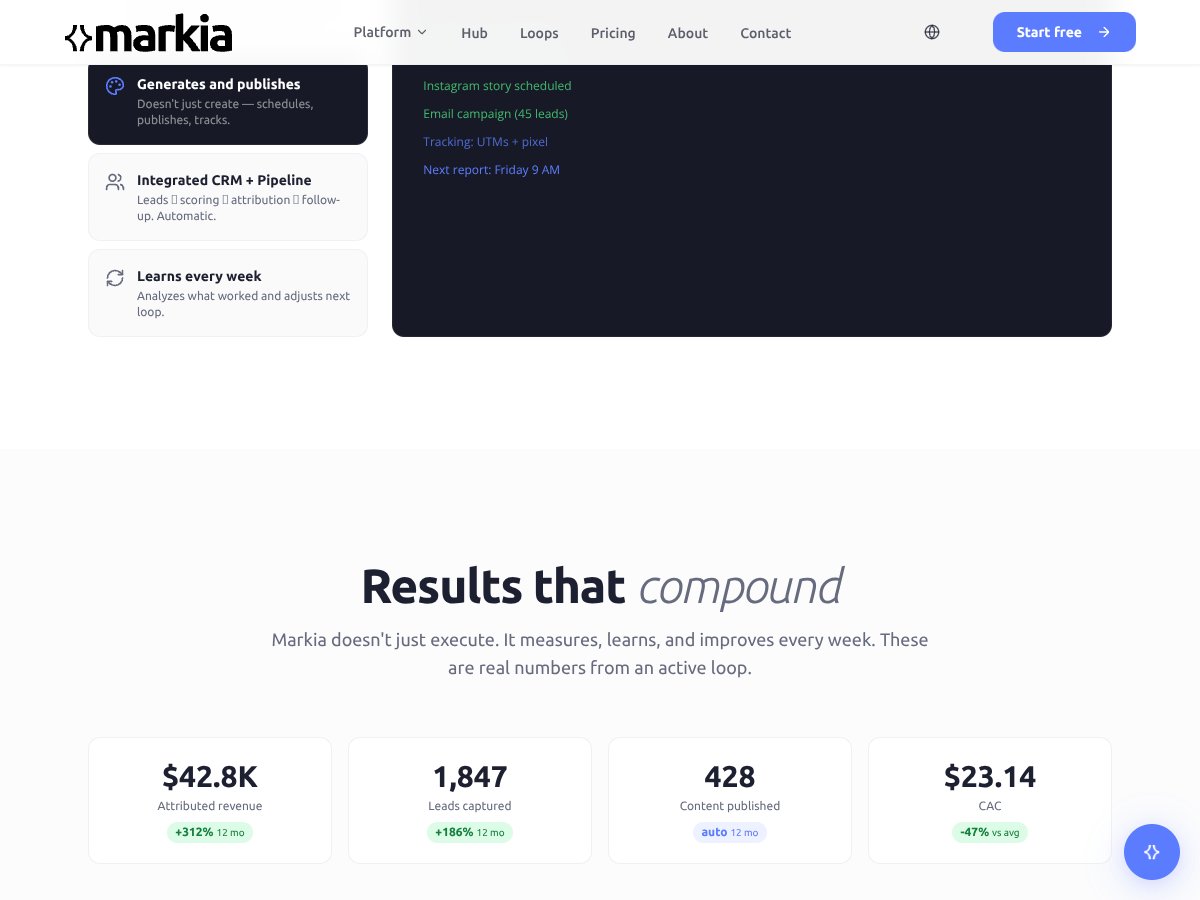
As for who’s behind it, there’s limited info on the team or company, which always makes me a little cautious. The website doesn’t go deep into the founders or their background, which is a bit of a red flag. That said, the marketing language is confident, and it does seem to have some real numbers backing its claims—like revenue attribution and lead generation stats.
My initial impression was that it’s as advertised on the surface — it appears to automate a lot of the routine marketing tasks. But, of course, I wasn’t expecting it to be perfect or to replace strategic thinking entirely. It’s more of an assistant that can handle repetitive work if set up correctly.
It’s important to manage expectations: Markia isn’t a magic button for instant growth. It’s not going to replace your entire marketing team or make nuanced brand decisions. It also doesn’t seem to handle things outside social media, email, and basic content publishing. So, if your marketing requires complex campaigns, deep personalization, or multi-channel orchestration beyond what’s listed, it might fall short.
Markia Pricing: Is It Worth It?

| Plan | Price | What You Get | My Take |
|---|---|---|---|
| Free Tier | Unknown / Not publicly listed | Likely limited in volume and features, possibly restricted to basic automation and scheduling | It's hard to evaluate without clear details. If you're just testing, it might be enough, but you'll want to verify restrictions before committing. |
| Basic Plan | Unknown / Not listed explicitly on the website | Includes core automation features, probably limited to a certain number of posts or accounts, perhaps suitable for small teams or solo users | Pricing details are elusive, which makes it tricky to assess value. Be prepared for potential add-ons or caps that could surprise you. |
| Professional Plan | $46/month | Supports 2 businesses, unlimited accounts, 600 posts/month, team access | This seems reasonable if you need multi-business support and higher volume automation, but for larger teams or enterprises, it might fall short or lack scalability info. |
Honest assessment: Here's the thing about the pricing: without transparent details on the lower tiers, it's hard to tell if you're getting a fair deal. The $46/month plan appears to be geared toward growing teams or agencies that need multi-account management and higher volume. Compared to competitors like Buffer or Hootsuite, which might charge more for similar features, Markia's pricing could be competitive—if the features match your needs.
What they don't tell you on the sales page is whether there are hidden costs, usage caps beyond the stated limits, or additional charges for extra features. Also, the lack of clarity around the free tier makes it tough to evaluate whether it's worth trying out or jumping straight into paid plans. This might be a dealbreaker for some small startups or solo entrepreneurs who need very specific features or higher post limits without paying for a full plan. Fair warning: if your marketing volume exceeds the included posts or accounts, you'll need to upgrade, and the pricing could add up quickly.
Which plan makes sense? For solo users or small teams with limited needs, the lower or free options (if available) might suffice. Larger teams or agencies managing multiple brands with high-volume content should consider the $46 plan or inquire about enterprise options. But again, without clear, public pricing for all tiers, proceed cautiously and ask for details before committing.
How Markia Stacks Up Against Alternatives
Buffer
- Diferencia principal: Buffer se centra en la programación y análisis de publicaciones, con una interfaz sencilla y varias integraciones, pero no ofrece automatización completa del ciclo de marketing como Markia. Es ideal para quienes quieren agendar contenido sin complicaciones y sin necesidad de automatizar toda la estrategia.
- Precio: Desde $6/mes para planes básicos, hasta $120+ para planes empresariales con funciones avanzadas. Es generalmente más barato que Markia, pero con menos automatización y funciones integradas.
- Elige Buffer si... solo necesitas programar publicaciones y hacer análisis rápidos, y prefieres pagar menos por una herramienta sencilla.
- Mantente con Markia si... buscas una solución todo en uno que automatice estrategia, creación, ejecución y seguimiento, y valoras la integración de múltiples funciones en un solo sistema.
Hootsuite
- Diferencia principal: Hootsuite ofrece gestión de redes sociales con funciones de colaboración, monitoreo y análisis, pero no automatiza todo el ciclo de marketing ni genera contenido en la misma medida que Markia.
- Precio: Desde $49/mes para planes básicos, llegando a más de $500 para planes empresariales. Es más caro que Markia en planes similares, pero con mayor enfoque en monitoreo y análisis.
- Elige Hootsuite si... necesitas una plataforma consolidada para gestionar múltiples cuentas y realizar análisis profundos, además de programar contenido.
- Mantente con Markia si... quieres automatizar todo el ciclo de marketing y crear contenido automáticamente, especialmente en múltiples idiomas y con flujo de trabajo colaborativo.
Later
- Diferencia principal: Later es muy bueno para planificación visual y programación en plataformas como Instagram, pero carece de automatización avanzada y creación de contenido en masa como Markia.
- Precio: Desde $12.50/mes para planes básicos, con límites en publicaciones y funciones. Más barato que Markia en planes pequeños, pero con menos automatización.
- Elige Later si... tu enfoque principal está en contenido visual y en plataformas específicas como Instagram y Pinterest, y no necesitas automatización completa.
- Mantente con Markia si... buscas un sistema autónomo que maneje toda tu estrategia, contenido y CRM en un solo lugar, con soporte multilingüe y automatización avanzada.
Sprout Social
- Diferencia principal: Sprout ofrece gestión, análisis y colaboración en redes sociales, con un enfoque fuerte en el compromiso y la interacción, pero no automatiza todo el ciclo de marketing ni crea contenido en masa como Markia.
- Precio: Desde $99/mes, con planes más caros para funciones avanzadas y más cuentas. Es más costoso, pero con un enfoque en engagement y análisis profundo.
- Elige Sprout Social si... necesitas herramientas robustas para interacción y análisis, y no te importa pagar más por funciones de colaboración y monitoreo.
- Mantente con Markia si... quieres automatización completa y generación de contenido que ahorre tiempo, además de gestión multilingüe y aprendizaje semanal.
Final Verdict: Should You Try Markia?

En general, le daría a Markia un 7/10. Es una herramienta potente si buscas automatizar todo el ciclo de marketing en redes sociales, mantener tu contenido en línea y gestionar varias cuentas sin esfuerzo constante. Sin embargo, su precio puede ser un poco elevado para pequeños equipos o emprendedores individuales que solo necesitan programar publicaciones básicas.
La gran ventaja es que si eres un negocio que quiere escalar y automatizar sin perder calidad, Markia puede ser una inversión que vale la pena. La función de creación de contenido en masa, integración CRM y soporte multilingüe la hacen destacar.
Recomendaría que la pruebes si tu estrategia de marketing en redes sociales es un pilar de tu negocio y quieres reducir tareas manuales. Pero si solo necesitas programar algunas publicaciones ocasionales o tienes un presupuesto muy ajustado, quizás otras herramientas como Buffer o Later sean mejores para empezar.
Si tienes un equipo que puede aprovechar la colaboración y la automatización, definitivamente dale una oportunidad a la versión gratuita y, si te convence, pasa a la paga. Pero si buscas algo más sencillo y barato, puede que tus recursos estén mejor invertidos en una solución más básica.
En resumen, si tu objetivo es crecer con menos esfuerzo y automatizar tu marketing, dale una oportunidad a Markia; si prefieres control manual y menor inversión, explora otras opciones.
Common Questions About Markia
- ¿Vale la pena pagar por Markia? Si buscas automatizar completamente tu marketing y ahorrar tiempo, sí. Pero si solo necesitas programar publicaciones básicas, quizás no justifique el costo.
- ¿Hay una versión gratuita? Sí, ofrecen una prueba gratis, pero con límites en publicaciones y funciones. La versión paga amplía mucho esas capacidades.
- ¿Cómo se compara con Buffer? Markia automatiza todo el ciclo y crea contenido, mientras que Buffer se enfoca en programación y análisis, siendo más barato pero menos completo en automatización.
- ¿Puedo gestionar varias cuentas en un solo plan? Sí, en planes superiores puedes conectar múltiples negocios y cuentas ilimitadas, lo que es ideal para agencias.
- ¿Se puede integrar con otras herramientas? Actualmente, su enfoque principal es en redes sociales y CRM interno; no tiene tantas integraciones externas como otras plataformas.
- ¿Puedo obtener un reembolso? Generalmente, las políticas dependen del plan y el uso, pero suelen ofrecer soporte para casos específicos.